

Top 10: Most significant airplanes during the Vietnam War
- Last update: 2 days ago
- 4 min read
- 475 Views
- TRAVEL
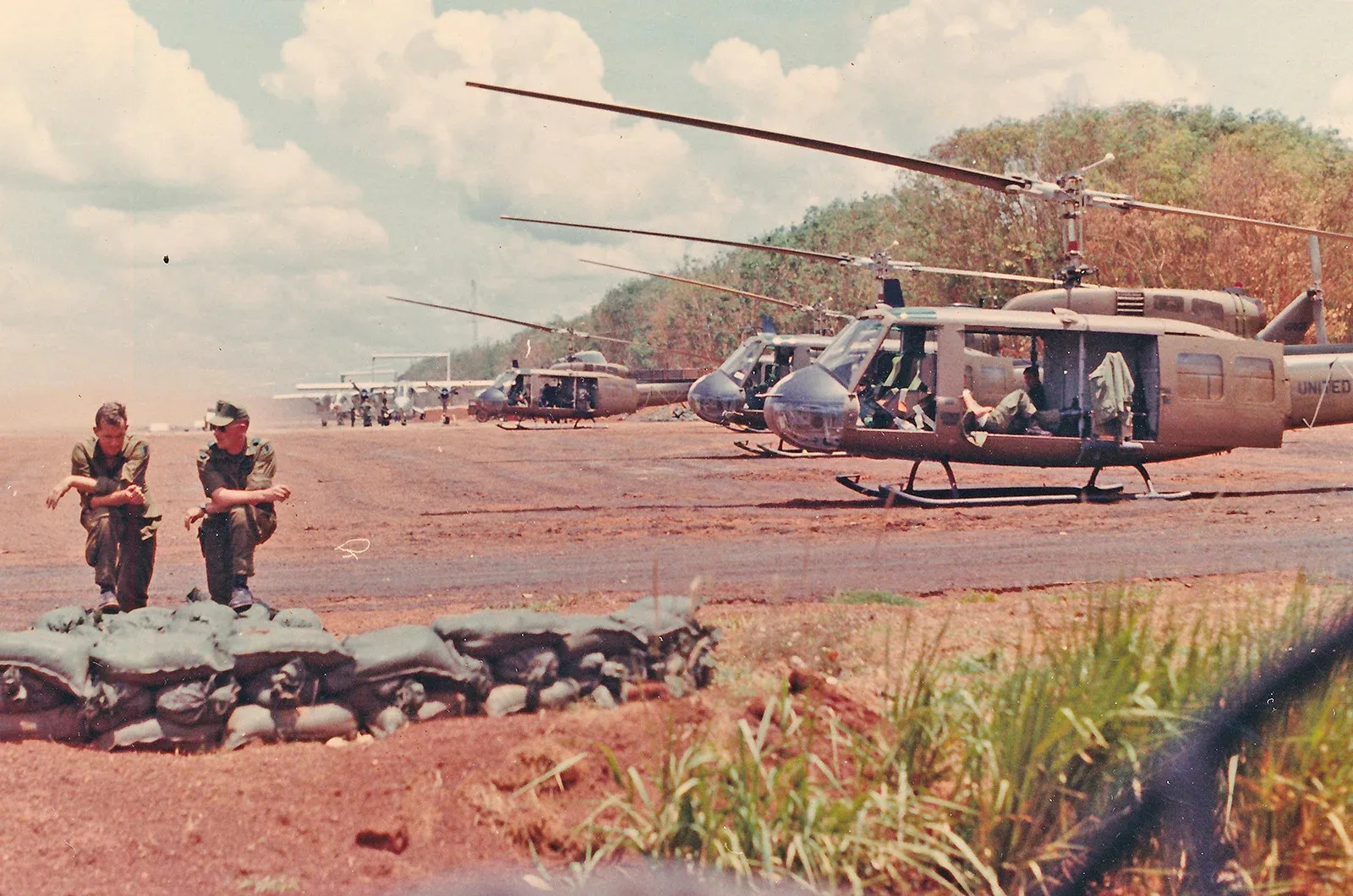
The Vietnam War was a catastrophic conflict that claimed millions of lives. Amid the chaos of aerial combat, MiGs and Phantom jets battled for control of the skies, while B-52 bombers and other heavy aircraft devastated large areas. The scale of bombing exceeded that of the entire Second World War. Dense jungles and mountainous terrain made air mobility essential, and helicopters, particularly the "Huey," became a defining feature of modern warfare. Amidst jet engines and napalm strikes, a new form of air combat emerged. Here are the aircraft that left the greatest mark on the Vietnam War.
A-4 Skyhawk
Designed by Ed Heinemann at Douglas Aircraft, the A-4 Skyhawk was a compact, carrier-capable attack jet that exceeded expectations despite its small size. A key component of US Navy and Marine Corps operations, the Skyhawk carried bombs, rockets, and guided missiles, performing close air support, interdiction, and strike missions. Its toughness, maneuverability, and versatility made it especially effective in dangerous suppression of enemy air defense (SEAD) operations. Pilots valued its agility in low-level flight and evading ground fire or enemy aircraft, cementing its reputation as one of the most reliable aircraft of the war.
A-6 Intruder
The A-6 Intruder was another critical carrier-based attack aircraft. Known for its all-weather, long-range strike capabilities, it supported US operations throughout the conflict.
Boeing B-52 Stratofortress
The B-52, an eight-engine heavy bomber, carried out massive carpet-bombing campaigns targeting North Vietnamese bases, supply routes, and troop concentrations. Its ability to carry enormous bomb loads made it central to campaigns like Operation Rolling Thunder. Despite 31 B-52s being lost to enemy action and accidents, the bombers durability and high-altitude performance showcased the destructive power of aerial warfare. Built on lessons from the B-17 and B-29, the B-52 remains operational, with 76 still in service and expected to fly into the 2050s.
MiG-17
The Soviet MiG-17, an evolution of the MiG-15, was slower than US jets like the F-4 but excelled in maneuverability and turning capability. Armed with a 37mm and two 23mm cannons, it enabled North Vietnamese pilots to perform hit-and-run tactics effectively. Approximately 87 confirmed kills were credited to MiG-17s, proving that agility could counter more advanced aircraft.
MiG-21
The MiG-21, a supersonic jet introduced in the late 1950s, reached speeds of Mach 2 and became a cornerstone of North Vietnamese air defense. Its small size and speed made it difficult to detect, while its agility and hit-and-run tactics led to around 103 confirmed kills. Pilots like Nguyn Vn Cc became aces flying this highly effective interceptor.
North American A-5 Vigilante
Initially designed as a supersonic nuclear bomber, the A-5 Vigilante was adapted for reconnaissance as the RA-5C. Equipped with advanced sensors, it provided critical intelligence for pre- and post-strike missions. Flying at high speed and altitude, it collected vital data while minimizing exposure to enemy defenses, making it a strategic asset despite high loss rates.
Lockheed AC-130 Spectre
The AC-130, a modified C-130 Hercules, delivered precision firepower in support of troops and interdiction missions. Equipped with infrared sensors, low-light cameras, and heavy side-firing weapons, it dominated nighttime operations, targeting supply routes like the Ho Chi Minh Trail. The C-130 family, including the C-141 Starlifter and C-123 Provider, was essential for transport and logistics throughout the war.
Douglas A-1 Skyraider, O-1 Bird Dog, O-2 Skymaster
The piston-engine A-1 Skyraider excelled in Close Air Support and Combat Search and Rescue, protecting rescue helicopters and delivering reliable firepower. The O-1 Bird Dog and O-2 Skymaster served as forward air control aircraft, guiding strikes and identifying enemy positions. These aircraft were indispensable in improving accuracy and effectiveness of air operations.
F-105 Thunderchief
The F-105 "Thud" was the primary high-speed fighter-bomber in early operations, performing strike missions over heavily defended North Vietnamese territory. Despite high losses, it scored 27.5 aerial victories and excelled in suppression of enemy defenses. Its speed, durability, and reliability made it a key asset for the US Air Force.
F-4 Phantom II
The versatile F-4 Phantom II served the Air Force, Navy, and Marines in multiple roles, including air superiority, ground attack, reconnaissance, and Wild Weasel missions. Capable of over Mach 2, it carried a wide array of weapons and flew thousands of sorties, shaping future fighter design and proving its unmatched utility in contested airspace.
UH-1 Iroquois "Huey"
The UH-1, or "Huey," revolutionized helicopter warfare. Used for troop transport, medevac, supply, and close air support, it was highly adaptable and reliable under fire. Over 7,000 were deployed in Vietnam, with roughly 3,000 lost in combat or accidents. Its success paved the way for the AH-1 Cobra attack helicopter and transformed modern airmobile tactics. Other helicopters like the CH-47, CH-34, CH-53, OH-6 Cayuse, CH-54, SH-3, and HH-3E played vital roles as well, while the Hiller OH-23 Raven helped prevent incidents like the My Lai Massacre.
Author: Ava Mitchell
Share
Delta imposes temporary halt on flights to Detroit Metro Airport
38 minutes ago 1 min read TRAVEL

Plans to Expand US Travel Ban to Over 30 Countries Unveiled by Head of Homeland Security
44 minutes ago 2 min read TRAVEL
DFW CEO Not Worried About New Airport Development
55 minutes ago 2 min read TRAVEL

Detroit Airport in Chaos following Ground Stop for Delta Flights
55 minutes ago 1 min read TRAVEL

A cooking teacher and food expert analyzes Michelin's first Philadelphia list − and gives inspectors a rating of zero stars
59 minutes ago 4 min read TRAVEL

Penguins line up for bird flu vaccinations at Paris zoo
1 hours ago 2 min read TRAVEL
'Slow tourism' initiative aims to double population of small island
1 hours ago 3 min read TRAVEL

Decades of Neglect: Istanbul's Remarkable Building Revived
1 hours ago 3 min read TRAVEL

Milan Bans Check-In Boxes in Latest Overtourism Crackdown in Italy
2 hours ago 2 min read TRAVEL

Christmas markets travel chaos warning
3 hours ago 2 min read TRAVEL