

A favorable nuclear agreement will not lead Saudi Arabia towards developing nuclear weapons
- Last update: 1 hours ago
- 3 min read
- 456 Views
- POLITICS
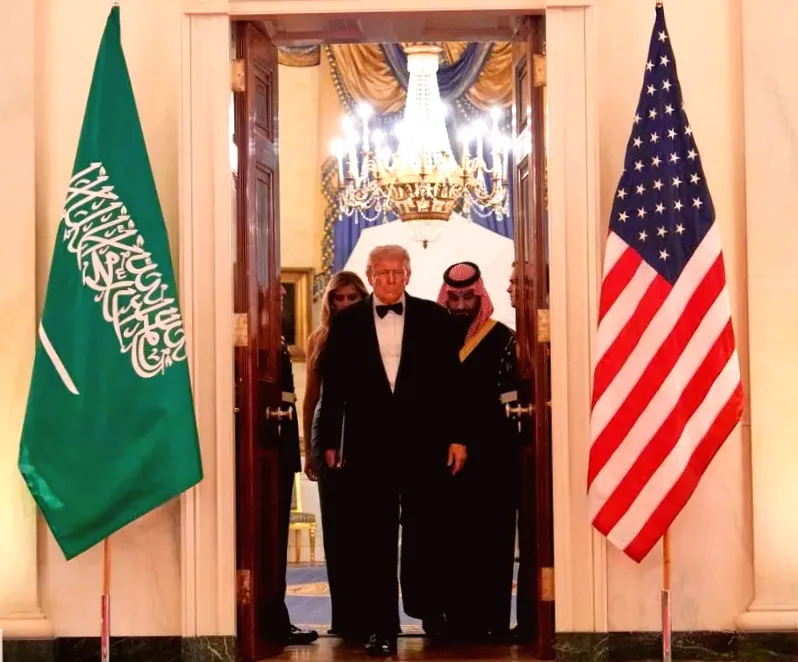
During his visit to Washington, Saudi Crown Prince Mohammed bin Salman sought a range of agreements in exchange for a trillion-dollar investment commitment. These included military jets, defense arrangements, and potentially U.S. approval for nuclear fuel capabilities. Negotiations are ongoing for a formal U.S.-Saudi civil nuclear pact, but the final details will determine its global impact.
If the agreement is weak, it could inadvertently trigger a regional nuclear arms race, a scenario no U.S. president would want. Conversely, a solid civil nuclear deal would reinforce U.S.-Saudi relations and support global oil market stability.
Saudi Arabia is pressing to reduce U.S. and international restrictions on its emerging nuclear program, seeking permissionand possibly assistanceto enrich uranium, a key step toward nuclear weapons. Globally, only a few nations enrich uranium or reprocess plutonium, mainly due to high costs and the proliferation risks. Nations pursuing peaceful nuclear energy generally avoid enrichment and reprocessing to prevent signaling potential weapons ambitions.
Concerns grow as Saudi Arabia has resisted adopting the International Atomic Energy Agencys Additional Protocol, which allows inspections of undeclared sites to prevent covert weapons development. This reluctance is particularly worrying given the crown princes public statements about acquiring nuclear weapons if Iran does.
The 2009 U.S.-UAE nuclear deal provides a model: a major partner developed a peaceful nuclear program, agreed to strict inspections, and renounced enrichment and reprocessing. This approach has prevented regional escalation. Iran, by contrast, illustrates the dangers of clandestine nuclear activity, coming close to producing multiple nuclear weapons before U.S. intervention.
Recent statements from U.S. Energy Secretary Chris Wright indicate that the U.S.-Saudi deal will prohibit enrichment, focusing instead on nuclear reactors and cooperation. However, Saudi Arabia is expected to continue seeking future exemptions, citing recent U.S. concessions to South Korea as precedent.
To maintain global nonproliferation standards, any Saudi agreement should include four firm conditions:
- Saudi Arabia must ratify the Additional Protocol, granting IAEA timely inspection authority.
- The U.S. must retain perpetual rights to all American-supplied nuclear materials and technology to prevent diversion toward weapons.
- The agreement must legally bind Saudi Arabia to the gold standard, explicitly forbidding uranium enrichment and plutonium reprocessing while ensuring a stable reactor fuel supply from the U.S.
- All Saudi nuclear facilities must remain under permanent IAEA safeguards with real-time monitoring and no exceptions.
Such measures would secure strategic and economic benefits while preventing a Middle Eastern nuclear arms race. Upholding strict standards ensures Americas partners do not unintentionally become nuclear competitors, reinforcing global security and nonproliferation commitments.
Author: Zoe Harrison
Share

International Powers Focus on AI Partnerships in the Gulf
6 hours ago 1 min read BUSINESS

Second U.S. air defense command post established in the Middle East
3 days ago 3 min read WORLD
Opinion - Maximizing a turning point for Middle East peace
5 days ago 4 min read WORLD

UAE avoids criticism from EU regarding Sudan
5 days ago 1 min read WORLD