

Opinion - Maximizing a turning point for Middle East peace
- Last update: 5 days ago
- 4 min read
- 11 Views
- WORLD
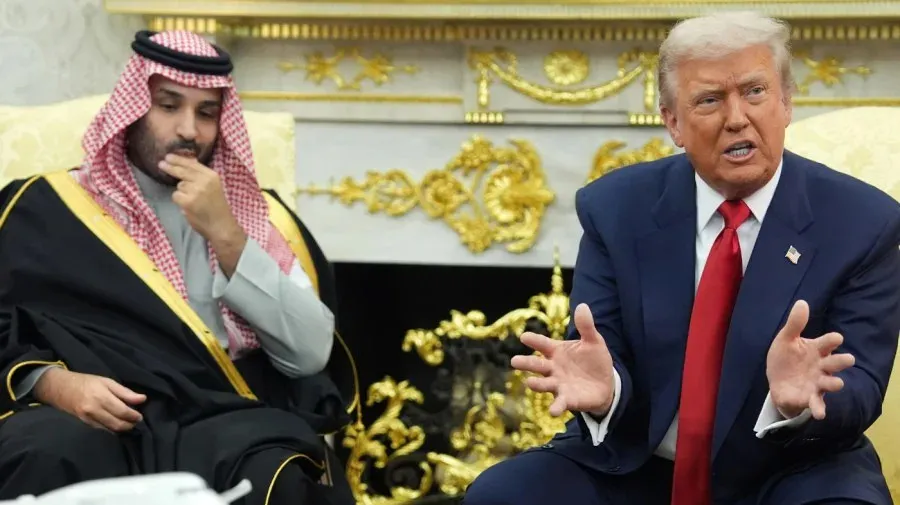
With a hostage and ceasefire agreement now in effect, coupled with declining influence of Iran and its regional proxies, the United States and its allies face an unprecedented chance to reshape the Middle East. The rise of pragmatic governments in Syria and Lebanon, alongside forward-looking leadership in the Gulf, creates a window for Washington to foster a region defined by cooperation, mutual interests, and economic growth.
Time is critical. Iran and its allied militias in Lebanon, Iraq, and Yemen are rebuilding their capabilities, while Tehran continues to obscure the status of its near-weapons-grade uranium stockpile. Syria and Lebanon are stable for now, but the ceasefire and hostage deal remain fragile and vulnerable to collapse. As the U.S. maintains the ceasefire, supports Gazas reconstruction, and promotes diplomatic engagement, it must coordinate with partners to leverage this brief opportunity for long-term regional stability.
Recent diplomatic visits underscore this momentum. Saudi Crown Prince and Prime Minister Mohammed bin Salman met with U.S. officials in Washington to strengthen the U.S.-Saudi strategic partnership and expressed willingness for Riyadh to join the Abraham Accords, contingent on a clear path to a two-state solution. Earlier, U.S. officials hosted Syrian President Ahmed Al Sharaathe first official visit by a Syrian president in more than 80 yearsleading to Syria joining the Global Coalition to Defeat ISIS and initiating talks on a security arrangement with Israel.
At the C5+1 Summit in Washington, Kazakhstan announced its accession to the Abraham Accords, signaling opportunities for the alliance to expand into the Caucasus and engage nations with existing ties to Israel. These developments, along with improved regional security and progress in Gaza, have reignited prospects for Saudi-Israel normalization.
During bin Salmans visit, Saudi Arabia and the United States signed agreements covering mutual security, arms sales, artificial intelligence, and civil nuclear cooperation, key components of the broader normalization framework. While Riyadh has not yet secured the Article 5-like security guarantee it seeks, progress is contingent on regional conditions and political commitment to a credible pathway for a Palestinian state. Advancing normalization could encourage other Arab and Muslim countries in the Gulf, Central Asia, East Asia, and Africa to join the Abraham Accords. Central Asia, in particular, could see Azerbaijan and Uzbekistan entering the accords, with Azerbaijan potentially joining the C6+1, expanding to C6+2 with Israel.
In parallel, the United States is facilitating a regional security architecture to enhance cooperation and economic integration, building on existing trilateral agreements with Israel, Bahrain, and the United Kingdom. Relaxation of U.S. sanctions on Syria opens space for its reintegration, including potential non-aggression agreements with Israel that could lead to security collaboration and eventual normalization. Coordinated U.S. and Arab investment in sectors such as cement, energy, renewable power, desalination, and petrochemicals will be crucial for Syrias economic recovery, alongside efforts to ensure Syria serves as a reliable partner against Iran, Hezbollah, and ISIS.
Lebanon faces a parallel opportunity. With Iran weakened, Hezbollahs influence reduced, and President Aoun in power, stabilization is possible, though contingent on disarming Hezbollah to prevent renewed conflict. Engagement with the U.S. and Israel will be essential to counter Iranian influence and manage disarmament.
Economic integration remains the regions most untapped resource. The India-Middle East-Europe Economic Corridor offers a practical framework to connect trade, energy, and digital infrastructure across three continents and support Gazas reconstruction. Leveraging existing routes from the Gulf to Israel and completing key rail links from the UAE to Jordan could realize this vision.
The potential for transformation in the Middle East is significant but requires sustained U.S. engagement. Bold, strategic action by the United States and its partners could deliver lasting security, economic integration, and prosperity, despite challenges from destabilizing forces.
Gershom Sacks is director of the N7 Foundation and former director for Gulf Affairs at the National Security Council. Emily Milliken is deputy director of the N7 Foundation.
Author: Sophia Brooks
Share
Putin and Modi agree to strengthen trade relations during official visit
58 seconds ago 1 min read WORLD

Funding allocated for crime prevention in playing fields and church
1 minutes ago 1 min read WORLD

Archaeologists Discover Eerie Warning from the Roman Empire
1 minutes ago 2 min read WORLD

Stalker sentenced for violating restraining order
7 minutes ago 1 min read WORLD

US reevaluating relationship with Tanzania following violent election turmoil
7 minutes ago 2 min read WORLD
US raid reportedly resulted in death of undercover agent instead of IS official
8 minutes ago 3 min read WORLD

Legal experts' opinions on the second US strike on a boat in Venezuela
10 minutes ago 4 min read WORLD

Full support for crackdown on anti-social behavior
10 minutes ago 2 min read WORLD

ERP Seeks Matching Grant of $250,000 to Expand Anti-Poaching Air Wing
11 minutes ago 2 min read WORLD

All Populations on the Largest Continent Share a Common DNA Thread—Except for One
13 minutes ago 2 min read WORLD