

Are Trump's actions in Venezuela fueling allegations of war crimes? Are they legal?
- Last update: 2 days ago
- 4 min read
- 126 Views
- POLITICS
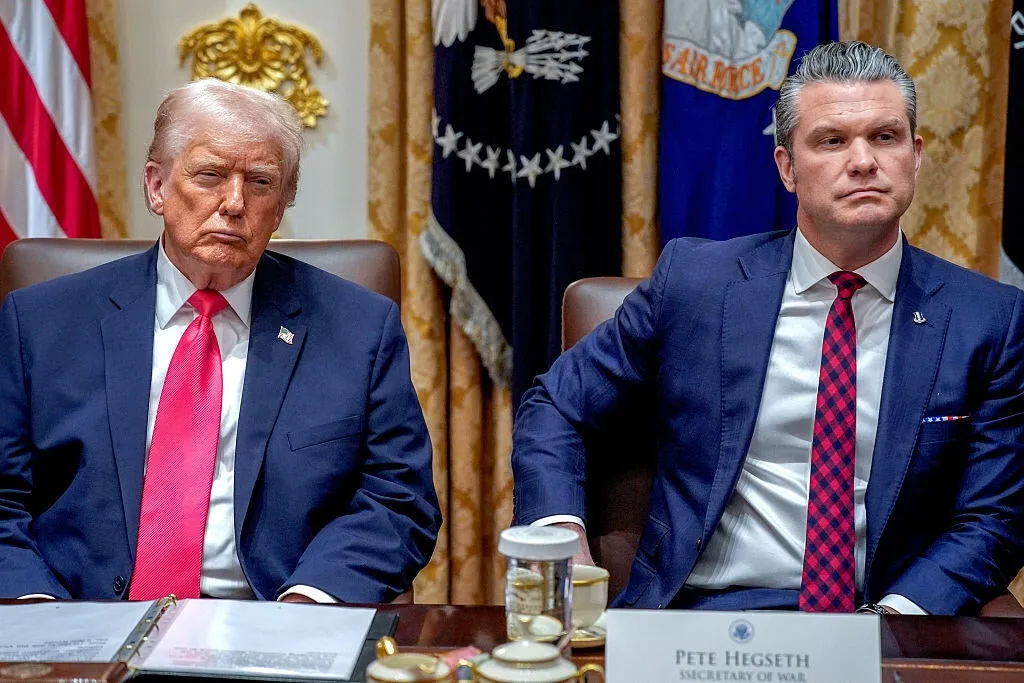
Washington Questions have intensified regarding the Trump administrations attacks on vessels suspected of drug trafficking after reports revealed that the first U.S. strike involved multiple assaults. According to the Washington Post, the initial strike left two survivors, who were reportedly killed in a subsequent attack.
The report indicated that Peter Hegseth may have verbally instructed to "kill everybody" during the September 2 strike in the Caribbean Sea, though Hegseth has not confirmed this. He told reporters he did not see survivors in the live feed and was not present when Navy Admiral Frank "Mitch" Bradley, overseeing the operation, authorized a second strike. The Post states that Bradley followed Hegseths directive as the two survivors clung to the wreckage.
White House Press Secretary Karoline Leavitt confirmed that Bradley directed a second strike, emphasizing that it was carried out within legal authority to eliminate the threat posed by alleged narco-terrorists. Hegseth authorized the operation, but Leavitt denied that the defense secretary ordered the deaths of the survivors. President Trump later stated he would not have wanted the second strike and reiterated that Hegseth claimed he did not order the killings.
Since September 2, the U.S. has conducted an additional 20 attacks targeting suspected drug traffickers in the Caribbean and eastern Pacific, resulting in more than 80 deaths. Congressional Democrats have raised concerns about the legality of these actions, warning that continued strikes could escalate tensions with Venezuela. The Posts reporting has intensified debate over potential war crimes.
In mid-September, the Trump administration notified Congress that the U.S. is engaged in a "non-international armed conflict" with designated drug cartels, citing the high death toll from drug-related deaths in the U.S. President Trump defended the strikes, arguing that the scale of drug-related deaths justified military action. However, the Justice Departments legal justification for the attacks remains classified, prompting Senate Democrats to request its declassification for transparency.
Legal experts argue that targeting suspected drug smuggling boats was already legally questionable, as the president may have lacked authority under the War Powers Resolution of 1973, which requires congressional consultation or authorization for military actions. The administration contends that drone strikes do not endanger U.S. personnel and do not constitute hostilities.
Republicans largely defend the strikes under presidential authority, but the new details of the September 2 strike have prompted bipartisan investigations by Senate and House Armed Services committees. Experts note that the characterization of drug cartels as terrorist organizations does not confer legal authority for military action. Cartels lack organized military structures, and the strikes may not meet the threshold of armed conflict under international law.
Former military prosecutors and law scholars emphasize that international law prohibits intentionally targeting defenseless individuals. The Geneva Conventions mandate the care of the wounded and forbid orders to leave no survivors. Following the September strike, protocols were updated to prioritize rescuing survivors, as seen in later incidents in October where survivors were rescued or searches conducted by neighboring countries.
Legal Implications of the Second Strike
The follow-up strike killing the two survivors has raised serious concerns about potential war crimes. Congressional Democrats consider such an action illegal under both international and domestic law. Republican lawmakers, including Rep. Mike Turner and Sen. Rand Paul, also questioned the legality of killing individuals clinging to wreckage.
Legal authorities argue that if the operation does not constitute an armed conflict, domestic law governs the actions, making the killings potentially prosecutable as murder. If treated as part of an armed conflict, international law would classify orders to kill survivors as war crimes. Former Defense Secretary Leon Panetta described the second strike as a clear violation of the laws of war, emphasizing the duty to protect the wounded.
Despite these controversies, Hegseth stated in a Cabinet meeting that operations against narco-boats are only beginning and defended the strategy as necessary for deterrence. He highlighted a temporary pause due to difficulties in locating targets, stressing that the approach differs from previous administrations methods of arrest and release.
Author: Olivia Parker
Share

Pentagon aware of survivors from boat attack but still carried out follow-up strike, say AP sources
1 days ago 2 min read WORLD

3 important questions about the US boat collision that claimed survivors' lives
1 days ago 3 min read POLITICS

Trump officials claim second strike targeted drug boat, not crew
2 days ago 3 min read POLITICS
Are Trump's actions in Venezuela fueling allegations of war crimes? Are they legal?
2 days ago 4 min read POLITICS
This is the Trump administration's statement on the 'double-tap' strike on an alleged drug boat.
2 days ago 3 min read POLITICS
Pentagon Confirms Admiral's Decision on 'Double Tap' Strike was Correct
2 days ago 3 min read POLITICS
Senator Reads DOD Law of War Manual On CNN To Demonstrate Trump Administration's Alleged 'War Crime'
2 days ago 2 min read POLITICS
Hegseth declares continued assaults on 'narco-boats'
2 days ago 3 min read POLITICS

Adm. Frank 'Mitch' Bradley's involvement in the Venezuela boat strikes
2 days ago 4 min read POLITICS
US defence secretary confirms no survivors sighted before second strike on drug boat
2 days ago 3 min read WORLD