

Exploring the political factors behind Netanyahu's pardon campaign
- Last update: 48 minutes ago
- 4 min read
- 331 Views
- POLITICS
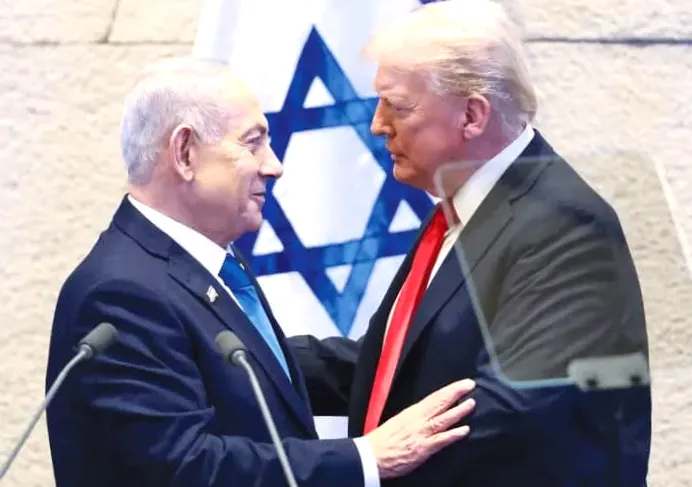
Prime Minister Benjamin Netanyahus recent petition for a presidential pardon, submitted on Sunday, marks a dramatic shift in his approach to the legal battles he has faced for nearly a decade. After five years on trial and years of promising to fight for full acquittal, Netanyahus request, sent to President Isaac Herzog, was meticulously prepared and strategically timed.
Previously adamant that he would never seek clemency for crimes he denies committing, Netanyahu is now requesting a pardon before any verdict or conviction. The question arises: why now? The answer becomes clearer when examining three interlinked calendars: the international diplomatic schedule in Washington, the legal proceedings in Jerusalem, and domestic political dynamics surrounding the contentious haredi draft legislation currently advancing through the Knesset.
Diplomatic Pressure from Washington
At the forefront is the role of the United States, particularly former President Donald Trump, who has consistently voiced strong support for Netanyahus pardon. Trump publicly called for clemency in the Knesset and sent a letter to President Herzog urging the same. This level of personal and political involvement is unprecedented for a foreign leader in Israels legal process, creating a unique window of opportunity for Netanyahu. In his request, Netanyahu emphasized that Israel faces "historic challenges and opportunities" that require an unencumbered prime minister, indirectly referencing Trumps regional initiatives such as the Abraham Accords.
By framing the pardon as essential for national interest rather than personal gain, Netanyahu positioned himself as a statesman poised to engage in high-stakes diplomacy. His immediate conversation with Trump following the submission of the request and the invitation to Washington underscored the calculated timing, portraying the pardon as a strategic necessity rather than an escape from justice.
Escalating Courtroom Demands
The second factor is the intensifying demands of Netanyahus trial. Earlier, the prime minister could continue governing while his lawyers handled court proceedings. However, since late 2024, Netanyahu has been required to attend court three days a week, preparing testimony and enduring cross-examination. This heavy schedule has, according to his legal team, limited his ability to manage the country at a critical moment.
Netanyahu publicly characterized the trial as a distraction, emphasizing that prolonged courtroom attendance conflicts with leading a nation facing major challenges. He described the proceedings as trivial and insisted that Israel cannot afford to have its prime minister tied up in legal matters during pivotal times. Yet, this argument faces a contradiction: in 2021, Netanyahus lawyers argued that a prime minister could balance trial obligations with governance, highlighting a shift in strategy aligned with current pressures.
Domestic Political Turbulence
The third calendar is the domestic political landscape, centered on the haredi conscription bill, a highly divisive issue in Israeli society. On the same day Netanyahu submitted the pardon request, the Knessets Foreign Affairs and Defense Committee advanced this legislation. The bill, which seeks to modify military exemptions for ultra-Orthodox youth, has become a flashpoint, pitting the haredi parties existential concerns against broader public opposition.
Netanyahus pardon request intersects with this political storm. A prime minister heavily engaged in court proceedings would struggle to navigate such a sensitive issue. By seeking clemency, Netanyahu aims to maintain political stability, securing coalition support from haredi parties while advancing the legislation. This mutual dependencyNetanyahu needing coalition stability, and the haredi parties needing his leadership to pass the lawcreates a scenario of mutual assured survival.
The Strategic Convergence
When combined, these three pressures clarify the timing of Netanyahus move: a supportive US president urging clemency, a trial entering a demanding phase, and an imminent domestic political confrontation. This convergence allows Netanyahu to present the pardon as an act of national responsibility, rather than self-preservation. The window for this narrative is narrow, prompting immediate action to capitalize on this unique alignment of diplomatic, legal, and political circumstances.
Author: Ethan Caldwell
Share
Netanyahu's plea for pardon viewed as attempt to secure political future before 2026 election
1 days ago 3 min read WORLD

Israel's significant political corruption scandals beyond Netanyahu
3 days ago 3 min read POLITICS
Netanyahu requests pardon for corruption charges
3 days ago 1 min read POLITICS
The cost of pardoning Netanyahu
3 days ago 3 min read POLITICS
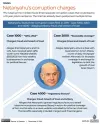
Is Netanyahu seeking pardon and can it be granted?
4 days ago 3 min read POLITICS
Ex-justice minister Ramon states Netanyahu has 'zero possibility' of getting pardon
4 days ago 2 min read POLITICS
Netanyahu trial: Interrogation in Case 4000 continues despite unexpected request for pardon
4 days ago 2 min read POLITICS
Scholars warn that Netanyahu's request for a pardon is a direct attempt to bypass courts
4 days ago 4 min read POLITICS
Understanding Netanyahu's appeal for pardon in corruption trial
4 days ago 3 min read POLITICS
Israeli Prime Minister Netanyahu seeks forgiveness in ongoing corruption trial
4 days ago 3 min read POLITICS