

Navy investigation reveals weaknesses in carrier strike group following collision and loss of fighter jets
- Last update: 1 hours ago
- 2 min read
- 306 Views
- POLITICS
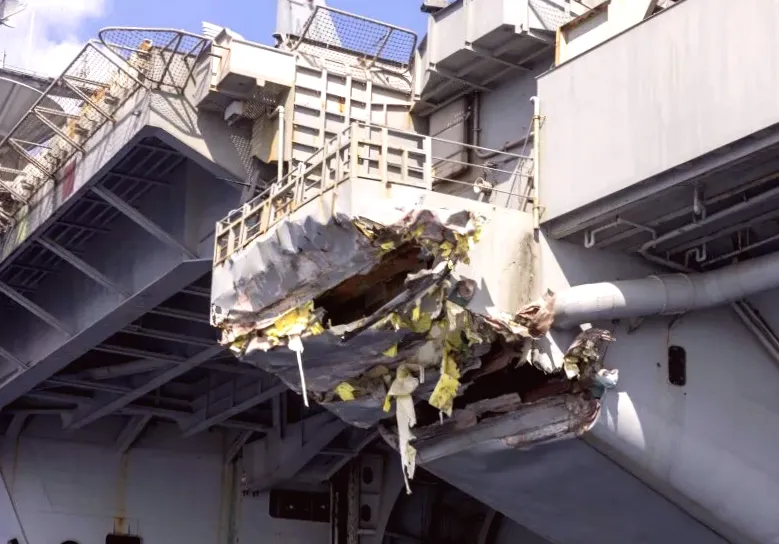
Dec. 5 The U.S. Navy is set to enhance its operational procedures after reviewing a series of incidents involving the USS Harry S. Truman Carrier Strike Group, officials reported Thursday. Vice Chief of Naval Operations Adm. Jim Kilby emphasized that these events offer crucial lessons for strengthening Navy readiness.
"These reviews underscore the importance of continued investment in our personnel to maintain battle-ready forces for operational commanders," Kilby stated. He praised the sailors of the Truman Strike Group for their professionalism and commitment during deployment, highlighting their adaptability under challenging circumstances. Kilby also noted the Navy's ongoing operations in the U.S. Central Command region, demonstrating both combat effectiveness and the ability to uphold freedom of navigation.
On Feb. 12, the aircraft carrier USS Harry S. Truman collided with the merchant vessel Besiktas-M in the Mediterranean near Port Said, Egypt. The incident caused no injuries or flooding. Investigators determined that the collision was preventable and resulted from lapses in safe navigation by the carrier's bridge team.
The Truman underwent repairs at the U.S. Naval Support Activity in Souda Bay, Greece, including the installation of weathertight bulkheads to address damaged areas. During the same period, the strike group experienced the loss of three F/A-18 Super Hornet aircraft in separate events between December 2024 and May 2025.
In December, the cruiser USS Gettysburg mistakenly shot down one aircraft in a friendly-fire incident. The investigation revealed that insufficient integrated training with the strike group contributed to the misidentification. No injuries were reported.
In April, another aircraft fell from the Truman's hangar deck while the carrier executed evasive maneuvers to avoid a ballistic missile. The mishap, caused by brake system failure and poor communication between the bridge, flight deck, and hangar bay, resulted in no casualties.
The third F/A-18 crashed in May during a landing attempt on the Truman. Investigators attributed the accident to a malfunctioning arresting wire sheave damper, which stemmed from inadequate maintenance compounded by limited training, manpower shortages, and high operational tempo. Crew members were unharmed.
"Reviewing these events reinforces our focus on developing battle-ready sailors and forces, ensuring the Navy delivers the most capable and combat-ready force possible," Kilby concluded.
Author: Jackson Miller
Share

Admiral confirms two survivors on 'narco boat' hit with second strike were unable to call for help, report reveals
1 hours ago 2 min read BUSINESS
How USS Gettysburg Shot Down One Super Hornet and Almost Another
2 hours ago 3 min read POLITICS
A Navy warship mistakenly fires at US fighter jets, pilot's life flashes before his eyes.
9 hours ago 2 min read WORLD
A US aircraft carrier's sudden maneuver to dodge enemy fire caught sailors off guard and caused a jet with faulty brakes to crash into the sea
9 hours ago 2 min read POLITICS
Houthi combat stress identified as main factor in costly Navy mishaps, investigations reveal
11 hours ago 4 min read WORLD
Navy reveals 'catastrophic' discoveries regarding USS Harry S. Truman
12 hours ago 2 min read POLITICS
Lessons learned from the Navy's investigations into 4 mishaps during Houthi campaign
12 hours ago 3 min read POLITICS
Navy finds operations against Houthis contributed to Truman Strike Group accidents
14 hours ago 3 min read POLITICS
A Navy warship mistakenly fires at US fighter jets, pilot narrowly escapes.
15 hours ago 2 min read WORLD
Democrats Disturbed by Boat Strikes After Briefing
1 days ago 3 min read POLITICS