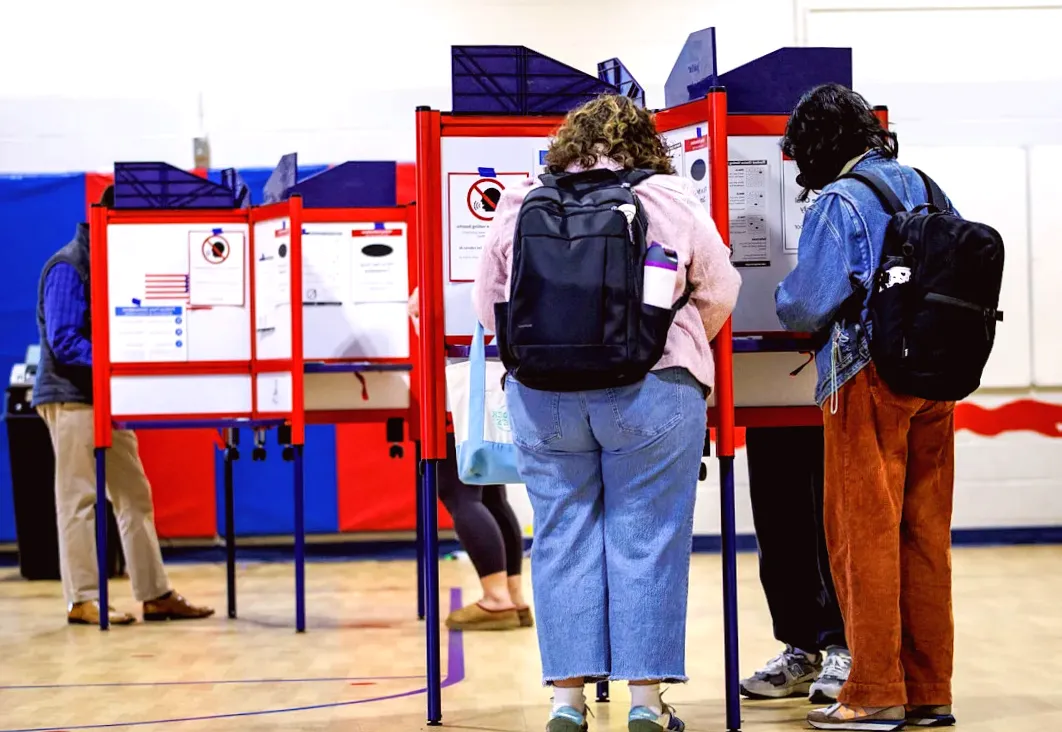
In recent discussions with voters who supported President Donald Trump in 2024 but later backed Democratic candidates in gubernatorial races in New Jersey and Virginia, a clear message emerges: both parties must avoid extreme positions and focus on broader issues beyond Trump. These voters express frustration with the polarized nature of politics and are searching for more moderate, pragmatic leaders.
In focus groups conducted with 14 swing voters from these two states, it became evident that many of them were disillusioned with both major political parties. The participants gravitated towards newly elected Governors Mikie Sherrill of New Jersey and Abigail Spanberger of Virginia, both of whom presented themselves as centrist alternatives. Their ability to position themselves outside the traditionally partisan dynamics played a key role in their victories.
While ten of these voters expressed dissatisfaction with Trumps leadership and raised concerns about rising costs, most of them clarified that their votes were not purely an anti-Trump statement. Instead, they highlighted the importance of candidate quality, ranging from policy stances to character and experience.
One participant, Cynthia G., a 52-year-old from New Jersey, shared her perspective on Sherrill's appeal: Even though Im a Republican, if a Democrat meets my criteria, Ill go with them. Mikie checks all the boxesshes tough, experienced, and proven, said Cynthia. Sherrill, a former congresswoman and naval officer, had a strong backing for her well-rounded credentials. This sentiment was mirrored across the focus groups, where voters appreciated candidates with solid track records and a pragmatic approach to governance.
In both New Jersey and Virginia, Sherrill and Spanberger achieved notable success, securing 7% of voters who supported Trump in 2024. These findings suggest that Republicans and Democrats need to focus on candidate integrity and electability, especially when preparing for the upcoming 2026 elections.
Rich Thau, president of Engagious, emphasized, The key takeaway for both parties is that running flawed candidates is a mistake. Issues like affordability and political moderation matter, but ultimately, swing voters care most about the quality of the candidates themselves.
Healthcare: A Crucial Issue for 2026
Looking ahead to next years elections, one issue that stands out is healthcare. In a recent special election in Tennessees deep-red district, Democrats were able to narrow their margin of defeat by focusing on affordability, particularly healthcare costs. This signals that voters continue to be deeply concerned about rising healthcare expenses, a topic that is likely to dominate the 2026 midterm debates.
Among the participants in the focus groups, many expressed anxiety about the future of the Affordable Care Act and its impact on healthcare premiums. David S., a 47-year-old Democrat from New Jersey, voiced concern over potential increases in his health insurance premiums. Im really worried that my premiums could jump by $300 a month in January, he said, highlighting the anxiety felt by many voters as the expiration of Obamacare subsidies looms. Despite his past support for Trump, David backed Sherrill in the gubernatorial race, drawn to her proposals to lower energy costs and her stance on economic issues.
While Congress remains at an impasse over extending healthcare subsidies, Senate Democrats have introduced a proposal to extend the subsidies for three years. However, this initiative is unlikely to garner Republican support. Meanwhile, the Trump administration has yet to unveil a comprehensive healthcare plan to address the ongoing concerns of voters like David.
As lawmakers continue to struggle with healthcare negotiations, a recent Gallup poll revealed that Americans economic confidence has hit a 17-month low, with only 21% of respondents rating the economy as good or excellent. This indicates a growing sense of unease, which both political parties will need to address as they approach the 2026 midterms.
Additionally, as we approach the next election cycle, Republicans are still working to mobilize Trumps base, particularly in states like Tennessee, where Trumps influence wasnt enough to secure a clear victory for the GOP in a non-presidential race.
With 2026 on the horizon, the political landscape will likely continue to be shaped by the battle over healthcare, economic security, and the ongoing debate over candidate qualifications. As both parties move forward, the stakes couldnt be higher in terms of attracting swing voters and securing key electoral wins.