

Amidst numerous global challenges, Iran steps up communication with African allies for essential support
- Last update: 23 hours ago
- 3 min read
- 654 Views
- WORLD
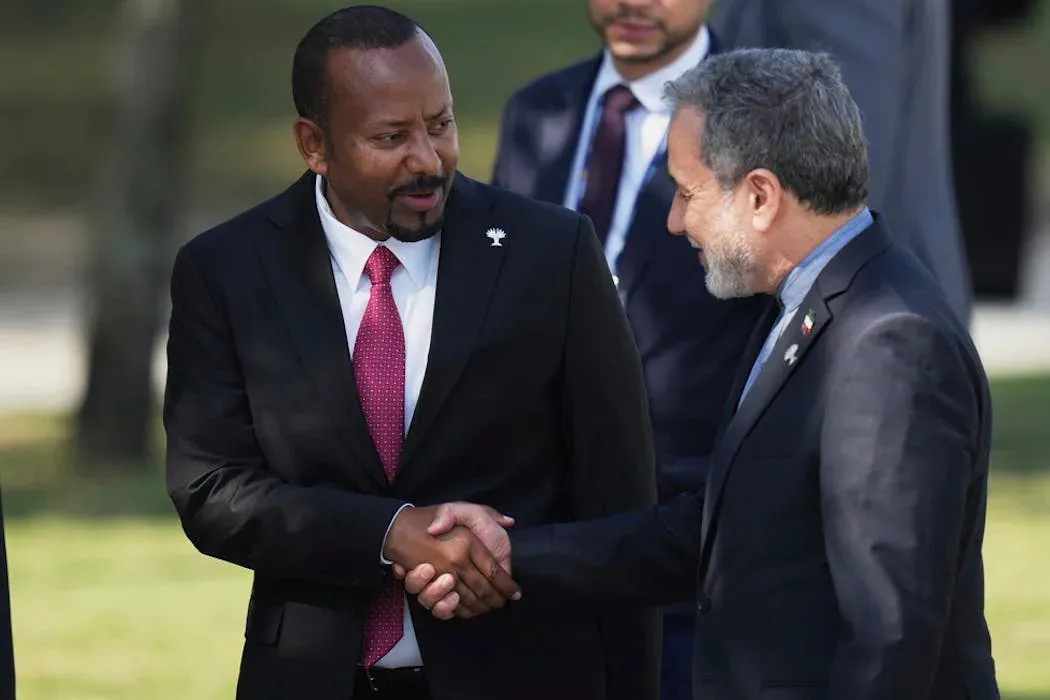
On November 12, 2025, Burkina Fasos security minister traveled to Tehran for high-level discussions with Iranian officials. The visit marked a significant milestone: the reopening of Burkina Fasos embassy in Iran, the signing of new security cooperation agreements, and talks on enhancing collaboration in agriculture and industry.
This visit is part of a broader pattern. Since the 2023 Gaza conflict, led by Tehran-supported Hamas, Iran has faced growing isolation and multiple crises. Its regional network of allied groups, often referred to as the axis of resistance, has been heavily strained by conflicts with Israel and the collapse of the Assad regime in Syria in 2024. These challenges escalated with a 12-day war with Israel in June 2025, involving U.S. participation, followed by renewed U.N. sanctions. Meanwhile, Iran is also grappling with severe drought in its capital.
In response to these pressures, Iran has intensified its focus on Africa, engaging countries with historical and strategic significance. Burkina Faso represents one of these critical partnerships, providing Tehran opportunities to strengthen security ties, access key minerals, and expand markets for arms and other exports while navigating around sanctions.
Strategic and Economic Interests in West Africa
Iran has also sought closer relations with Mali and Niger. These West African nations, facing internal instability, coups, and security threats from armed groups, have increasingly viewed Iran as a potential security partner and arms supplier. For Tehran, these relationships also open access to economically valuable resources such as gold in Burkina Faso and Mali and uranium in Niger. Such materials may play a crucial role in Irans nuclear ambitions, particularly after damage sustained in the recent war.
Iran has held multiple diplomatic engagements with these countries. In 2024, Iranian and Malian foreign ministers met twice to strengthen bilateral and multilateral cooperation, agreeing on a joint economic commission and mutual support in international forums. In 2025, Iran and Niger signed economic and security agreements, including a deal for 300 tons of uranium for $56 million. Tehran has also pursued diplomatic talks with Sierra Leone, seeking both resource access and political support in multilateral institutions.
Broadening Engagement Across Africa
Beyond West Africa, Iran has worked with Malawi to circumvent sanctions and import aircraft and engaged with South Africa, its largest African trading partner, to strengthen security ties. Iran also held agreements with Zimbabwe covering economy, environment, and medical tourism. During a Non-Aligned Movement meeting in Kampala in October 2025, Iranian Foreign Minister Abbas Araghchi met with Ugandan President Yoweri Museveni to express interest in cooperation in agriculture, commerce, and the economy. Ugandas strategic importance lies in its uranium and cobalt reserves, essential for industrial applications.
Challenges and Limitations
Despite these efforts, Iran faces significant constraints. Middle Eastern rivals, particularly the UAE and Saudi Arabia, remain influential trade partners for many African countries, potentially discouraging deeper engagement with Tehran. The return of U.N. sanctions adds economic pressure, while Irans transactional approach to diplomacy may raise distrust among partners. For example, supplying drones to Eritrea in late 2025 could complicate relations with Ethiopia.
Nonetheless, Tehran continues to pursue these partnerships as critical avenues to maintain influence, access resources, and navigate international isolation. For Iranian officials, engaging with African nations offers a strategic lifeline amid domestic and global pressures.
Author: Harper Simmons
Share

UN Security Council delegation makes historic visit to Syria
20 hours ago 2 min read WORLD
Iran requests meeting with Lebanon’s foreign minister amid escalating tensions with Hezbollah
21 hours ago 1 min read WORLD
Dispute and uncertainty in Iraq regarding freezing of Hezbollah, Houthis assets
22 hours ago 3 min read BUSINESS
Iraq reverses decision to freeze funds of Iran-backed groups, to review list of terrorist organizations
1 days ago 2 min read WORLD
UNSC delegation visits Syria one year after al-Assad's regime change
1 days ago 2 min read WORLD
Trump's Attempt to Violate International Law is Failing.
1 days ago 5 min read WORLD

Israel announces the reopening of the Rafah border crossing: What it means for Palestinians in Gaza
1 days ago 3 min read WORLD
Lebanon's Prime Minister Says Diplomatic Normalization and Economic Relations with Israel Are Not on the Horizon
1 days ago 2 min read WORLD
Prime Minister says Lebanon is nowhere near diplomatic normalization or economic relations with Israel
1 days ago 2 min read WORLD

Trump cautions Israel against 'meddling' in Syria
3 days ago 2 min read POLITICS