

Belgium calls on Europe to abandon plan to freeze Russian assets in support of Ukraine
- Last update: 3 days ago
- 3 min read
- 796 Views
- WORLD
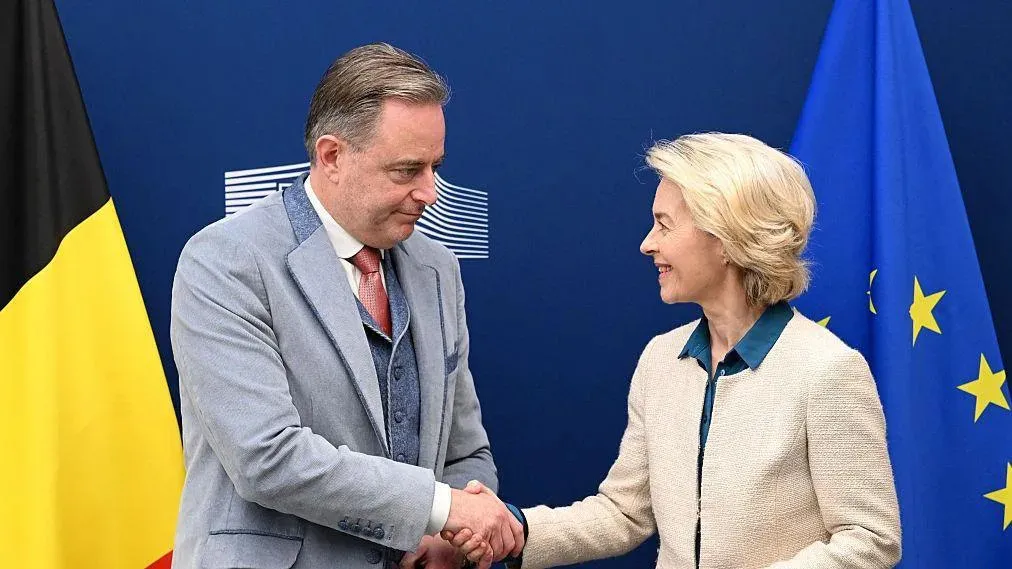
Belgium has criticized the European Union for overlooking its objections to a plan that would convert frozen Russian assets in Europe into financial support for Ukraine. Belgian Foreign Minister Maxime Prvot has repeatedly called for an alternative approach, suggesting that the EU should borrow the required funds from financial markets instead.
The EU proposal, supported by German Chancellor Friedrich Merz, intends to transform 140 billion of Russian state assets held in Belgium into a "reparations loan" for Kyiv next year. While most EU countries back the initiative, Belgium has emerged as a vocal opponent, warning that such a move could jeopardize short-term peace negotiations and expose the EU to potential legal claims from Russia.
Russia has condemned the plan, with one senior banker threatening decades of litigation if the assets are used. The European Commission is preparing solutions to address the deadlock, but Prvot has expressed dissatisfaction, claiming the proposals under discussion fail to adequately address Belgium's concerns.
Although EU nations have previously used profits from frozen Russian assetstotaling approximately 210 billionto fund Ukraine's defense since Russia's 2022 invasion, directly using the assets remains contentious. EU leaders are expected to vote on the reparations loan at an upcoming Brussels summit, but agreement remains uncertain.
Belgium's opposition is particularly significant because a large portion of frozen assets185 billionare held at Euroclear, the Brussels-based securities depository. The Belgian government argues that it would face the main legal and financial burden if an EU-funded loan to Ukraine were challenged by Russia. Prvot warned that Belgium could not cover a 200 billion claim, equivalent to its entire annual federal budget, if litigation arose.
Prime Minister Bart De Wever has formally requested that EU guarantees be legally binding to share the risk among member states should the loan fail or sanctions against Russia be lifted. Euroclear's head, Valrie Urbain, echoed this concern. The European Central Bank has stated it cannot serve as a lender of last resort, complicating the prospect of shared guarantees.
Belgium has proposed an alternative: a 45 billion loan to Ukraine next year funded from the EU's existing budgetary provisions. Chancellor Merz, however, insists that using frozen Russian assets is more urgent given escalating attacks on Ukraine and the onset of winter.
EU foreign policy chief Kaja Kallas supports the reparations loan, arguing that it would strengthen Europe's leverage over Moscow and encourage President Vladimir Putin to engage in peace negotiations. Legal experts, including Veerle Colaert from KU Leuven University, say Belgium's concerns are valid due to Euroclear's contractual obligation to repay Russia if sanctions are lifted.
Russia has pledged retaliation if the EU proceeds with using its sovereign assets. Andrei Kostin, chairman of state-owned VTB Bank, warned of up to 50 years of legal disputes and criticized the plan for potentially funding conflict rather than peace.
Attempts to reach consensus in October failed, and while the European Commission intended to present a legal framework for the reparations loan by November, disagreements among member states have delayed the process. Meanwhile, EU countries continue to navigate both internal disagreements and external pressures from Washington and Moscow in determining how to support Ukraine.
Author: Connor Blake
Share

Best time to witness a frigid supermoon and the most powerful meteor shower of the year in PA
3 minutes ago 2 min read WORLD

Kate Middleton's Reusing of Royal Blue Coat is a Symbolic Tribute to Her Cancer Journey
4 minutes ago 3 min read WORLD

Syrian museum receives back hundreds of artefacts hidden during war
7 minutes ago 2 min read WORLD

Spain worries about potential loss of multibillion-euro industry because of swine fever
7 minutes ago 2 min read WORLD
Hidden people in Amazon rainforest protect their tribe from outside threats
8 minutes ago 2 min read WORLD
Insights into Putin's state of mind from the latest Ukraine talks
8 minutes ago 2 min read WORLD

Chernobyl Mold Adapted to Feed on Radiation
8 minutes ago 2 min read WORLD

Police name rottweiler puppies after the Kray twins
8 minutes ago 2 min read WORLD
Zelensky informs about fresh Russian assaults on civilian infrastructure
14 minutes ago 2 min read WORLD

American Shahed-136 Clones with Satellite Datalinks and Swarming Capabilities Deployed to Middle East
17 minutes ago 3 min read WORLD