

Has China changed its policy and recognized North Korea as a nuclear-armed state?
- Last update: 2 hours ago
- 3 min read
- 187 Views
- WORLD
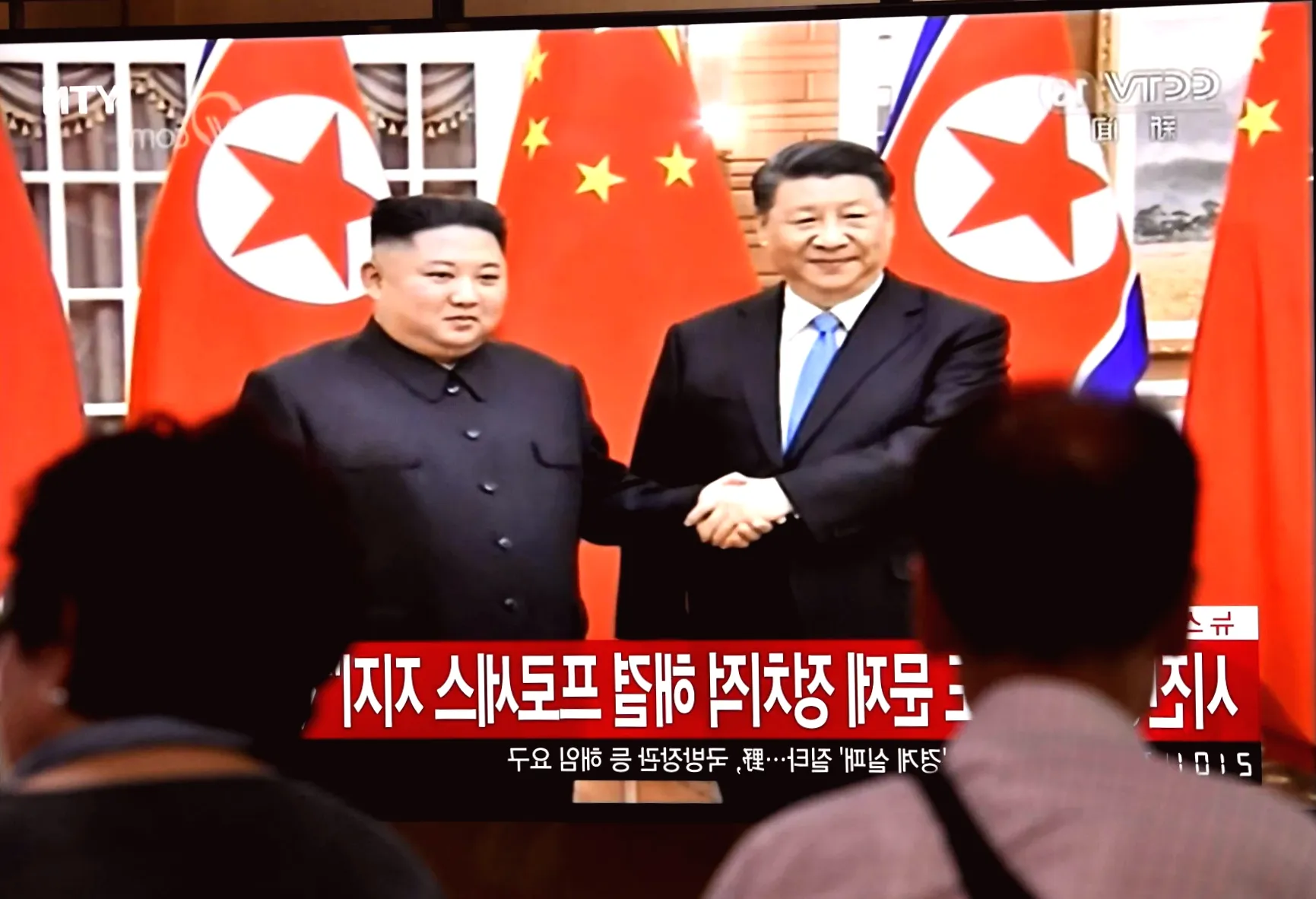
China's latest white paper on arms control and non-proliferation has notably removed references to the "denuclearisation of the Korean peninsula," signaling what analysts describe as a quiet acknowledgment of North Korea as a nuclear-armed nation. The report emphasizes China's focus on strategic rivalry with the United States over prior denuclearization priorities.
The newly released white paper updates Beijing's previous 2005 document on national defense and nuclear policy. Unlike earlier reports, the latest paper omits the traditional support for denuclearization, instead framing Chinas role as a neutral actor committed to regional peace and stability through political dialogue.
China calls on relevant parties to abandon coercive tactics, resume negotiations, and contribute constructively to lasting peace and stability on the Korean peninsula, the report stated, avoiding the term denuclearisation entirely.
Analysts note this departure from previous positions is significant. Earlier white papers, including one in 2017 on Asia-Pacific security, explicitly affirmed Chinas commitment to denuclearization and peaceful resolution of the Korean peninsula issue. Zhao Tong from the Carnegie Endowment for International Peace remarked that Chinas avoidance of the term suggests tacit acceptance of a nuclear North Korea, likely influenced by repeated pressure from Pyongyang.
This shift aligns with Beijings closer ties to Pyongyang. In September, North Korean leader Kim Jong-un attended Chinas military parade and met with President Xi Jinping and Russian President Vladimir Putin, agreeing to strengthen strategic coordination in global and regional affairs. This contrasts with Xis 2019 visit to Pyongyang, which emphasized denuclearization and long-term stability.
Experts suggest Beijings new stance reflects a strategic recalibration prioritizing competition with the U.S. over pressing North Korea on nuclear restraint. Zhao noted that China appears to value maintaining influence over North Korea more than cooperating with Washington to curb Pyongyang's nuclear expansion.
North Korea has accelerated its nuclear development, including deploying new solid-fueled intercontinental ballistic missiles with reported Russian assistance. Concurrently, Pyongyang has rejected proposals from the U.S. and South Korea to resume denuclearization talks, insisting on recognition as a nuclear power.
Observers like Timothy Heath from the Rand Corporation describe Chinas approach as pragmatic, acknowledging the reality of North Koreas nuclear status, partly influenced by Moscows support. Patrick Cronin of the Hudson Institute sees Chinas posture as an assertion of its version of principled denuclearization while countering U.S. extended deterrence policies in the region.
The white paper also opposed nuclear sharing and foreign deployment of nuclear weapons, without naming the U.S., criticizing a "certain country" for pursuing absolute strategic superiority. Analysts warn that Chinas acceptance of North Korea as a nuclear state may push U.S. allies to seek their own nuclear protection or rely more heavily on American deterrence.
In response, the U.S. has recently adjusted its approach, approving South Korea to develop nuclear-powered submarines and modernize atomic energy agreements. Experts suggest this shift reflects concern over North Koreas nuclear advancements and closer alignment with China and Russia.
Chinas revised stance signals a recognition that denuclearization may be increasingly unfeasible, particularly as both Koreas develop nuclear-powered capabilities. Analysts argue that while this approach may stabilize Beijing-Pyongyang relations, it could intensify regional security tensions and complicate long-term non-proliferation efforts.
Author: Harper Simmons
Share
Has China changed its policy and recognized North Korea as a nuclear-armed state?
2 hours ago 3 min read WORLD
Termination of RFA, VOA Korean services poses a threat to national security, warns AI system
1 days ago 3 min read BUSINESS
South Korean president considers apologizing to North Korea for accusations of distributing leaflets and using drones
3 days ago 4 min read WORLD
Divided South Korea commemorates martial law anniversary
3 days ago 3 min read WORLD
Lee suggests reestablishing communication channels with North Korea
3 days ago 2 min read POLITICS
China-Japan dispute escalates at UN over Taiwan remarks described as 'biggest challenge' to relations
4 days ago 3 min read WORLD

Beijing suspends Japan youth exchange programs due to Takaichi Taiwan dispute
6 days ago 3 min read WORLD