

Pope Leo XIV's trip showcases Christian strength in Lebanon amid regional unrest
- Last update: 3 days ago
- 4 min read
- 15 Views
- WORLD
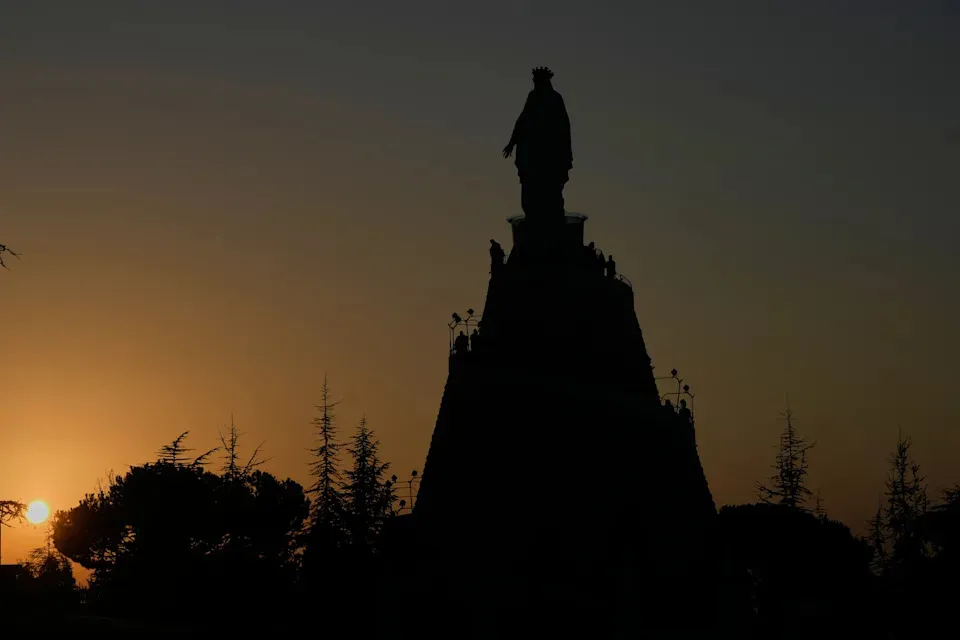
BEIRUT (AP) While countless Christians have departed from the Middle East over recent decades due to wars and extremist violence, Lebanon presents a contrasting story. Despite facing multiple crises, Christians in Lebanon continue to enjoy religious freedom and hold substantial political influence. The recent visit of Pope Leo XIV underscores the significance of Lebanons religious diversity and encourages Christians to maintain their presence in the region.
In neighboring Iraq, the U.S.-led invasion in 2003 and the subsequent rise of the Islamic State triggered a mass Christian exodus. The declaration of an IS caliphate in 2014 accelerated this migration, as the group destroyed churches and seized properties belonging to Christians. Even this year, a church bombing in Damascus prompted concerns among remaining Christians about the stability of their communities under the new interim government led by Ahmad al-Sharaa, a former Islamist insurgent leader.
In Lebanon, however, many Christians have remained steadfast. The nations sectarian power-sharing system, while often criticized for political gridlock, has guaranteed that minority groups retain influence. "More than half the advantage comes from Lebanons political system when it comes to Christians," said Monsignor Abdo Abou Kassm, director of the Catholic Center for Information. He added, "There is a democratic system where people can express their opinions freely without fear of oppression or exile. You can live freely with dignity in Lebanon."
Synthia Khoury, a 25-year-old Syrian business graduate visiting Lebanon as part of a delegation to see the Pope, observed that Lebanese Christians have endured numerous wars yet chose to remain in their homeland, preserving their customs and traditions despite hardships.
Christianity has deep roots in Lebanon, with communities surviving centuries of conflict and persecution. Monastic communities historically sought refuge in mountain caves to protect their faith. Since the creation of Greater Lebanon in 1920, Christians have been integral to the countrys politics and economy. Today, they comprise roughly a third of Lebanons population of 5 million, making it the Middle East country with the highest proportion of Christians. Lebanon hosts 18 recognized religious sects, with Maronite Catholics and Greek Orthodox forming the largest Christian groups. Christians are spread across the country, from southern villages near Israel to northern and eastern regions along the Syrian border, as well as coastal areas. Mount Lebanon, the traditional Christian heartland, is frequently mentioned in biblical texts.
Lebanons post-independence political framework, established in 1943, ensures a Maronite president, a Shiite Muslim parliament speaker, and a Sunni Muslim prime minister, making it the only Arab state with a Christian head of state. Maronites hold key positions such as army commander and central bank governor, while Greek Orthodox Christians occupy roles like deputy parliament speaker and head of State Security.
Charles Hayek, historian, highlights Lebanons historical ties to the Vatican, noting traditions that attribute the establishment of churches in Beirut, Byblos, Batroun, and Tripoli to St. Peter. Phoenician-origin figures from Tyre were elected popes in the 8th century, and correspondence between the Maronite Church and the papacy has been continuous since 1215.
Despite Lebanons civil war and sectarian conflicts, Muslims and Christians now coexist peacefully. Sunni cleric Khaldoun Oreimet emphasizes that Christians are not merely a community but an essential part of Lebanons social fabric.
The Popes visit comes a year after the U.S.-brokered ceasefire following the Israel-Hezbollah war, which killed about 4,000 people and caused extensive damage. Although daily Israeli airstrikes persist, many Christian leaders, including Cardinal Bechara Rai, advocate for Lebanons neutrality, seeking to prevent it from becoming a battleground for regional conflicts. Christian legislator Camille Dory Chamoun stressed the importance of ending wars that devastate the country, saying, "We have seen their consequences, and we have seen that we are paying a very high price for other peoples wars on our land."
Author: Sophia Brooks
Share

Everything You Need to Know About Kate Middleton's Annual "Together at Christmas" Carol Service (and the Royal Excluded from the Event)
45 seconds ago 3 min read WORLD

Trump administration warns Europe of 'civilizational erasure'
5 minutes ago 3 min read WORLD

Bulldozer crashes into village pub during opening hours
5 minutes ago 2 min read WORLD

Three Shocking Crypto Horror Stories: Kidnapped, Murdered, and Burned for Tokens
6 minutes ago 2 min read WORLD
Israel launches air attack on southern Lebanon following historic direct talks
7 minutes ago 2 min read WORLD

Report: Nuclear energy set to significantly increase in Africa's energy mix
8 minutes ago 3 min read WORLD

The Week in Photos: November 28 - December 5
8 minutes ago 4 min read WORLD
King Charles III Maintains Crown's Credibility by Setting Boundaries
10 minutes ago 4 min read WORLD

French first lady Brigitte Macron pays a visit to an old friend in China: A giant panda named Yuan Meng
12 minutes ago 2 min read WORLD
Three polar vortexes will bring Arctic cold to central and eastern U.S. until mid-December.
13 minutes ago 3 min read WORLD