

Uzbekistan initiates €9.46 billion investment in green energy to meet nation's power demands
- Last update: 1 hours ago
- 3 min read
- 438 Views
- BUSINESS
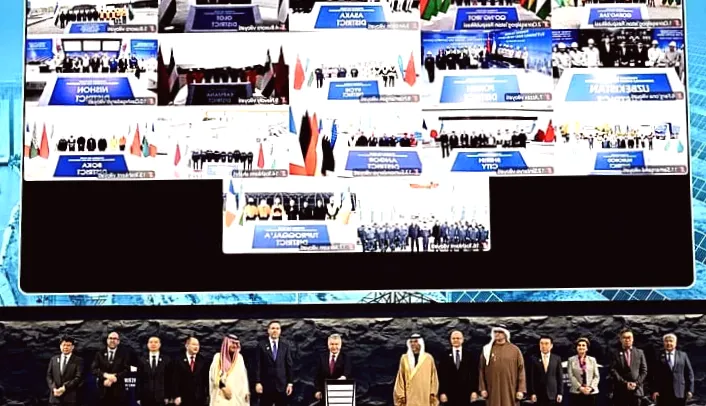
By 2026, every household in Uzbekistan could be running entirely on clean electricity. Officials report that the country's renewable energy generation will reach 23 billion kilowatt-hours annually, matching the nations total electricity demand. This announcement was made by President Shavkat Mirziyoyev during the "Powering the Future: Sustainable Energy for New Uzbekistan" forum, where multiple renewable and grid development projects were revealed.
42 New Projects with 9.46 Billion Investment
The government introduced 42 projects valued at 9.46 billion, including power generation plants, energy storage systems, substations, and high-voltage transmission networks. These developments aim to modernize the energy infrastructure and enhance national energy security.
The projects consist of 16 solar, wind, thermal, and hydropower plants totaling 3,500 megawatts, distributed across various regions and funded through both public and private investment. Additionally, 10 large-scale energy storage systems with 1,245 megawatts of capacity will enable up to 1.5 billion kilowatt-hours of electricity to be fed into the grid during peak demand, stabilizing supply.
To support the new capacity, 11 substations are being commissioned, along with the construction of 420 kilometres of high-voltage lines. President Mirziyoyev emphasized two priorities: ensuring uninterrupted energy access nationwide and achieving it through environmentally friendly, renewable sources.
Foreign Investment Driving Growth
The forum brought together officials, international corporations, and financial institutions. Over recent years, foreign investments totaling around 30 billion have been directed to Uzbekistan's energy sector, resulting in 9,000 megawatts of new capacity since 2017. Annual electricity generation increased from 60 billion kilowatt-hours to 85 billion in 2024.
International investors, including companies from Saudi Arabia, Turkiye, the UAE, China, France, and Qatar, are contributing to the expansion. ACWA Power of Saudi Arabia added over 2,500 megawatts to the grid this year, supporting Uzbekistans 2030 goal of 54% renewable energy. Frances Voltalia signed an agreement for a 200-megawatt hybrid wind and storage project and is planning a 500-megawatt storage facility called Turan, expected to start construction in 2026.
European companies are also involved in conventional energy projects. EDF Central Asia, together with partners from Japan, Qatar, and Germany, is developing two major gas-fired power plants, with turbine tests starting shortly.
Environmental and Long-Term Goals
Energy Minister Jurabek Mirzamakhmudov highlighted that expanding renewables will reduce natural gas use by nearly 7 billion cubic meters and prevent 11 million tons of emissions. By 2030, Uzbekistan plans to add over 17,000 megawatts of renewable capacity, raising green energys share to 54%, which will require 6,000 kilometres of high-voltage lines.
At COP-30 in Brazil, Uzbekistan presented progress on the iCraft initiative with the World Bank, achieving 23 million tons of verified greenhouse-gas reductions and establishing a carbon-credit trading system. Seventeen domestic companies have received international green-energy certification, with plans to expand this to 100 within two years.
Expanding PublicPrivate Partnerships
Uzbekistan is extending publicprivate partnerships to energy distribution. The Samarkand regional grid was handed to Turkiyes Aksa Elektrik for modernisation and management, expected to save 17.2 million annually. Additional regional grids will be opened to investors in the coming years.
Small-scale renewable projects are also underway, including 107 megawatts of rooftop and micro-solar installations across 300 neighbourhoods, providing clean electricity to 30,000 low-income families, who can sell excess power to the grid. Entrepreneurs are investing in small hydropower as well, with 40 micro-hydro plants generating 120 million kilowatt-hours this year and plans to add 65 megawatts next year, benefiting 80,000 households.
Regional Energy Cooperation
Uzbekistan is strengthening ties with neighboring countries. In 2026, it will co-finance the Kambarata-1 hydropower project with Kyrgyzstan and Kazakhstan to enhance the regional water-energy network. Work continues on the Green Energy Corridor with Azerbaijan and Kazakhstan to facilitate Central Asian electricity exports to Europe.
Author: Connor Blake
Share

Uzbekistan initiates €9.46 billion investment in green energy to meet nation's power demands
1 hours ago 3 min read BUSINESS

Report: Nuclear energy set to significantly increase in Africa's energy mix
6 hours ago 3 min read WORLD

By 2035, data centers will require twice the amount of electricity currently used by California
8 hours ago 3 min read BUSINESS
Government gives green light to new 1,900MW solar farm
1 days ago 2 min read WORLD

UK gives green light to 190MW Helios solar project development
1 days ago 2 min read WORLD

Approval near for energy storage system near M1
1 days ago 2 min read WORLD
Understanding small modular reactors, a new type of nuclear power plant designed to supply energy for AI's increasing demand.
2 days ago 3 min read WORLD
Officials mark the successful finish of large-scale project powering 80,000 homes: 'Incredibly significant'
2 days ago 2 min read WORLD
Strong Backing for New Advanced Nuclear Power Plant: 'Historic Turning Point'
3 days ago 2 min read SCIENCE

Japan's Large Nuclear Reactors Trigger Envy in Australia
3 days ago 2 min read WORLD