

Zillow is Indifferent to Climate Change Threatening Your New Home
- Last update: 55 minutes ago
- 5 min read
- 367 Views
- BUSINESS
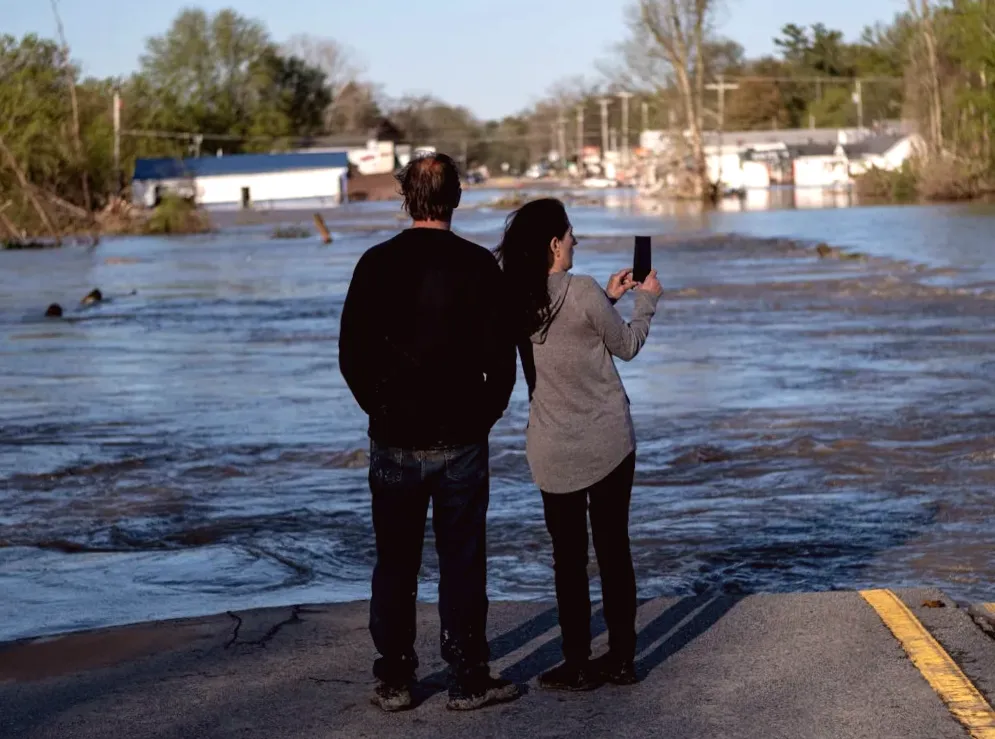
When people try to make sensible decisions about where and how to live, the climate crisis complicates nearly every choice. Should it be safer to live far from the coast, away from storms and rising oceans? What about the growing danger of wildfires, extreme heat, or polluted air? Is it wise to raise children in places that may soon become unlivable? Will an aging population be able to cope in neighborhoods that may flood regularly or become inaccessible during disasters? In a world shaped by climate change, even imagining a safe future feels increasingly uncertain.
At the same time, individuals are already forced to weigh countless practical considerations: job opportunities, family ties, a sense of community, and basic affordability. Reliable, accessible information about environmental risk should be part of that decision-making process, but instead of increasing transparency, one of the largest real estate platforms in the United States has taken a step backward.
In October, it was reported that Zillow had stopped displaying climate risk data on its property listings. The company had only recently introduced this feature the year before, drawing on modeling from the firm First Street. For buyers and current homeowners, understanding environmental risks is not a minor detail; failing to do so can lead to significant and irreversible loss. Nearly half of all homes in the United States already face considerable danger from flooding, wildfires, hurricanes, extreme heat, or severely degraded air quality.
While ordinary people struggle to obtain accurate information about these dangers, insurance companies have no such difficulty. They are responding to the data in ways that protect their own interests. In some areas, insurers are refusing to cover properties altogether. In others, they set premiums so high that coverage becomes unaffordable. Last year alone, State Farm discontinued 72,000 homeowners insurance policies, leaving tens of thousands vulnerable in the face of future disasters. Meanwhile, Hurricane Helene caused an estimated $200 billion in damage, and reportedly, very little of that loss was insured.
This widening gap between financial risk and financial protection is pushing many households toward disaster. When properties become uninsurable or impossible to sell, entire communities begin to collapse in value. The Senate Budget Committee warned that such patterns could ultimately result in a widespread fall in property values, potentially triggering a much broader financial crisis.
Earlier this year, First Street projected that, over the next 30 years, climate-related destruction would erase nearly $1.5 trillion in American residential assets. For most families, a home is the single most valuable possession they own. On average, home equity makes up about 45 percent of a households net worth, and that percentage is even higher among Black and Hispanic homeowners, who, on average, possess far less accumulated wealth than white households. The loss of a home, therefore, is not just an inconvenience; it can represent total financial collapse.
Extreme weather is no longer limited to traditionally vulnerable regions such as Tornado Alley or the Gulf Coast. Climate-driven disasters are now a threat to people living everywhere from flooded basements in urban neighborhoods to hillside mansions along the Pacific. The danger is spreading, and no place can be considered completely safe.
It is tempting to blame Zillow for removing this critical information. However, the company is not designed to serve the public interest. It is a profit-driven business that earns revenue from advertising and services connected to property sales. Anything that discourages people from buying homes such as visible warnings about climate vulnerability ultimately conflicts with its business model. Sellers, too, have little incentive to highlight the risks associated with their own properties, especially when those risks could make a home harder to sell.
This issue is only going to intensify over time. Many retirees, particularly members of the Baby Boomer generation, settled in coastal regions such as Florida or the Outer Banks of North Carolina. In the future, their children and heirs may inherit homes that are severely threatened by climate change and nearly impossible to sell. What looks like a quiet retirement decision today may become a massive financial burden tomorrow.
In response to the removal of climate data from housing listings, advocacy groups have argued that governments must step in to fill the information gap. Access to accurate, unbiased climate risk data should be considered a public necessity, not a private luxury. Relying on corporations to deliver such information is unreliable at best.
At the federal level, little support is likely. The Trump administration has consistently undermined climate science, including efforts to strip funding from institutions such as the National Oceanic and Atmospheric Administration, while repeatedly dismissing climate change as a deception. This makes meaningful national leadership on the issue unlikely in the near term.
However, state and local governments are also deeply invested in preventing disastrous housing decisions. When people settle in high-risk areas, it increases the burden on emergency services, firefighters, infrastructure, and disaster relief programs. Entire local economies can be destroyed by a single catastrophe. Providing clear, accessible climate information to residents and potential buyers is therefore not just responsible, it is economically necessary.
Better information alone is not a complete solution. Builders and developers should be discouraged, or even legally prohibited, from constructing new homes in the most environmentally vulnerable locations. Stronger building codes and land-use regulations can reduce future losses. Urban planning must shift toward resilience, with improved drainage systems, fire-resistant design, and materials built to withstand extreme conditions. True affordability does not come from cheap construction in dangerous places, but from durable, sustainable communities that can survive in a changing climate.
Above all, the most effective solution would be to directly confront the root causes of climate change itself. Reducing emissions and transitioning to sustainable systems is the only way to limit the scale of destruction ahead. Yet under the current political climate, meaningful action appears unlikely even as countless residents may watch their savings, properties, and futures disappear beneath rising water or burn in unprecedented fires.
Author: Benjamin Carter
Share

Using hydrogen peroxide is not an effective remedy for whooping cough
1 minutes ago 3 min read BUSINESS

Laura Mayer, Former ABC News Producer, Takes on Role as Head of Podcasts at Talkhouse
5 minutes ago 2 min read BUSINESS

Four additional Poundland stores set to shut down
5 minutes ago 1 min read BUSINESS

General Mills resurrects popular childhood snack from the 1980s
7 minutes ago 2 min read BUSINESS

Cable company attempting to resolve viral lawn dispute
10 minutes ago 2 min read BUSINESS

European Cinema Association UNIC Criticizes Netflix-WB Deal as "Detrimental to Cinema in All Aspects" & "More Negative" Than Disney's Acquisition of Fox
11 minutes ago 2 min read BUSINESS

Open thread for Friday
11 minutes ago 1 min read BUSINESS

TikTok Shop Generates $500M in Black Friday Sales as Black Creators Encourage Customers to 'Buy Black'
12 minutes ago 2 min read BUSINESS

Democrats grill 5 tech giants over Trump's new ballroom
15 minutes ago 2 min read BUSINESS

E.U. fines Musk’s X $140 million for violating hate speech and misinformation rules
15 minutes ago 2 min read BUSINESS