

CDC advisory committee convenes to discuss hepatitis B vaccination, childhood immunization schedule
- Last update: 23 hours ago
- 3 min read
- 289 Views
- POLITICS
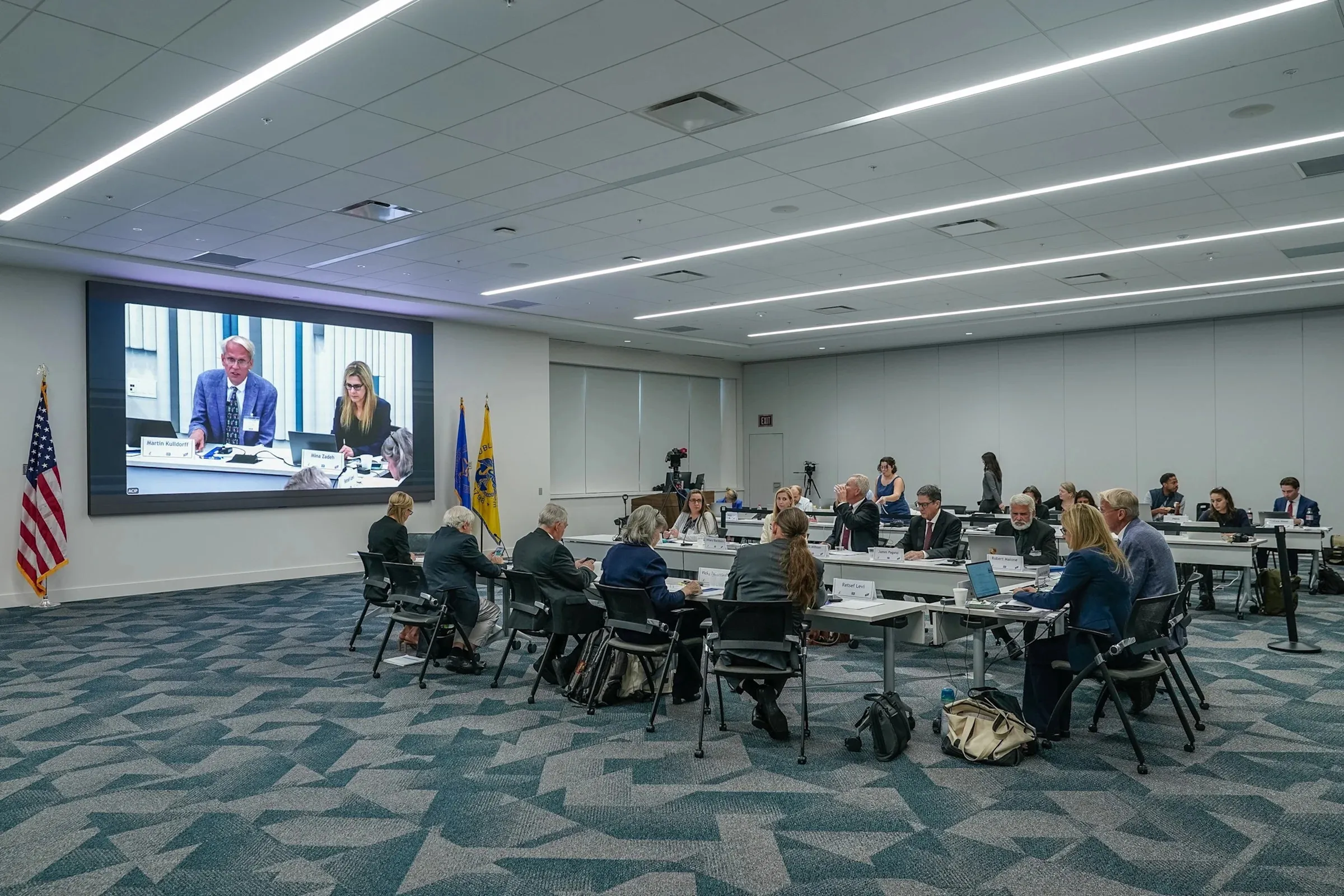
The CDCs Advisory Committee on Immunization Practices (ACIP) will meet on Thursday and Friday to review the childhood vaccination schedule, consider issues related to adjuvants and potential contaminants, and examine recommendations for the hepatitis B vaccine. This will be the committees third gathering since Health and Human Services Secretary Robert F. Kennedy Jr. dismissed all 17 previous members and appointed new ones, several of whom have expressed skepticism toward vaccines.
The meeting will also be the first since former Harvard Medical School professor Martin Kulldorff, now permanently placed at HHS, stepped down from serving as ACIP chair. Pediatric cardiologist and former U.S. Air Force flight surgeon Dr. Kirk Milhoan, known for his affiliation with the Independent Medical Alliance, will preside over this session.
According to the draft agenda, ACIP plans to discuss and vote on hepatitis B vaccine recommendations on the first day, followed by a review of the childhood immunization schedule on the second day. Some public health experts have voiced concerns about the direction of these discussions.
Since Kennedys newly chosen members joined the committee, ACIP has already recommended against using flu vaccines containing thimerosal despite broad scientific consensus that low levels of the preservative are safe and has restricted the recommended use of the combined MMRV vaccine, which protects against measles, mumps, rubella, and chickenpox.
Day one of the meeting will feature presentations on the hepatitis B vaccine and a scheduled vote. Specialists expect renewed debate over the long-standing recommendation that infants receive a dose within 24 hours of birth. Health experts emphasize that this early dose has played a crucial role in preventing hepatitis B transmission to newborns.
Kulldorff previously questioned whether administering the shot to all newborns is appropriate, while Kennedy has falsely associated the vaccine with autism. Some observers anticipate a push to scale back or delay the birth dose, a move pediatric and infectious disease experts warn could lead to increased infant infections. Prior to the universal vaccination policy, the U.S. attempted a risk-based approach, which failed to prevent ongoing transmission.
Medical specialists stress that babies can contract hepatitis B not only from infected mothers but also from caregivers or community members who may be unaware they carry the virus. They warn that rolling back the universal birth dose could lead to preventable lifelong infections, increasing the risk of liver failure and liver cancer.
The second day of the meeting is expected to focus on the childhood immunization schedule. The agenda references discussions on vaccine safety monitoring, the history of the schedule, and considerations for future adjustments. Earlier this year, ACIP formed two work groups: one examining the cumulative effects of all recommended vaccines given to children, and another reviewing older vaccines that have not been evaluated for more than seven years.
Kennedy has claimed that children receive an excessive number of vaccine doses, far more than in previous generations. However, pediatric experts report that children actually receive around 30 doses far fewer than Kennedy asserts and that the schedule has evolved based on decades of scientific advancement.
Vaccine professionals say they have not observed widespread safety concerns about the childhood immunization schedule and worry that approaching the discussion with an assumption of harm could undermine established public health protections.
The committee will also examine issues related to vaccine adjuvants and contaminants. Kennedy has suggested in the past that aluminum-based adjuvants are neurotoxic and linked to allergies, though the CDC maintains that adjuvants have been safely used in vaccines for more than 70 years to help enhance immune response.
Author: Benjamin Carter
Share
RFK Jr's panel to consider postponing hepatitis B vaccinations for newborns
22 hours ago 2 min read POLITICS

They were infected with hepatitis before receiving the birth vaccine - now the vaccination schedule may be postponed once more
22 hours ago 3 min read HEALTH

CDC panel to decide on hepatitis B vaccination for infants
23 hours ago 3 min read POLITICS
Kennedy's vaccine advisors to consider timing of hepatitis B vaccine in significant policy shift
23 hours ago 3 min read POLITICS

Kennedy's selected CDC advisors to consider significant alteration to childhood vaccine schedule
1 days ago 4 min read HEALTH

Twelve ex-Commissioners of the US FDA express grave concerns over agency's vaccine policy shift, according to NEJM
1 days ago 2 min read BUSINESS

Twelve former FDA leaders criticize current FDA vaccine chief's claims
1 days ago 2 min read POLITICS

US authorities are examining the Hepatitis B vaccine for newborns
1 days ago 2 min read POLITICS
Former FDA commissioners criticize Trump administration's vaccine plan
1 days ago 2 min read POLITICS

RFK Jr.'s panel may soon change the hepatitis B vaccine. What you should be aware of
1 days ago 4 min read POLITICS