

Concerns rise within military about potential for illegal orders following authorization by Hegseth for additional boat strike
- Last update: 3 days ago
- 3 min read
- 19 Views
- POLITICS
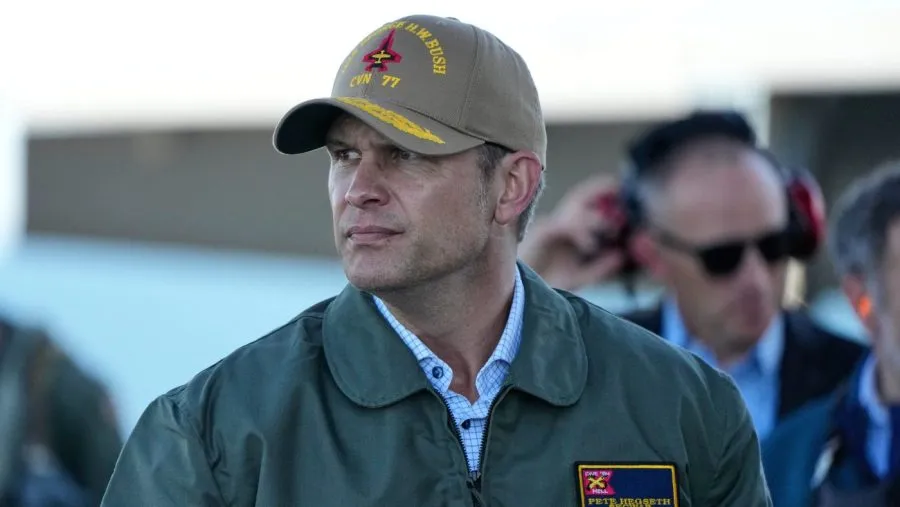
Military members are increasingly worried about being instructed to execute unlawful commands, following reports that Defense Secretary Pete Hegseth authorized a September strike ordering troops to "eliminate everyone" on a targeted vessel. This unease has led to a noticeable rise in calls to the Orders Project, a program providing free legal guidance to service members.
Those raising concerns include staff officers involved in planning the attacks on boats suspected of carrying drugs, as well as personnel responsible for labeling individuals on these vessels as threats to justify military action. Despite a reportedly classified Justice Department memo from this summer asserting that U.S. troops would not face legal repercussions for participating in the strikes, service members remain unusually anxious about potential legal consequences, according to Frank Rosenblatt, president of the National Institute of Military Justice, which manages the Orders Project.
"This situation has prompted questions that never arose before. Throughout past counterterrorism operations in Iraq and Afghanistan, no one claimed blanket immunity for potential actions," Rosenblatt told The Hill, noting that activity on the Orders Project was minimal until three months ago. "Service members generally trusted that if they followed their duties and avoided actions like targeting civilians, they would not be prosecuted. Now, discussions of immunity raise serious concerns and uncertainty about what they may be asked to do."
The concern is heightened by recent reports from The Washington Post and CNN, detailing Hegseth's approval of a rare strike to kill all survivors on a boat allegedly transporting drugs in the Caribbean Sea. White House press secretary Karoline Leavitt confirmed that on September 2, Hegseth authorized Admiral Frank Bradley to conduct a follow-up strike, resulting in the deaths of two individuals clinging to the burning vessel after an initial attack.
"President Trump and Secretary Hegseth have indicated that narco-terrorist groups designated by the presidency are valid targets under the laws of war," Leavitt stated. "Adm. Bradley acted within legal authority to neutralize the threat to the United States."
This development coincides with Trump's dispute with six congressional Democrats over a video reminding troops of their right to refuse illegal orders. Trump labeled their message as "seditious behavior, punishable by death," urging potential legal action. Meanwhile, lawmakers and former officials, including ex-Defense Secretary Leon Panetta, have expressed concern that Hegseth's actions may constitute a war crime.
Rosenblatt confirmed that inquiries to the Orders Project surged as the administration intensified strikes on alleged drug vessels. At least 21 operations have been disclosed, resulting in 83 reported fatalities. Calls include service members potentially involved in these missions seeking guidance on the legality of their orders. "One person wanted to know their options before an assignment because they feared involvement in strikes with contested legal justification," Rosenblatt said.
Rosenblatt also described a case where a staff officer was asked to apply their expertise to a document designating targets as enemies, thereby enabling attacks under international law. "This officer felt intense pressure after refusing to endorse the plan fully, fearing repercussions for their career," he said. The incident illustrates broader concerns about service members being pressured to compromise professional and ethical standards.
"From the perspective of the troops, it's uncertain what they may be required to do, and this has left many watching closely and deeply concerned," Rosenblatt added.
Author: Sophia Brooks
Share
Trump's national security strategy emphasizes 'fostering opposition' in Europe and reshaping US' role in the Western Hemisphere.
4 minutes ago 3 min read POLITICS

Video Shows Hegseth Lied About Crucial Detail in Boat Bombing
4 minutes ago 1 min read POLITICS

Trump, 79, Is Concerned About Reports That He's an Exhausted Elderly Man
4 minutes ago 2 min read POLITICS

Trump Warns of 'Complete and Total OBLITERATION' if Democrats Take Power
5 minutes ago 2 min read POLITICS

Bongino admits he was paid for his opinions on past pipe bomb cover-up claim
12 minutes ago 2 min read POLITICS

Lessons for Democrats from Tennessee: Aftyn Behn and Rahm Emanuel on Whole Hog Politics
15 minutes ago 3 min read POLITICS

Understanding the who and what of presidential power
16 minutes ago 3 min read POLITICS
Trump selects new architect for $300 million White House renovation project
17 minutes ago 2 min read POLITICS

Hamas officials establish new security protocols due to concerns about Israeli assassination plot
18 minutes ago 2 min read POLITICS

Trump recruits a new architect for his $300M White House ballroom following disagreements with previous one over its size
26 minutes ago 2 min read POLITICS