

Deciding Between Accommodation and Opposition: NY Officials Struggle with Potential Federal Escalation
- Last update: 2 days ago
- 3 min read
- 732 Views
- POLITICS
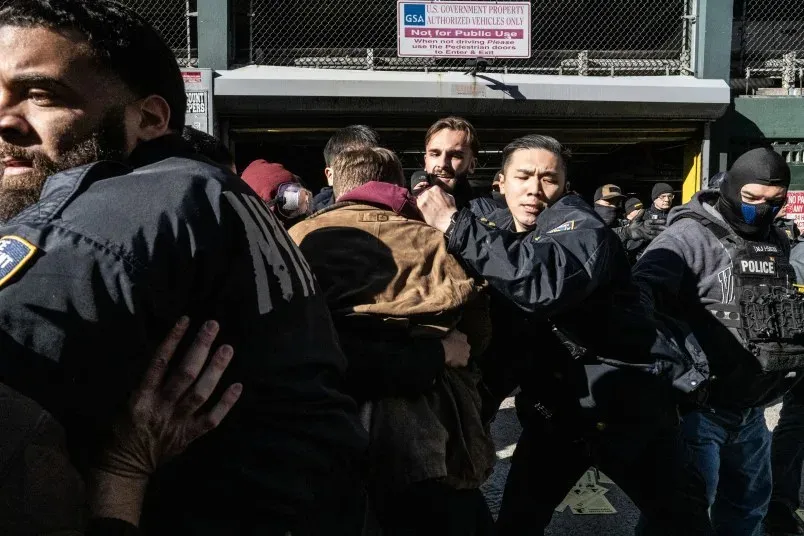
Jackie Bray, New York States emergency management chief, has been carefully weighing how quickly tensions could escalate. Tasked by Governor Kathy Hochul with preventing a scenario similar to federal interventions in Chicago or Los Angeles, Bray faces a delicate challenge: responding to highly visible federal immigration operations without provoking a direct confrontation.
The dilemma arises from operations designed more for public spectacle than traditional immigration enforcement, often aimed at suppressing protests rather than addressing immigration violations. In response, New York has adopted a dual strategy. Officials plan to oppose any National Guard deployment, but in the case of federal immigration officer surges, state and local police will act as intermediaries to protect both demonstrators and federal personnel, focusing on crowd control and de-escalation.
Early examples of this approach have already emerged. NYPD Commissioner Jessica Tisch was reportedly notified in advance of a high-profile immigration operation on Manhattans Canal Street and instructed officers to avoid the area. At a late November protest, local police placed barriers between ICE and Border Patrol officers and demonstrators in a parking garage, preventing confrontation. While some critics view this as overly accommodating, officials argue it prevents escalation that could justify broader federal deployments.
Governor Hochul instructed Bray over the summer to develop a plan to avoid the dramatic federal presence seen in other cities. The strategy draws inspiration from San Francisco, where local leaders successfully persuaded the Trump administration to cancel a planned deployment by highlighting potential economic harm.
New York officials have engaged in discussions with Wall Street figures and directly with federal leadership, seeking to maintain a cooperative yet cautious stance. These interactions have produced limited tension and opportunities for negotiation, such as the approval of licenses for new casinos, including one on a Trump-owned property.
The Trump administrations previous operations in Chicago and Los Angeles demonstrated a high level of aggression, framed publicly as immigration enforcement but often used to justify broader federal action. This pattern has prompted cities to share strategies and coordinate responses. In September, New York joined a conference call with officials from California, Illinois, and other states to prepare for potential federal escalations, emphasizing careful messaging and community coordination.
Bray has also consulted with counterparts in California and Illinois, noting the importance of early legal preparation, readiness for reduced federal communication, and identifying potential flashpoints, such as ICE detention facilities. The states proactive measures include selling an unused prison barge near Rikers Island, preventing federal authorities from utilizing it for detention purposes.
Attorney General Tish James office is preparing lawsuits to challenge any National Guard deployments, while community organizers are developing coordinated responses. Tactics range from reporting federal operations to mobilizing volunteers for protests, as well as mutual aid and support programs. Some activists are considering more confrontational approaches to disrupt federal agents while maintaining safety.
Bray dedicates roughly half of her time to planning for federal escalation and mitigating risks. She noted the extreme displays in Chicago, such as masked federal agents in fatigues and dramatic helicopter-assisted raids, which she described as unnecessary and provocative. While it is illegal to block federal enforcement, the main risk is uncontrolled escalation. By maintaining communication between local and federal law enforcement, New York aims to prevent violent confrontations while managing public demonstrations.
Police are there to ensure crowd safety, not to assist federal operations, Bray explained. Our goal is to control situations and avoid violence, even if that means preventing clashes that could be misinterpreted as cooperation with federal authorities. This is a significant test for all involved.
Author: Noah Whitman
Share

'DHS begins immigration sweeps in New Orleans under Operation Catahoula Crunch'
1 days ago 2 min read US

California introduces a portal for the public to report suspected ICE misconduct
1 days ago 2 min read BUSINESS

Homan: ICE focusing on Minneapolis, St. Paul due to criminal behavior
1 days ago 2 min read BUSINESS
Trump's Immigration Raids and Troop Deployments: A Detailed Analysis by City
1 days ago 4 min read POLITICS

Immigration operations initiated by Federal agents in New Orleans and Minneapolis
1 days ago 2 min read POLITICS

Trump's crackdown on all forms of immigration to the US is escalating
2 days ago 4 min read US

Trump: National Guard troops will be sent to New Orleans shortly.
2 days ago 2 min read POLITICS

DHS calls for Letitia James to address New York's refusal to comply with ICE detainers
2 days ago 3 min read US
Protesters decide to drop lawsuit against immigration officers' tactics in the Chicago area
2 days ago 3 min read US

Noem meets with Trump, suggests complete travel ban
3 days ago 2 min read POLITICS