

Democratic Leaders Continue to Misunderstand Populism
- Last update: 47 minutes ago
- 2 min read
- 927 Views
- POLITICS
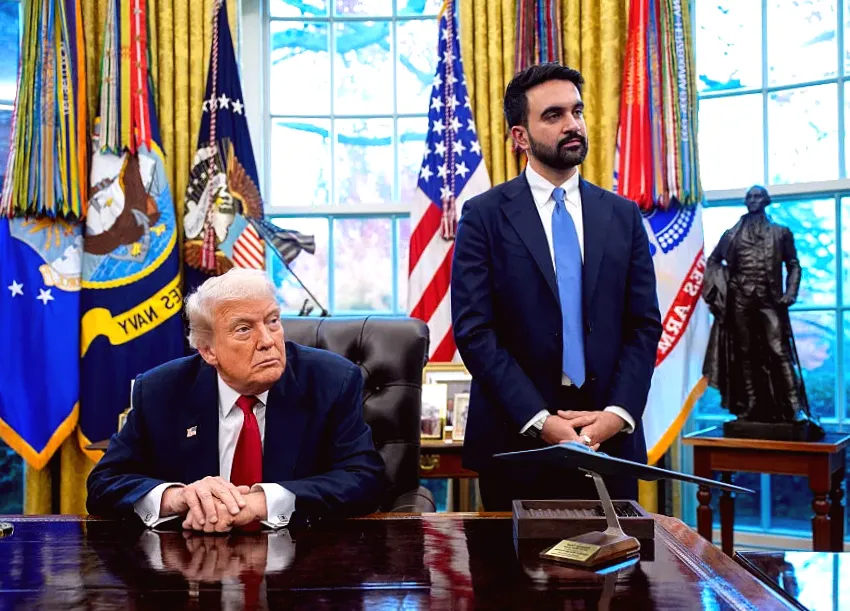
In a surprising political encounter, Republican President Donald Trump met with New Yorks incoming Democratic Socialist Mayor Zohran Mamdani in the Oval Office recently. On the surface, the two figures seem diametrically opposed, yet their interaction highlights a broader shift in American politics: the resurgence of populist sentiment.
Trumps version of populism has mostly been rhetorical, even as his policies have largely supported traditional conservative priorities, such as tax cuts for the wealthy and supply-side economic incentives. Meanwhile, Mamdani won the New York mayoral race by promoting economic fairness and addressing affordability through class-focused policies.
For many Democrats, this wave of populism is met with hesitation. The party has historically struggled to adopt platforms that might clash with influential financial and political interests. Since the 1990s, centrist and globalization-oriented policies have dominated Democratic strategies, guided by the successes of figures like Bill Clinton after years of Republican dominance.
Looking back, some political analysts suggest that the Democratic Party missed opportunities to channel grassroots energy, as seen in Jesse Jacksons presidential campaigns in the 1980s. Jackson focused on ordinary Americans facing economic hardship, highlighting systemic inequalities while building multiracial coalitions. His approach offered a blueprint for combining populist economic messaging with inclusive politics.
James Carville, a strategist from the Clinton era, recently argued that Democrats now need the most populist economic platform in decades, echoing themes from Jacksons campaigns. Jacksons approach aimed to unite marginalized groups with working-class voters, emphasizing shared economic and social goals.
Even in later years, as centrism reemerged with leaders like Joe Biden, Jacksons coalition-focused message remains instructive. Biden often emphasized alliances with established power structures and white voters, while Jackson sought to create a broad, multiracial majority that tied social justice to economic equity.
Today, a younger wave of progressive lawmakers, often referred to as "the Squad," continues this populist and coalition-building tradition. Jacksons influence can be traced through these movements, demonstrating that understanding populism requires more than rhetorical adoption; it involves uniting diverse groups around economic and social justice goals.
Reflecting on these historical campaigns reveals lessons not only for politicians but also for the media, which often underestimated Jacksons impact. His campaigns inspired a generation of journalists and reshaped the political landscape, leaving a lasting legacy on how populism and coalition politics can drive change in America.
Author: Ethan Caldwell
Share

Are Americans in favor of Trump's boat strikes? It's complex.
5 minutes ago 3 min read POLITICS

Trump Inserts Bizarre Election Falsehood into Christmas Tree Celebration
6 minutes ago 2 min read POLITICS

Trump to embark on campaign against the affordability 'hoax'
9 minutes ago 2 min read POLITICS

Protesters Condemn Targeting of Somali Community by Anti-Trump Supporters
9 minutes ago 3 min read POLITICS

Live broadcast: Trump oversees signing of peace deal between Rwanda and Congo
10 minutes ago 1 min read POLITICS

Trump dismisses White House ballroom architect amid increasing scrutiny
11 minutes ago 3 min read POLITICS

Melania Trump embraces the Christmas spirit as construction weariness fades
14 minutes ago 2 min read POLITICS

Leticia James' attempt to reindict fails; Fresh boat strike adds to Capitol tensions
16 minutes ago 3 min read POLITICS

Van Epps takes oath of office 2 days after winning Tennessee special election
19 minutes ago 2 min read POLITICS

Greene criticized by GOP for missing votes following sudden resignation
19 minutes ago 2 min read POLITICS