

Faith leaders in Chicago leading resistance against ICE crackdown
- Last update: 5 days ago
- 3 min read
- 37 Views
- POLITICS
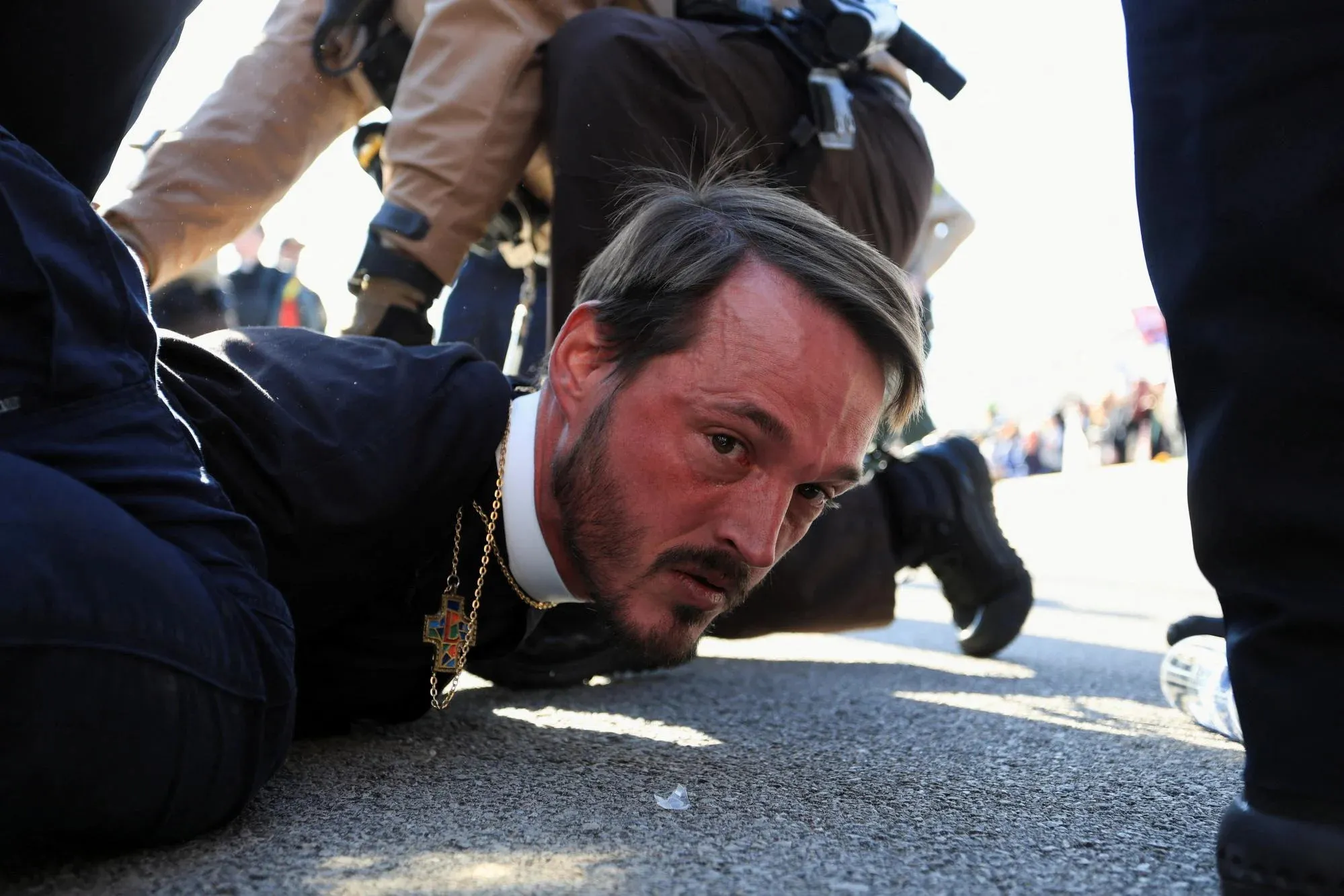
In recent weeks, Chicago has become a focal point of the Trump administrations harsh immigration policies. As of October 1, Immigration and Customs Enforcement (ICE) and the Department of Homeland Security (DHS) have detained 800 individuals, often employing aggressive measures, including body-slamming and teargas deployment in residential neighborhoods.
Amid the raids and arrests, which have fueled widespread fear, religious leaders have taken a proactive role, positioning themselves at the forefront of resistance. Faith leaders bring a deeply moral and prophetic perspective, said Rev. Ciera Bates-Chamberlain, executive director of Live Free Illinois, an organization that mobilizes Black churches around social justice causes in Chicago. While others may focus on economic or legal arguments, faith leaders consistently advocate for humanity and compassion.
One visible action of clergy has been organizing weekly Friday gatherings outside the Broadview processing center, where ICE detains individuals slated for deportation. Rev. David Black of Chicagos First Presbyterian Church explained that clergy often pray for those held inside, and sometimes use nonviolent strategies to prevent vans from transporting detainees. Black himself was hit in the head with pepper balls while praying outside the facility, and other faith leaders have faced arrests there.
Religious leaders have requested access to detainees to provide spiritual support and perform religious rituals, such as delivering communion, but DHS has denied these requests. In response, church groups have sued the administration, claiming violations of their First Amendment rights.
Chicago faith communities have also formed an interfaith coalition, Faith over Fear, which trains clergy to respond rapidly to immigration raids and maintain churches as safe spaces for immigrants. Following the administrations reversal of previous policies allowing arrests in churches, congregations have increasingly become centers for organizing, distributing food, hosting Know Your Rights sessions, and offering sanctuary to residents opposing federal enforcement.
Voices from the Front Lines
Rev. David Black, First Presbyterian Church of Chicago:
This period has been difficult, but it has also sparked remarkable grassroots organization. People are no longer waiting for the government; they are protecting each other and building deep networks of solidarity. Churches are central in this effort, providing space for community gatherings, training sessions, and essential resources. Congregations are offering radical hospitality, and faith is becoming vividly alive, reflecting timeless biblical principles in todays context.
Rami Nashashibi, Inner-City Muslim Action Network:
We are facing unprecedented conditions, with masked agents and military-style tactics creating fear and isolation. Faith communities must not remain silent or isolated; instead, we must unite and draw on our traditions to build power and resilience. Our efforts extend beyond immigrant communities, supporting all groups affected by state violence. Faith over Fear has enabled us to coordinate food distribution, shelter, and community support, sustaining a long-term movement for justice.
Rev. Ciera Bates-Chamberlain, Live Free Illinois:
The Faith over Fear coalition emerged to resist ICE and National Guard presence in our communities. Our focus is ensuring that all people are treated with dignity. Black churches have historically led on justice issues, and our work continues that legacy. Through food distribution and educational outreach, we challenge the militarization of our neighborhoods and combat divisive narratives about immigrants. Communities are increasingly aware that compassion, not coercion, is the answer.
Faith communities in Chicago have become crucial hubs for solidarity, organizing, and advocacy, providing spiritual and practical support to those facing deportation, while actively resisting aggressive federal enforcement tactics.
Author: Sophia Brooks
Share
US judge approves release of Epstein grand jury transcripts by Justice Department
28 seconds ago 2 min read POLITICS
Supreme Court to review Trump's challenge to birthright citizenship
2 minutes ago 3 min read POLITICS
Supreme Court to Finally Hear Birthright Citizenship Case
6 minutes ago 2 min read POLITICS

Blanche cautions attorneys who criticize the Justice Department
9 minutes ago 2 min read POLITICS

CENTCOM announces Syrian regime's successful prevention of Hezbollah weapons smuggling attempts
9 minutes ago 1 min read POLITICS

Florida Federal Judge Orders Unsealing of Grand Jury Transcripts and Records in Epstein Investigation
9 minutes ago 2 min read POLITICS
Florida judge approves DOJ's request to release Epstein grand jury transcripts
15 minutes ago 2 min read POLITICS

US Supreme Court to Determine Legality of Trump's Birthright Citizenship Order
20 minutes ago 2 min read POLITICS

Indiana GOP Moves Forward with Trump-Backed Congressional Map, Senate Outcome Uncertain
22 minutes ago 3 min read POLITICS

Conservative Commentators Celebrate Violence in the Caribbean
22 minutes ago 3 min read POLITICS