

Supreme Court to review Trump's challenge to birthright citizenship
- Last update: 59 minutes ago
- 3 min read
- 678 Views
- POLITICS
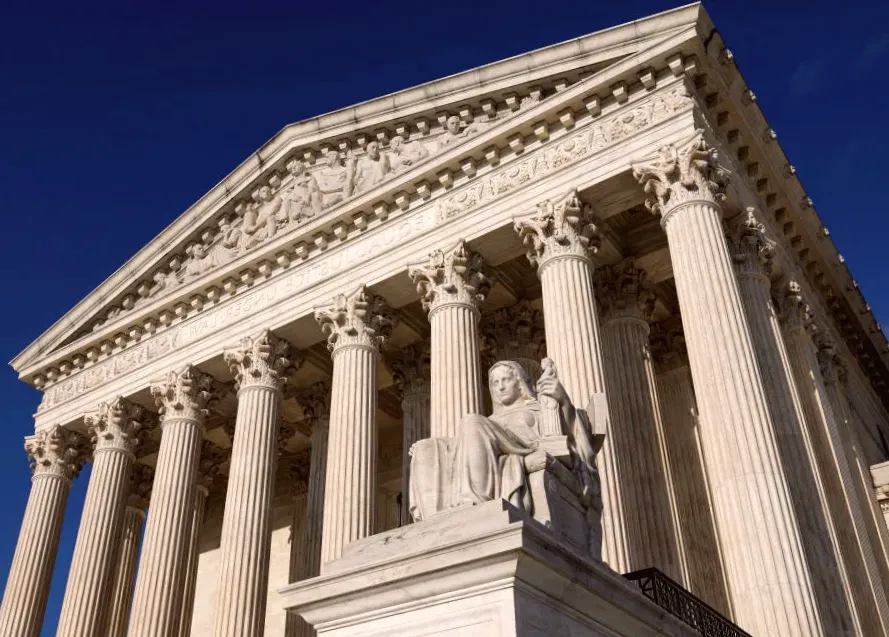
The Supreme Court has agreed to review a legal challenge to former President Donald Trumps executive order from January 20, which aimed to end automatic citizenship for nearly everyone born in the United States. Oral arguments are scheduled for early next year.
The order, which has never been enforced, proposed that children born in the U.S. would not automatically become citizens if their parents were in the country illegally or temporarily. Opponents of the order argue that it contradicts both the Constitution and longstanding Supreme Court rulings.
The announcement came in a brief list of orders following the justices private conference on Friday. The court will release a more detailed order list, including cases it declined to review, on Monday at 9:30 a.m. EST.
The United States is among roughly 30 countries, including Canada and Mexico, that grant automatic citizenship to almost all children born within their borders. Birthright citizenship was established in 1868 with the 14th Amendment, following the Civil War. The amendments citizenship clause states that [a]ll persons born or naturalized in the United States, and subject to the jurisdiction thereof, are citizens of the United States and of the State wherein they reside. This was intended to overturn the Supreme Courts 1857 Dred Scott v. Sandford decision, which denied citizenship to Black individuals whose ancestors were enslaved in the U.S.
In 1898, the Supreme Court affirmed birthright citizenship in the case of Wong Kim Ark, who was born in California to Chinese parents. By a 6-2 vote, the court rejected the governments claim that Wong Kim Ark was not a U.S. citizen, noting that the 14th Amendment enshrined the principle of citizenship by birth on U.S. soil. Chief Justice Melville Fuller dissented, arguing that Wong Kim Ark was not fully subject to U.S. jurisdiction because his parents owed allegiance to China and were barred from naturalization.
Trumps executive order prompted several lawsuits. Federal judges in Seattle and Maryland temporarily blocked enforcement, while immigrant rights groups and pregnant individuals continued challenging the order. Initially, the Trump administration asked the Supreme Court to consider the legality of nationwide injunctions issued by lower courts, rather than the executive order itself.
After the Supreme Courts June ruling limiting nationwide injunctions, lower courts continued to block the order. In Barbara v. Trump, a New Hampshire judge issued a preliminary injunction preventing the administration from denying citizenship to children born on or after February 20, 2025. In Trump v. Washington, the 9th Circuit ruled the order invalid, citing the 14th Amendments clear language.
The Trump administration petitioned the Supreme Court in September to review both cases, arguing that the 14th Amendment was intended to grant citizenship only to the children of newly freed slaves, not children of temporary or undocumented immigrants. They claimed that Wong Kim Ark does not apply, as the parents in that case were permanent residents.
Opponents of review countered that the Supreme Court has already clarified the meaning of the citizenship clause, and that federal laws passed in 1940 and 1952 reinforce this interpretation, making the executive order illegal.
On Friday, the Supreme Court granted review of the Barbara case. It appears that Trump v. Washington will remain on hold until a decision is reached in the New Hampshire case. Oral arguments are expected in spring, with a ruling likely by late June or early July.
Author: Natalie Monroe
Share
Supreme Court to determine if Trump can restrict birthright citizenship constitutional right
18 minutes ago 3 min read POLITICS

Supreme Court to determine if Trump can terminate birthright citizenship
38 minutes ago 3 min read POLITICS
US Supreme Court to consider Trump's attempt to eliminate birthright citizenship
45 minutes ago 2 min read POLITICS
Supreme Court to review Trump's challenge to birthright citizenship
59 minutes ago 3 min read POLITICS
Supreme Court to Finally Hear Birthright Citizenship Case
1 hours ago 2 min read POLITICS
US Supreme Court to Determine Legality of Trump's Birthright Citizenship Order
1 hours ago 2 min read POLITICS
Supreme Court to review Trump birthright citizenship case
1 hours ago 1 min read POLITICS
Supreme Court to consider case on Trump's birthright citizenship order
1 hours ago 2 min read POLITICS
Supreme Court to review Trump's attempt to block birthright citizenship
1 hours ago 3 min read POLITICS
Supreme Court to rule on legality of Trump's birthright citizenship order
1 hours ago 2 min read POLITICS