

Supreme Court to determine if Trump can terminate birthright citizenship
- Last update: 1 hours ago
- 3 min read
- 795 Views
- POLITICS
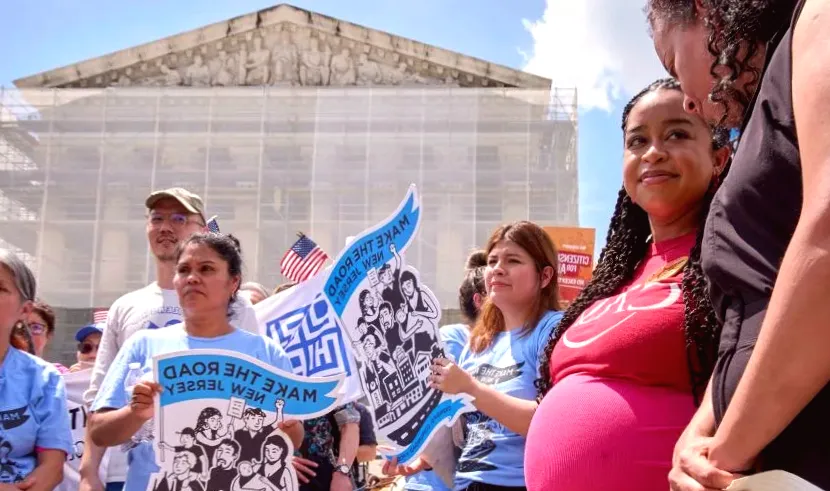
The Supreme Court has agreed to evaluate whether President Donald Trumps attempt to terminate birthright citizenship through an executive order aligns with the Constitution, giving the justices a chance to revisit a principle that has been largely settled since the 19th century.
By accepting the appeal, the court is set to examine the core legal arguments, after earlier this year avoiding the substance and siding with Trump only on procedural technicalities regarding how lower courts addressed the challenges to the policy.
Cecillia Wang, national legal director of the American Civil Liberties Union, stated that the organization anticipates the Supreme Court will finally resolve this issue once and for all. She noted that federal courts have consistently found Trumps executive order to contradict both constitutional provisions, including a landmark 1898 Supreme Court ruling, and federal law.
Despite the legal reasoning behind the Trump administrations appeal being widely viewed as unconventional, the case is expected to attract significant public attention during this Supreme Court term. A ruling in favor of Trump could overturn a long-established aspect of constitutional and immigration law, potentially complicating the documentation of citizenship for newborns in the United States.
The court is scheduled to hear arguments next year, with a decision expected by the end of June.
Steve Vladeck, CNN Supreme Court analyst and Georgetown University Law professor, remarked that Trumps executive order on birthright citizenship is among the administrations most legally questionable actions, conflicting with relevant statutes, the Fourteenth Amendment, and the Supreme Courts interpretation from 1898.
Two decades after the 14th Amendment was ratified in 1868, the Supreme Court in US v. Wong Kim Ark confirmed that individuals born in the U.S., even to immigrant parents, are entitled to citizenship, except in narrowly defined cases. The Trump administration, however, argued in its appeal that this precedent had been misinterpreted and carried destructive consequences.
Ending birthright citizenship has been a cornerstone of Trumps immigration agenda. Solicitor General D. John Sauer, representing the administration, told the Supreme Court that the citizenship clause was originally intended for the children of newly freed slaves, not for children born to temporary visitors or undocumented immigrants.
Earlier this year, the Supreme Court issued a ruling related to Trumps birthright order, but it focused on procedural limits regarding lower courts ability to block presidential policies, without addressing the constitutionality of the policy itself. Following that decision, lower courts quickly blocked the executive order through other mechanisms, preventing it from taking effect.
The ACLU and allied groups criticized the administrations case as being based on historical inaccuracies, selective citations, and policy preferences rather than sound legal reasoning.
The Supreme Court will hear the case originating from a New Hampshire judge who blocked the executive order for babies affected under a class-action lawsuit filed by the ACLU. The court did not take up a related case from the 9th Circuit, which had upheld a Seattle judges nationwide injunction against the policy, likely due to differences in which parties had standing to sue.
Trumps executive order, signed on January 20 and titled PROTECTING THE MEANING AND VALUE OF AMERICAN CITIZENSHIP, directed that the federal government would not issue documents recognizing U.S. citizenship to children born on U.S. soil to parents who were unlawfully present or temporarily in the country.
Author: Connor Blake
Share

Trump's executive order on birthright citizenship goes to the Supreme Court
11 minutes ago 2 min read POLITICS

Supreme Court Allows Trump to Move Closer to Ending Birthright Citizenship
20 minutes ago 2 min read POLITICS

Supreme Court to determine if Trump can restrict birthright citizenship constitutional right
40 minutes ago 3 min read POLITICS

US Supreme Court to consider Trump's attempt to eliminate birthright citizenship
1 hours ago 2 min read POLITICS

Supreme Court to review Trump's challenge to birthright citizenship
1 hours ago 3 min read POLITICS
Supreme Court to Finally Hear Birthright Citizenship Case
1 hours ago 2 min read POLITICS

US Supreme Court to Determine Legality of Trump's Birthright Citizenship Order
1 hours ago 2 min read POLITICS

Supreme Court to review Trump birthright citizenship case
1 hours ago 1 min read POLITICS
Supreme Court to consider case on Trump's birthright citizenship order
1 hours ago 2 min read POLITICS
Supreme Court to review Trump's attempt to block birthright citizenship
1 hours ago 3 min read POLITICS