

Supreme Court to rule on legality of Trump's birthright citizenship order
- Last update: 1 hours ago
- 2 min read
- 449 Views
- POLITICS
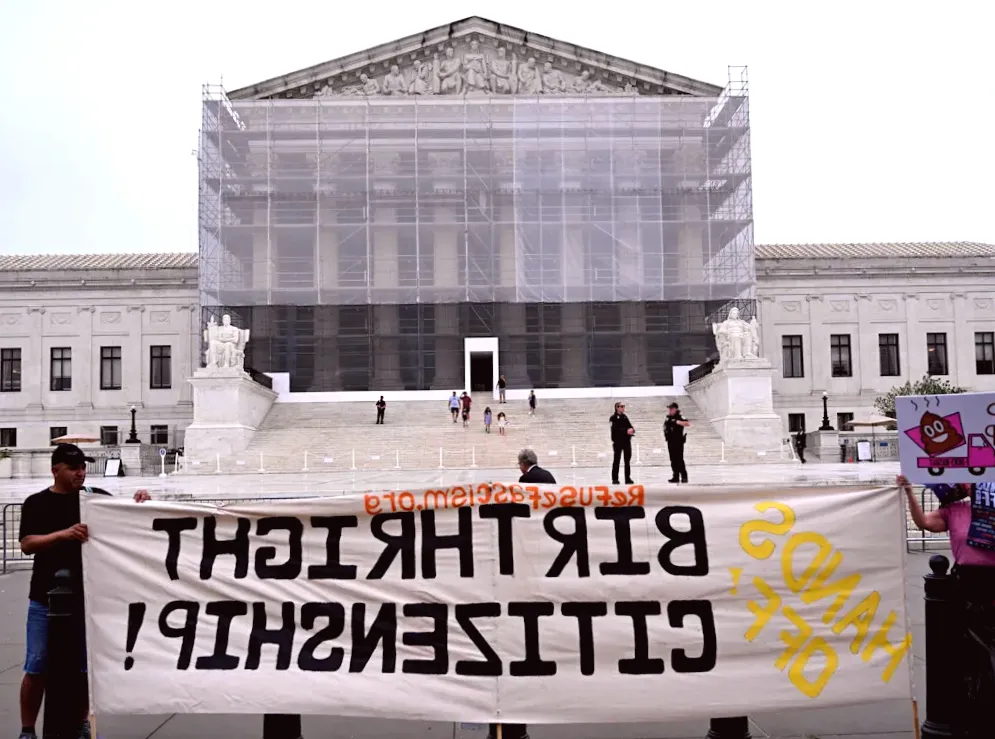
Washington The Supreme Court announced on Friday that it will examine the constitutionality of President Trump's executive order aimed at ending birthright citizenship, which currently grants automatic U.S. citizenship to anyone born in the country.
Introduced at the start of his second term, this order is the first part of Trump's immigration agenda to reach the Supreme Court for a full legal assessment. While the justices have previously intervened in challenges to other immigration policies, those interventions occurred at preliminary stages or through emergency appeals.
So far, no lower court has endorsed the Trump administration's reading of the 14th Amendments Citizenship Clause. However, the Justice Department contends that these rulings are mistaken, arguing that children born to temporary visitors or undocumented immigrants are not entitled to citizenship under the Constitution.
Trump signed the birthright citizenship order on his first day back in office. The measure states that children born in the U.S. to parents in the country illegally or temporarily would not automatically receive citizenship. This directive challenges over a century of interpretation of the 14th Amendment, which traditionally grants citizenship to anyone born on U.S. soil, except for children of diplomats or foreign military personnel. The Supreme Court previously addressed the issue in 1898, confirming that place of birth determines U.S. citizenship.
The order is central to Trumps immigration agenda but has not been implemented due to extensive legal opposition. Lower courts consistently blocked the policy shortly after it was announced. While the Supreme Court intervened in three early-stage cases, it did not initially rule on the core legality of the order. Instead, the justices addressed whether lower courts could issue nationwide injunctions against the policy. In a 6-3 ruling, the Supreme Court limited district judges authority to issue broad bans, though it left open avenues for class-action lawsuits and potential statewide relief.
Following that decision, parents of two children affected by the order, along with a pregnant woman, filed a lawsuit representing a national class challenging the directive. A federal district court in New Hampshire tentatively certified all children who would be denied birthright citizenship as a class, ruling that the order likely violates the Constitution and barring the administration from enforcing it.
The Supreme Court is now set to hear the case before the U.S. Court of Appeals for the 1st Circuit has issued a ruling.
Author: Connor Blake
Share
US Supreme Court to Determine Legality of Trump's Birthright Citizenship Order
20 minutes ago 2 min read POLITICS
Supreme Court to review Trump birthright citizenship case
23 minutes ago 1 min read POLITICS
Supreme Court to consider case on Trump's birthright citizenship order
31 minutes ago 2 min read POLITICS
Supreme Court to review Trump's attempt to block birthright citizenship
32 minutes ago 3 min read POLITICS
US Supreme Court to consider case questioning birthright citizenship
1 hours ago 1 min read POLITICS
The Supreme Court to Rule on Constitutionality of Trump's Birthright Citizenship Order
1 hours ago 3 min read POLITICS

Supreme Court to rule on Trump's attempt to restrict birthright citizenship
1 hours ago 3 min read POLITICS
Supreme Court to Consider Trump's Attempt to End Birthright Citizenship
1 hours ago 2 min read POLITICS

Supreme Court to consider Trump's controversial policy on birthright citizenship
1 hours ago 3 min read POLITICS

Justice Department urges Supreme Court to prevent immigration judges from filing free speech lawsuit
1 hours ago 3 min read POLITICS