

Supreme Court to Consider Trump's Attempt to End Birthright Citizenship
- Last update: 1 hours ago
- 2 min read
- 356 Views
- POLITICS
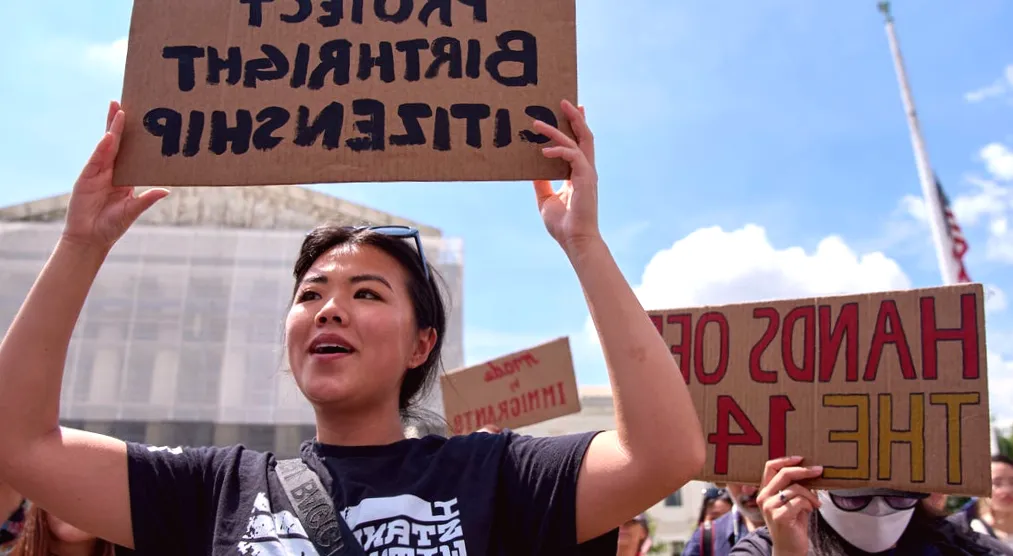
WASHINGTON The Supreme Court has announced it will hear arguments regarding the legality of former President Donald Trumps controversial executive order aimed at eliminating birthright citizenship for children born in the U.S. to parents who are in the country illegally or temporarily.
Trump issued the order on his first day in office, challenging the long-established interpretation of the 14th Amendment, which guarantees citizenship to all persons born or naturalized in the United States, and subject to the jurisdiction thereof.
Since its issuance, the order has faced repeated judicial setbacks. Lower courts frequently deemed it unconstitutional or likely unconstitutional, and it was blocked at least four times by district courts. An appeals court also struck it down, preventing it from taking effect nationwide.
Following these obstacles, the administration shifted strategy. In March, Trump requested that the Supreme Court not directly rule on the merits of the birthright citizenship order but instead limit the ability of lower courts to issue nationwide injunctions. The administration argued that only individuals directly affected in a specific jurisdiction should be allowed to sue.
The Supreme Court largely sided with this approach, restricting the scope of nationwide injunctions. Some lawsuits challenging the order are still allowed to continue, but the ruling significantly curtailed the publics ability to contest government actions on this matter. Trump hailed the decision as a major victory.
The executive order specified that any child born in the United States to an undocumented parent 30 days after January 20, 2025, would not automatically acquire U.S. citizenship. This included children of women in the country unlawfully and children whose mothers are in the U.S. on temporary legal status, such as a visa, if the father is not a U.S. citizen or lawful permanent resident at the time of birth.
This story is ongoing and will be updated as new developments occur.
Author: Sophia Brooks
Share
US Supreme Court to Determine Legality of Trump's Birthright Citizenship Order
20 minutes ago 2 min read POLITICS
Supreme Court to review Trump birthright citizenship case
23 minutes ago 1 min read POLITICS
Supreme Court to consider case on Trump's birthright citizenship order
31 minutes ago 2 min read POLITICS
Supreme Court to review Trump's attempt to block birthright citizenship
32 minutes ago 3 min read POLITICS
Supreme Court to rule on legality of Trump's birthright citizenship order
1 hours ago 2 min read POLITICS
US Supreme Court to consider case questioning birthright citizenship
1 hours ago 1 min read POLITICS
The Supreme Court to Rule on Constitutionality of Trump's Birthright Citizenship Order
1 hours ago 3 min read POLITICS
Supreme Court to rule on Trump's attempt to restrict birthright citizenship
1 hours ago 3 min read POLITICS

Supreme Court to consider Trump's controversial policy on birthright citizenship
1 hours ago 3 min read POLITICS

Justice Department urges Supreme Court to prevent immigration judges from filing free speech lawsuit
1 hours ago 3 min read POLITICS