

Indiana House Republicans move forward with 9-0 congressional map, sending proposal to state Senate
- Last update: 1 hours ago
- 2 min read
- 278 Views
- POLITICS
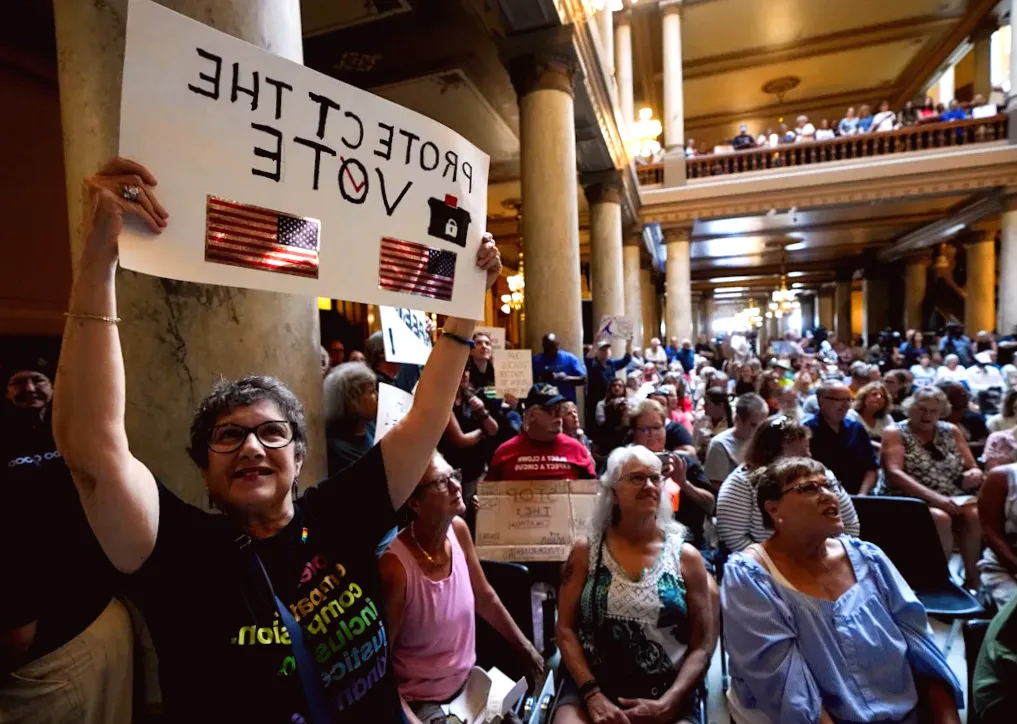
On Friday, the Indiana House of Representatives approved a new congressional district plan designed to favor Republicans in all nine U.S. House districts. The measure passed with a 57-41 vote and now heads to the Republican-controlled state Senate, which will reconvene on December 8.
Several Republican senators have expressed opposition to the redistricting, though it is uncertain whether their resistance will be sufficient to block the legislation. State Senator Kyle Walker, one of the GOP dissenters, recently announced he will not seek reelection. Other opponents, Senators Eric Bassler and Greg Walker, are also leaving office and have voiced objections to the plan.
The redistricting debate in Indiana has been fraught with tension, including reports of bomb threats and swatting incidents targeting lawmakers. Republican State Senator Jean Leising, who opposes the plan, disclosed she received a pipe bomb threat and attributed it to national political pressures, asserting that she would not back down.
The bill advanced through the House elections committee with eight Republicans supporting it, while one Republican joined all four Democrats in opposition. For months, the White House had urged Indiana, a state Donald Trump won by 19 points, to redraw its congressional map to challenge the two Democratic incumbents. Trump, Vice President JD Vance, and other administration officials met with state Republicans to advocate for the change.
Governor Mike Braun called for a special legislative session in November to address redistricting, but Senate President Rodric Bray indicated there were not enough votes. The legislature then agreed to resume in January during the regular session. In November, Bray acknowledged that mid-cycle redistricting had created significant controversy within the state.
Trump and his allies publicly pressured Republican holdouts, threatening primary challenges against dissenting lawmakers. Across the nation, both parties have increasingly engaged in mid-decade redistrictinga practice previously rare. Texas, for example, redrew its maps under a Republican legislature during the Bush administration, a move later upheld by the Supreme Court. Similar efforts are underway or being considered in states including California, Missouri, North Carolina, and Maryland, prompting legal challenges in some cases.
Most recently, the Supreme Court permitted Texas to temporarily implement its new congressional map after a lower court ruled it was racially gerrymandered.
Author: Grace Ellison
Share

Indiana GOP Moves Forward with Trump-Backed Congressional Map, Senate Outcome Uncertain
22 minutes ago 3 min read POLITICS

Indiana House Republicans Approve Redistricting Map Eliminating Democratic Representation
23 minutes ago 2 min read POLITICS

Indiana House Passes Gerrymandered Map Amid Trump's Threats, Headed to Senate
29 minutes ago 2 min read POLITICS

Indiana House initiates a confrontation between Trump and Republican state senators regarding redistricting
37 minutes ago 3 min read POLITICS

Indiana House supports redistricting plan influenced by pressure from Trump
57 minutes ago 3 min read POLITICS

Indiana Senate Republicans prepare for high-stakes battle over Trump-supported map
1 hours ago 3 min read POLITICS

PACs aligned with Trump focus on Indiana Republicans obstructing redistricting efforts
3 hours ago 1 min read POLITICS

States' Unprecedented Redistricting Efforts Being Tracked
4 hours ago 2 min read POLITICS

US Supreme Court reinstates Texas voting map favoring Republicans
12 hours ago 3 min read POLITICS

Supreme Court divided on allowing Texas to use new congressional maps
13 hours ago 3 min read POLITICS