

Indiana House supports redistricting plan influenced by pressure from Trump
- Last update: 1 hours ago
- 3 min read
- 156 Views
- POLITICS
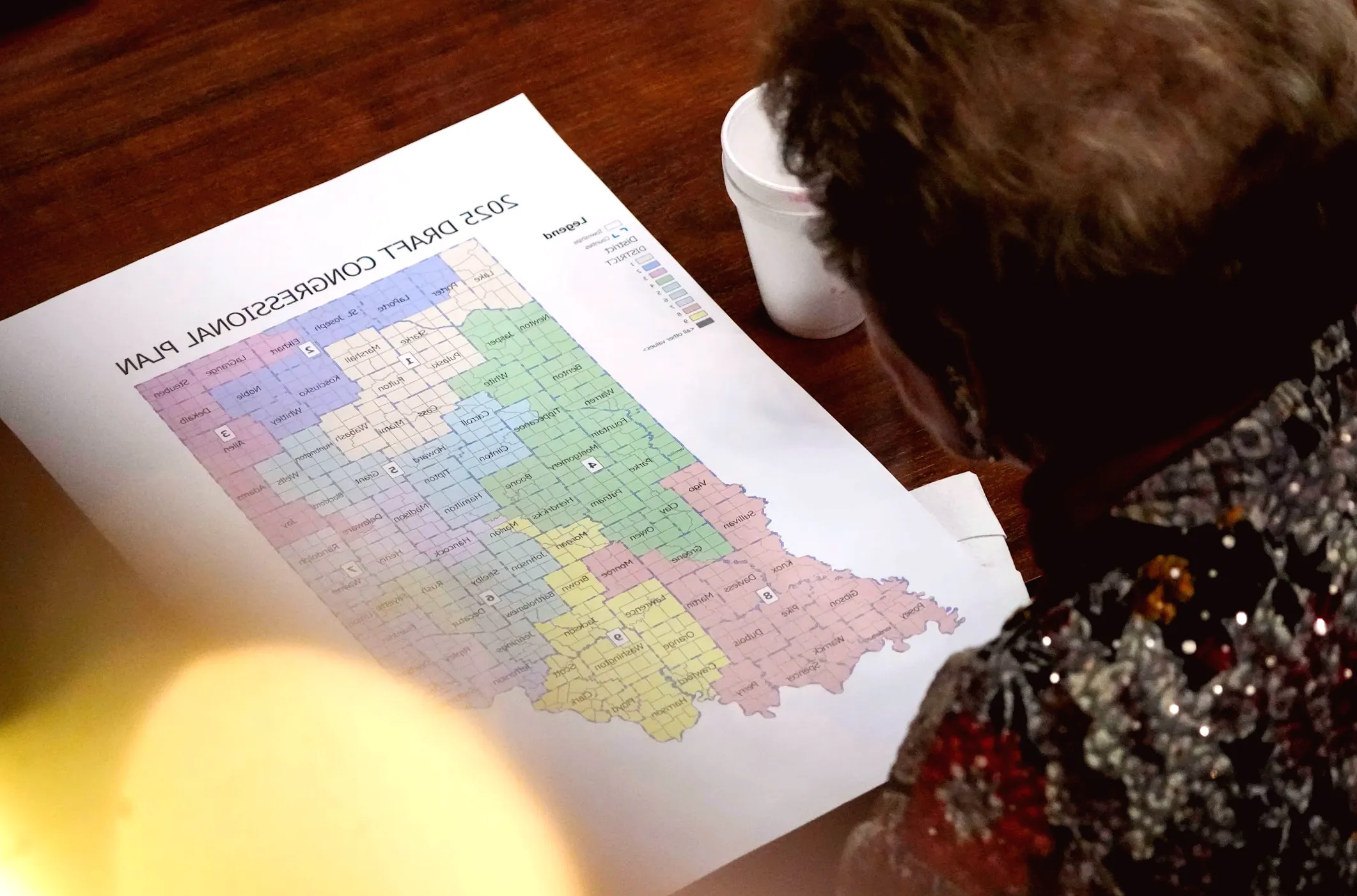
On December 5, the Indiana House of Representatives approved a mid-decade redistricting bill with a 57-41 vote, marking a key step toward reshaping the state's congressional districts. The proposal was crafted in response to pressure from former President Donald Trump, both direct and indirect, after months of advocacy. A group of twelve Republicans joined Democrats in opposing the measure.
The legislation now moves to the Indiana Senate, where its approval remains uncertain. The Senate is divided over the idea of redistricting mid-decade to increase Republican advantages ahead of the 2026 midterm elections. Senate President Pro Tempore Rodric Bray initially resisted convening for this purpose but eventually agreed to meet next week.
Indiana had previously resisted redistricting, despite intense pressure, including visits from Vice President JD Vance, campaigns by little-known organizations, threats of primary challenges from Trump, and even threats of violence toward lawmakers. House Democrats attempted to block the vote by denying quorum and challenging the sessions legitimacy, but the measure passed regardless.
During debate, some Democrats expressed frustration and concern over the partisan shift. Representative Matt Pierce of Bloomington reflected on friendships across the aisle and how the political climate has changed, noting, Ive never once got the sense from the other side of the aisle that basically you really shouldnt even exist. Why do we have to do it? We know it doesnt really make sense.
Republicans largely defended the bill. Rep. Ben Smaltz, the bills author, and House Speaker Todd Huston argued the measure was necessary for political strategy and national Republican interests. Smaltz emphasized that the redistricting was intended to strengthen party performance.
Key Features of the Bill
The new congressional map would significantly alter district boundaries, breaking up urban areas and combining them with rural regions. Under the proposal, Indiana would have nine Republican-leaning districts and no Democratic-leaning districts. Currently, Democrats hold two seats in Marion County and Northwest Indiana.
The plan splits Marion County into four districts, raising concerns that it could dilute the voting power of non-White residents. According to PlanScore, Democratic chances in the 1st and 7th Congressional Districts, currently at 78% and 99%, would drop to 9% and less than 1% under the proposed map.
House Bill 1032 also includes a provision preventing courts from temporarily blocking the new map if lawsuits arise, although permanent injunctions remain possible.
Political and Community Reactions
The bill underwent more than five hours of committee discussion on December 2, with most testimony opposing the changes. Only one Republican, Rep. Tim Yocum of Clinton, joined Democrats in opposing it at the committee stage. Democrats attempted fifteen amendments on December 4, including public hearings in each district and transparency regarding the maps creators, but all were rejected.
Republicans defended the plan as a response to national political pressures, while Democrats warned that it threatens representation for Black and Brown communities. Rep. Vanessa Summers of Indianapolis called it a direct threat to representation for our Black and Brown communities.
House Speaker Todd Huston framed the effort as part of a broader national Republican strategy, stating, These maps were generated to create some advantage for Republicans. We operate not in a vacuum, but across the national environment.
Author: Riley Thompson
Share

Indiana GOP Moves Forward with Trump-Backed Congressional Map, Senate Outcome Uncertain
41 minutes ago 3 min read POLITICS

Indiana House Republicans Approve Redistricting Map Eliminating Democratic Representation
42 minutes ago 2 min read POLITICS

Indiana House Passes Gerrymandered Map Amid Trump's Threats, Headed to Senate
48 minutes ago 2 min read POLITICS

Indiana House initiates a confrontation between Trump and Republican state senators regarding redistricting
56 minutes ago 3 min read POLITICS

Indiana House Republicans move forward with 9-0 congressional map, sending proposal to state Senate
1 hours ago 2 min read POLITICS

Indiana Senate Republicans prepare for high-stakes battle over Trump-supported map
2 hours ago 3 min read POLITICS

PACs aligned with Trump focus on Indiana Republicans obstructing redistricting efforts
4 hours ago 1 min read POLITICS

States' Unprecedented Redistricting Efforts Being Tracked
4 hours ago 2 min read POLITICS

Texas receives an updated map
8 hours ago 2 min read POLITICS

US Supreme Court reinstates Texas voting map favoring Republicans
12 hours ago 3 min read POLITICS