

Just the beginning: Hong Kong residents outraged over corruption and safety failures after deadly fire
- Last update: 3 days ago
- 4 min read
- 19 Views
- POLITICS
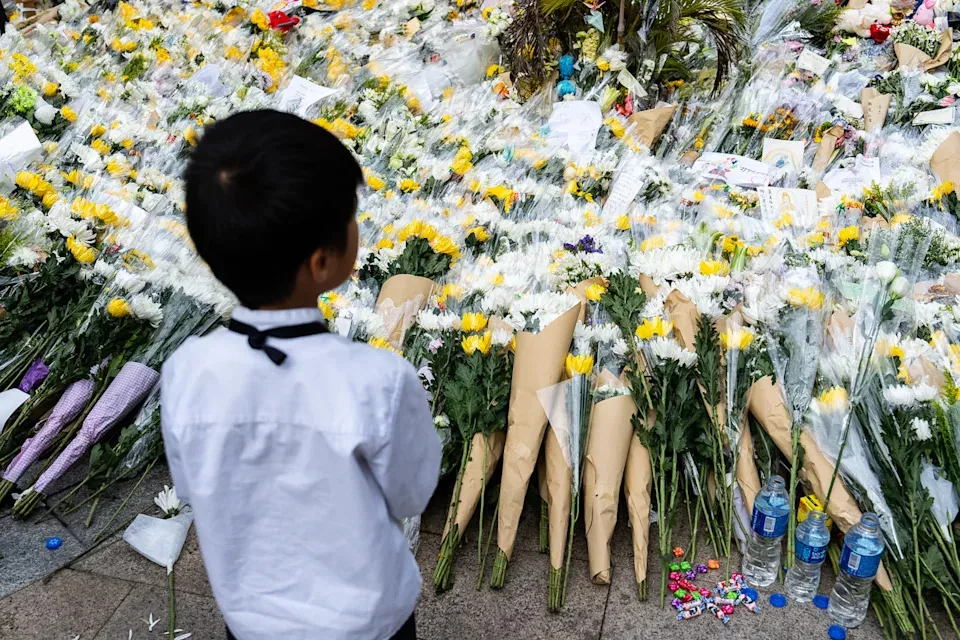
As Hong Kong mourns the catastrophic high-rise fire that claimed at least 151 lives, questions are intensifying over responsibility for the citys most fatal blaze in decades. Public anger is growing over suspected construction fraud, neglected building safety protocols, and inadequate government supervision.
Analysts warn the tragedy may signal deeper systemic failures in a city dominated by towering residential blocks. Concerns have surged after allegations of bid-rigging and the use of dangerous materials in renovation projects across various public housing estates, raising fears that similar disasters could occur elsewhere.
Authorities have so far detained 14 individuals in connection with a large-scale renovation project at Wang Fuk Court, where Wednesdays fire began. Among those arrested are scaffolding subcontractors and executives from both a construction firm and a consultancy, many under suspicion of manslaughter and severe negligence.
Steve Tsang, director of the SOAS China Institute in London, questioned whether the problems uncovered at Wang Fuk Court might be widespread across the citys housing developments.
Officials initially stated that fire-safety tests confirmed the green netting on the bamboo scaffolding met regulatory standards. However, highly flammable foam boards placed around windows during repairs combined with strong winds enabled the flames to race rapidly across seven of the estates eight towers. Later inspections revealed that seven of twenty additional samples taken from the site did not meet required safety standards.
Investigators say some contractors cut corners by substituting cheaper, inferior netting after a recent typhoon damaged parts of the original installation. Residents also reported that several fire alarms failed to activate when the blaze erupted.
This has opened a Pandoras box, said John Burns, honorary professor of politics and public administration at the University of Hong Kong, noting that long-ignored issues involving corruption, collusion, and regulatory negligence are now surfacing.
As a precaution, authorities halted renovation work at 28 additional projects overseen by the same contractor. Workers began removing foam panels and netting from other sites amid rising fears among high-rise residents. Tsang emphasized that the netting issue extends far beyond a single housing estate.
Documents reviewed by the Associated Press show residents of Wang Fuk Court had already raised concerns about construction materials used in the repairs. The Labor Department said it had verified the quality certificates for the netting and conducted 16 inspections since last year, including one roughly a week before the fire. Contractors had been repeatedly reminded to comply with fire safety standards.
Critics argue that public frustration is focused less on specific materials and more on the governments failure to provide adequate oversight. In response, officials have stressed the actions taken against contractors and the support offered to victims.
Under public pressure, Chief Executive John Lee announced the formation of an independent inquiry committee led by a judge. When asked if he should be held personally accountable, he reaffirmed the need for comprehensive reform and vowed to fix systemic gaps in the building renovation process.
Ronny Tong, a senior adviser to Lee, dismissed suggestions of weak enforcement, arguing that intentional deception by contractorsnot regulatorswas to blame.
Activists and industry insiders claim that bid-rigging, inflated costs, and opaque contracting structures are widespread in Hong Kong. Multi-tier subcontracting, they say, frequently results in poor-quality work and limited oversight. This is just the tip of an iceberg, said Jason Poon, a contractor-turned-advocate known for uncovering construction scandals.
The political context surrounding the tragedy has become increasingly sensitive. Since the imposition of Beijings national security law in 2020, public dissent in Hong Kong has sharply diminished. Authorities moved quickly to silence allegations of government negligence: local media reported that national security police arrested the organizer of a petition demanding official accountability.
The Office for Safeguarding National Security warned that the law would be used against anyone accused of exploiting the tragedy to incite hostility toward the authorities.
Political analysts say the disaster could dampen voter turnout in the upcoming December 7 Legislative Council election a metric closely watched by Beijing as a sign of public approval for its patriots-only political framework.
The real issue, said Burns, is whether the government cares about public opinion. Ignoring it now would be a serious mistake.
Author: Sophia Brooks
Share

Justice Department urges Supreme Court to prevent immigration judges from filing free speech lawsuit
35 seconds ago 3 min read POLITICS

The Supreme Court has made gerrymandering almost impossible to challenge
4 minutes ago 4 min read POLITICS

What is known about the suspected pipe bomber before the 2021 US Capitol riot
4 minutes ago 3 min read POLITICS

CNN captures someone laughing as Trump receives brand new prize on hot mic
6 minutes ago 2 min read POLITICS

Trump receives first ever Fifa peace prize during World Cup draw in Washington
9 minutes ago 3 min read POLITICS

Trump Describes Receiving 'FIFA Peace Prize' as 'One of the Greatest Honors of My Life'
9 minutes ago 2 min read POLITICS

Trump boasts of $20 trillion in new U.S. investments, but figures don't align
12 minutes ago 4 min read POLITICS

World Cup 2026: Donald Trump Receives Peace Prize
15 minutes ago 1 min read POLITICS

Bondi lays out options for prosecuting antifa, left-leaning groups after Trump's call
18 minutes ago 3 min read POLITICS

Trump celebrates winning FIFA's new peace prize with a big smile
22 minutes ago 2 min read POLITICS