

The Supreme Court Will Eliminate Independent Agencies
- Last update: 58 minutes ago
- 3 min read
- 636 Views
- POLITICS
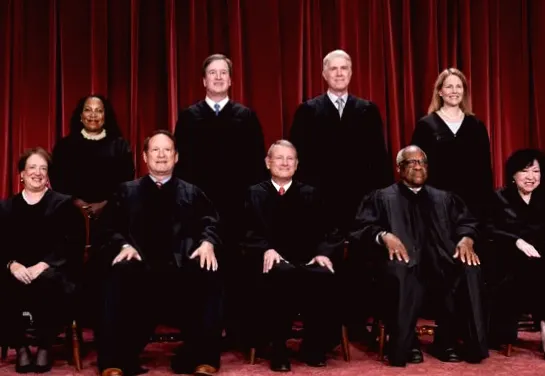
A major case set to be heard by the Supreme Court this Monday, Trump v. Slaughter, could dramatically shift the balance of power between the president and Congress. The case involves President Donald Trumps push to gain the authority to remove officials from independent agencies without restrictions.
The lawsuit stems from Trumps removal of numerous Democratic appointees from independent federal agencies. By law, these officials are generally protected from dismissal except for cause, a safeguard established in the 1935 precedent Humphreys Executor. These protections were designed to ensure that agencies with quasi-legislative or quasi-judicial functions could operate independently of the presidents influence.
The focal point of the case is Rebecca Slaughter, a former Federal Trade Commission member who sued the administration after her termination. Lower courts sided with her, ruling that she could not be fired without cause. However, the Supreme Court allowed her removal while hearing the case, signaling a potential overturn of the Humphrey precedent. If successful, this would eliminate the independence of agencies such as the FTC, the Federal Reserve, the FCC, the FEC, the NTSB, the SEC, and the Nuclear Regulatory Commission.
Without these protections, presidents could compel agencies to act in alignment with their political goals, affecting everything from regulatory enforcement and merger approvals to broadcasting licenses and interest rates. The implications for public oversight and economic stability are profound.
This legal battle is rooted in the unitary executive theory, which asserts that the president has complete control over the executive branch. The Trump administrations argument in Slaughter claims that the Constitution vests executive Power in a President, meaning he must have total authority to ensure laws are executed. The Supreme Court has previously supported elements of this theory in cases like Seila Law v. CFPB (2020) and Trump v. U.S. (2024), which curtailed agency independence and expanded presidential immunity.
The conservative legal movement developed the unitary executive theory during Reagans administration, aiming to increase presidential control over agencies historically led by Democrats. Early attempts, such as Reagans challenge in Morrison v. Olson (1988), failed, but the theory gained traction through dissenting opinions that emphasized unchecked executive authority.
Historians and legal scholars argue that the theory misinterprets historical precedent. For instance, James Madison and early congressional actions supported the independence of certain offices to prevent undue executive influence. Cases like the creation of the Comptroller of the Treasury and other early commissions demonstrate that Congress historically limited presidential removal power for specific roles.
The most pressing question remains the future of the Federal Reserve. As an agency with enormous influence over the economy, control by a president could destabilize markets worldwide. Previous Supreme Court rulings have recognized the Federal Reserves unique quasi-private structure and limited presidential authority, highlighting the tension between agency independence and executive power.
Regardless of these nuances, the outcome of Trump v. Slaughter is widely anticipated to favor the president, effectively ending for-cause protections for independent agencies. This would mark a significant expansion of presidential authority and further empower Trumps administration to dictate government operations without traditional checks and balances.
Author: Caleb Jennings
Share

Trump's Judges Decide He Has the Authority to Dismiss Anyone at Any Time
1 hours ago 2 min read POLITICS

US court rules in favor of Trump's authority to dismiss Democrats from two federal labor boards
2 hours ago 2 min read POLITICS
Trump Warns of 'Complete and Total OBLITERATION' if Democrats Take Power
3 hours ago 2 min read POLITICS
Understanding the who and what of presidential power
3 hours ago 3 min read POLITICS
Disagreement Among FBI Officials on Investigation Into Democratic Veterans for 'Seditious Conspiracy'
6 hours ago 2 min read POLITICS
Supreme Court to consider Trump's dismissal of FTC member in examination of presidential authority
7 hours ago 3 min read POLITICS
Roberts and Kagan get ready for another clash over executive authority
8 hours ago 3 min read POLITICS

Maurene Comey's legal action could face an obstacle
9 hours ago 2 min read ENTERTAINMENT

SCOTUS news for Thursday, December 4
1 days ago 3 min read POLITICS
Trump uses executive privilege to block Jan. 6 lawsuit
1 days ago 3 min read POLITICS