

Timeline of US Military's Increasing Presence near Venezuela and Operations against Suspected Drug Vessels
- Last update: 57 minutes ago
- 3 min read
- 693 Views
- POLITICS
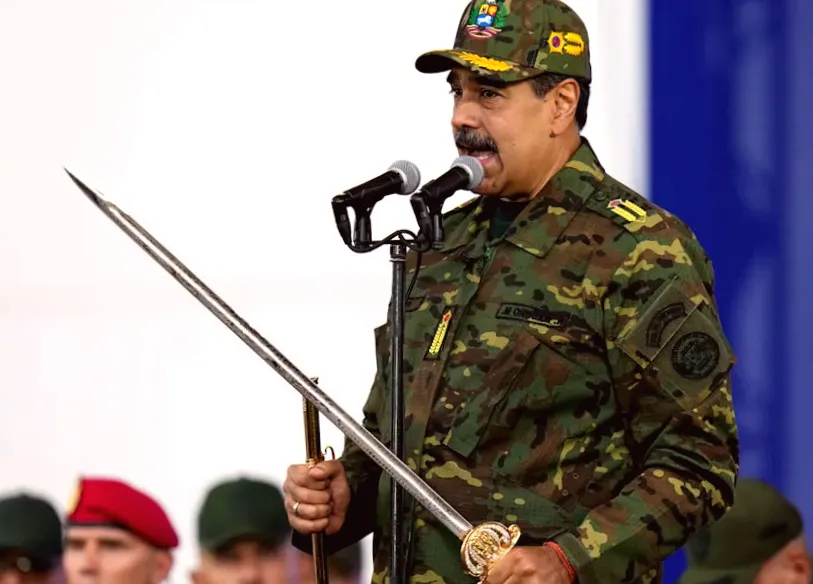
WASHINGTON (AP) Under the Trump administration, the U.S. has intensified its naval presence near Venezuela, deploying a fleet that includes its largest aircraft carrier. This buildup accompanies repeated strikes on small vessels accused of trafficking narcotics for criminal organizations.
The military presence, the most substantial U.S. deployment in Latin America in decades, has sparked debates over potential operational objectives. President Donald Trump has hinted at upcoming land actions but has provided no specific details. Venezuelan President Nicols Maduro contends the true aim is to force him from power.
The U.S. reports that its forces have killed at least 87 individuals in 22 confirmed strikes in the Caribbean Sea and eastern Pacific since early September. The administration frames these operations as part of an armed conflict against drug cartels and claims they are necessary to curb narcotics flowing into the United States. Congress has questioned the legal basis of these actions due to the lack of a formal war declaration.
Amid controversy, reports indicate that the initial strike included a follow-up attack that targeted survivors. Congressional inquiries are ongoing, with Navy leadership called in for classified briefings.
Key Developments and Military Actions
- Trump signs an executive order allowing certain criminal groups, including Venezuelas Tren de Aragua gang, to be labeled as foreign terrorist organizations. U.S. intelligence disputes claims that Maduros government collaborates with these gangs in trafficking operations.
- The administration formally designates eight Latin American crime groups as terrorist organizations, a label typically reserved for politically motivated militant groups.
- The U.S. deploys three guided-missile destroyers, followed by amphibious assault ships, totaling roughly 6,000 personnel and various aircraft. F-35 jets are stationed in Puerto Rico, and a submarine carrying cruise missiles patrols South American waters.
- The first strike targets a vessel allegedly operated by Tren de Aragua. All 11 aboard were killed. Democratic senators question the legal authority for such attacks.
- Subsequent strikes continue, killing several individuals on vessels claimed to be involved in drug trafficking. The administration releases limited evidence of the narcotics involved, raising concerns among lawmakers and human rights groups.
- Trump declares drug cartels unlawful combatants and asserts the U.S. is in an armed conflict with them, an extraordinary expansion of presidential war powers.
- Defense Secretary Pete Hegseth oversees multiple strikes, reporting dozens of deaths across several operations. The USS Gerald R. Ford aircraft carrier is deployed, increasing U.S. military firepower in the region.
- Some survivors from attacks are repatriated to their home countries to face prosecution, avoiding U.S. legal complications.
- Congressional oversight struggles with limited transparency, prompting calls for hearings and investigations into executive authority and operational legality.
- The U.N. human rights chief calls for an investigation into the strikes, urging measures to prevent extrajudicial killings.
- Venezuela responds with large-scale troop mobilizations and military exercises, asserting the strength and readiness of its forces.
- The U.S. militarys Operation Southern Spear reaches a peak with around 12,000 personnel on nearly a dozen ships in the Caribbean.
- Lawmakers continue reviewing the operations, including follow-up strikes that targeted survivors of initial attacks, raising ethical and legal questions.
This series of military actions represents a significant escalation of U.S. involvement in Latin America, drawing scrutiny from Congress, international organizations, and human rights advocates while intensifying tensions with Venezuela.
Author: Riley Thompson
Share
Timeline of US Military's Increasing Presence near Venezuela and Operations against Suspected Drug Vessels
57 minutes ago 3 min read POLITICS

Unleashing ‘Pandora’s box’: The consequences of a US attack on Venezuela
10 hours ago 3 min read WORLD

Are US attacks on drug boats in Latin America legal and what do we know about them?
10 hours ago 3 min read WORLD

Rand Paul warns that Trump boat strikes could be a precursor to an invasion of Venezuela.
11 hours ago 2 min read POLITICS
US military targets and kills four individuals in recent boat strike in the Caribbean
14 hours ago 1 min read POLITICS

Pentagon reports 4 deaths in recent attack on suspected drug vessel
15 hours ago 2 min read WORLD
Outrage sparked by killing of survivors amidst shaky legality of entire US 'drug boat' war
1 days ago 3 min read POLITICS

US lawmakers demand vote on war powers following Trump's promise of imminent attack on Venezuela
1 days ago 2 min read POLITICS

Trump and Hegseth's comments following the Sept. 2 attack on a suspected drug-smuggling vessel
2 days ago 3 min read WORLD
Understanding the reasons for the tensions between the US and Venezuela and Trump's warning of potential military action
2 days ago 3 min read POLITICS