

Trump's Speculated Theory About Physical Activity Sparks Discussion. Here's What Professionals Believe.
- Last update: 1 hours ago
- 2 min read
- 282 Views
- POLITICS
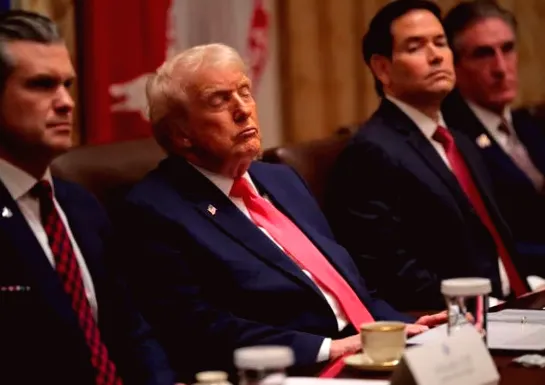
President Donald Trump has recently drawn attention for his unconventional ideas about physical activity. Observers noted the 79-year-old president nodding off during a recent Cabinet meeting, prompting renewed conversation about his energy levels and lifestyle habits.
Despite frequent public appearances, Trump reportedly avoids regular exercise due to a long-held belief that humans are born with a limited reserve of energy, which can be depleted through strenuous activity. This perspective likens the body to a battery, where exertion diminishes the finite supply of vitality. While Trump has never publicly explained this theory in detail, it has been documented in profiles and biographies dating back to his younger years.
Trumps approach to fitness mostly involves golf and minimal physical activity, with standing for speeches cited as his primary form of exertion. He has expressed skepticism about conventional exercise, suggesting it may lead to joint issues and long-term physical problems.
Experts strongly dispute this view. Christine Persaud, a sports medicine physician, explains that exercise does not deplete energy reserves but rather enhances the bodys ability to generate and use energy efficiently. Regular physical activity improves cardiovascular, metabolic, and musculoskeletal health, increasing longevity and reducing the risk of chronic illness.
Physical trainers also highlight that exercise boosts resilience and energy. Katie Gould, a strength coach, notes that properly dosed movement strengthens muscles, improves balance, and supports overall vitality, especially in older adults. Avoiding activity, she emphasizes, is more detrimental than overexertion.
Historical parallels have been drawn, comparing Trumps belief to 19th-century vitalist ideas that physical exertion could drain life force. However, modern medical research clearly contradicts the notion that the human body has a fixed amount of energy.
For adults, including those in their late 70s, experts recommend a combination of cardiovascular activity, strength training, and balance exercises. Even moderate routines, such as brisk walking, light resistance training, or tai chi, provide measurable benefits for heart health, mobility, and longevity. Specialists stress that these habits are essential for maintaining independence and reducing the risk of falls or chronic conditions.
While Trumps statements about exercise may reflect a privileged perspective, health professionals emphasize that consistent, structured physical activity remains one of the most effective tools for long-term well-being. Strength training, in particular, supports bone health, reduces fall risk, and enhances confidence, making it a crucial component of senior fitness.
Author: Connor Blake
Share
Trump's opposition to napping revisits him
58 minutes ago 2 min read POLITICS

Gavin Newsom Mocks Donald Trump with His Own 'Walk Of Fame' and It's Quite Impressive
3 hours ago 1 min read POLITICS

Jimmy Fallon Ridicules Trump's Melania Ballroom Entrance
1 days ago 1 min read ENTERTAINMENT
Fox News Documentary Portrays Trump's Public Naptime as Extremely Beneficial for Health
1 days ago 2 min read BUSINESS

Opinion - Trump's Cabinet meeting confirms that Make America Great Again is running on autopilot
1 days ago 2 min read POLITICS
Donald Trump Caught Napping During Cabinet Meeting
2 days ago 2 min read POLITICS
Donald Trump Allegedly Dozes Off During Cabinet Meeting
2 days ago 2 min read POLITICS
Jimmy Kimmel Mocks Trump's Struggle to Stay Awake During Viral Cabinet Meeting
2 days ago 2 min read POLITICS
Trump, 79, Napping During His Own Cabinet Meeting
2 days ago 1 min read POLITICS
President Trump's Health Raises Concerns as He Attends Cabinet Meeting Following Week of Boasting
2 days ago 2 min read POLITICS