

Last supermoon of 2025 to appear in December. Best time to view the Cold Moon
- Last update: 3 days ago
- 2 min read
- 39 Views
- SCIENCE
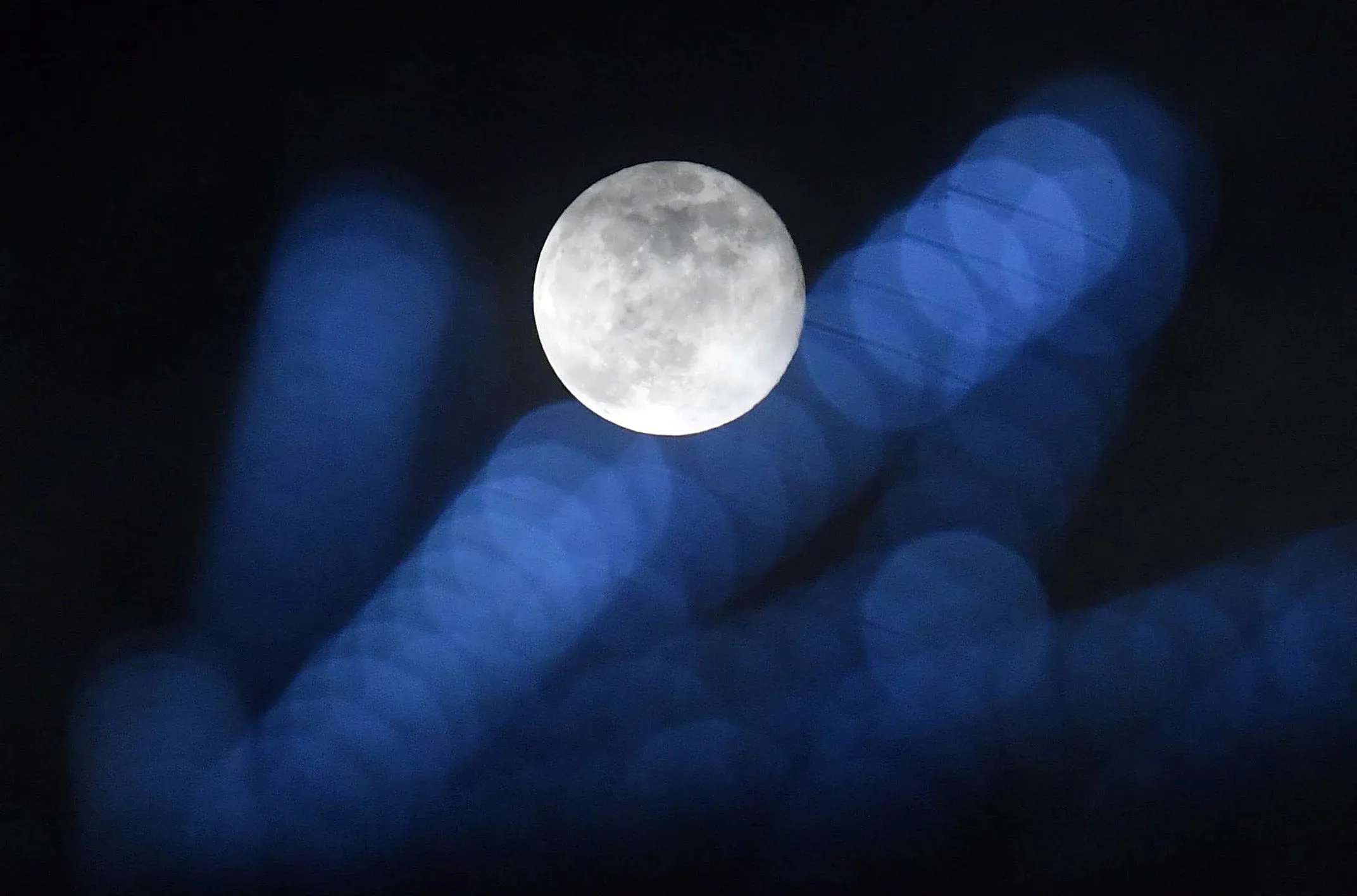
The final supermoon of 2025, known as the Cold Moon, is set to brighten the night skies this week. December also brings several meteor showers, including the active Geminids, and marks the winter solstice.
A photo captured on Dec. 15, 2024, in Skopje, North Macedonia, shows the year's last full moon, the Cold Moon, with festive winter decorations in the foreground.
This year's Cold Moon will peak on Thursday, Dec. 4, reaching full brightness at 6:14 p.m. ET, according to the Old Farmer's Almanac. A supermoon occurs when the full moon aligns with the point in its orbit closest to Earth, making it appear larger and brighter than usual. NASA notes that this December's supermoon will be roughly 17,000 miles closer than a typical full moon, as reported by AccuWeather.
Other Names for Decembers Full Moon
Known as the Cold Moon for reflecting the chilly season, it also goes by other names, including the Long Night Moon, Frost Exploding Trees Moon, Snow Moon, and Winter Maker Moon, according to the Old Farmer's Almanac.
Moonrise Times
In Rochester, the Cold Moon will rise around 3:58 p.m. on Dec. 4 and set at 7:18 a.m. on Dec. 5. In the White Plains area, moonrise occurs at 3:51 p.m. on Dec. 4, with a set time of 6:53 a.m. on Dec. 5.
Viewing Conditions
Weather may affect visibility. Rochester could see cloud cover and snow showers on Thursday night, while White Plains is expected to have mostly clear skies, offering a better view of the moon.
Other December Celestial Events
- Geminid Meteor Shower: Peaks Dec. 13-14, producing over 100 meteors per hour. Best viewing is after 10 p.m. and before 2 a.m.
- Winter Solstice: Occurs Dec. 21 at 10:03 a.m. ET, marking the shortest day and longest night in the Northern Hemisphere.
- Ursid Meteor Shower: Peaks Dec. 21-22, typically producing around 10 meteors per hour, visible late at night through early morning.
For those following the night sky, December offers a spectacular mix of the Cold Moon and seasonal meteor showers.
Author: Sophia Brooks
Share

Elon Musk predicts AI will render most skills irrelevant, but assures his children can still pursue higher education if they choose to
2 days ago 2 min read SCIENCE

What is the current status of SOCOM's AI targeting tests?
3 days ago 3 min read SCIENCE
Scientists uncover unsettling findings about wildfire smoke: 'Unnoticed chemical reactions'
3 days ago 2 min read SCIENCE
Tesla observers verify sightings of long-awaited new model on streets: 'It's an attractive car'
3 days ago 2 min read SCIENCE

Report suggests that the ship fire was probably caused by a battery
3 days ago 2 min read SCIENCE
Researchers discover remarkable effects of structures constructed by wild animals: 'Balancing costs and advantages'
3 days ago 3 min read SCIENCE

Curiosity Uncovered a Big Surprise Inside a Rock on Mars
3 days ago 3 min read SCIENCE

NASA Makes Significant Progress Towards Artemis II's Moon Mission
3 days ago 2 min read SCIENCE
NASA warns scientists about rapid acceleration of ocean changes: 'Speeding up'
3 days ago 2 min read SCIENCE
Surprising find in wetlands a decade after reintroducing extinct beavers: 'Has the potential to change local ecosystems'
3 days ago 2 min read SCIENCE