

What is the current status of SOCOM's AI targeting tests?
- Last update: 2 days ago
- 3 min read
- 47 Views
- SCIENCE
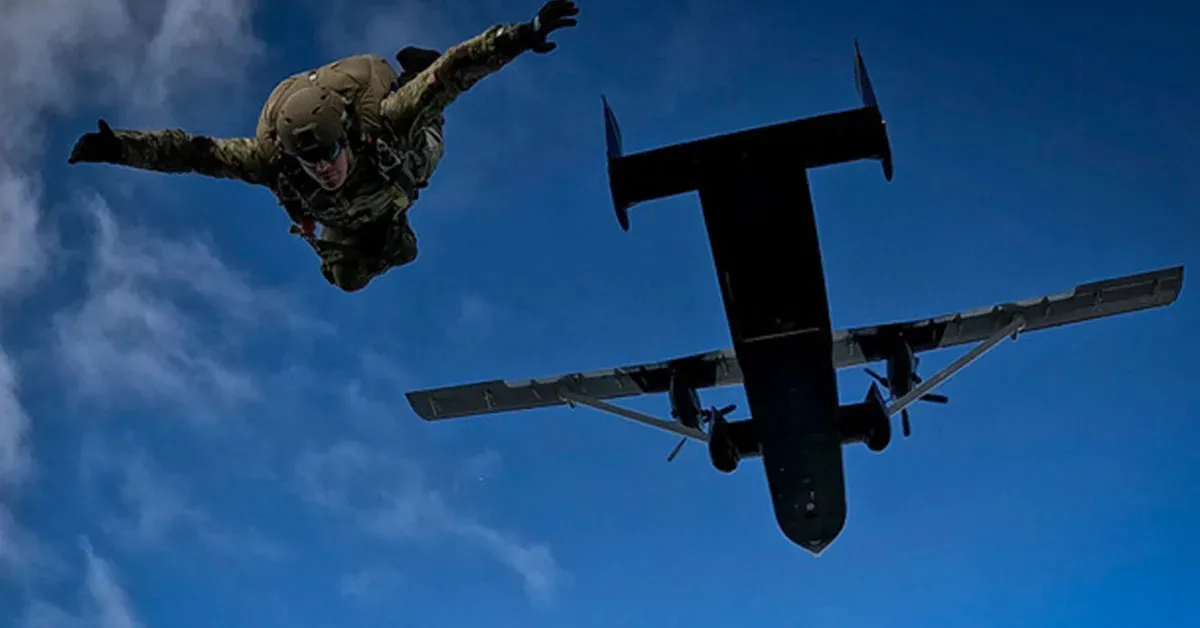
Recently, the U.S. Special Operations Command (SOCOM) has been increasingly focused on artificial intelligence. While industry announcements and contractor pitches are highly visible, the real question remains: which AI-powered targeting systems are actively being used or tested, and which remain conceptual?
The reality shows measurable progress, particularly in AI-assisted mapping, intelligence, surveillance, reconnaissance (ISR), and decision-support systems. However, fully autonomous lethal systems remain beyond current capabilities.
In July 2025, SOCOM revised its Broad Agency Announcement (BAA), formally detailing the types of technology it seeks to acquire or evaluate. For the first time, the BAA included a dedicated section on "Advanced Autonomy and Artificial Intelligence," highlighting areas of interest such as:
- Automatic target recognition (ATR) algorithms
- Vision-language-action models for complex task comprehension
- Neural radiance fields (NeRFs) for fast, realistic 3D mapping
- Generative AI for simulation, red-teaming, and mission rehearsal
- Edge-computing AI models capable of self-improvement in operational environments
This BAA update illustrates SOCOMs near-term roadmap for AI adoption. These technologies are still under evaluation rather than fully deployed, aiming to enhance target recognition, reduce intelligence workloads, improve mapping, and accelerate decision-making for small units in contested areas.
AI is also being applied in support roles. In May 2025, SOCOMs acquisition chief confirmed pilots using AI and machine learning to streamline contracting processes, demonstrating practical, reliable use of the technology off the battlefield. Faster acquisition translates to faster deployment in operational contexts where timing is critical.
Hands-on training with AI has begun as well. In October 2025, Special Operations Command Pacific (SOCPAC) hosted an AI boot camp for senior leaders, focusing on intelligence triage, mapping, mission planning, and decision-making. SOCOM emphasizes integrating AI into operations while maintaining human oversight.
Industry partners are aligning with SOCOM priorities. For example, in August 2025, Sightline Intelligence introduced an onboard AI video processing suite tailored for small drones and real-time integration with Tactical Assault Kit (TAK) networks. These systems aim to enhance situational awareness without replacing human judgment.
Real-time mapping capabilities are another focus. The interest in NeRFs and generative simulation suggests a future where small teams can rapidly create detailed 3D maps of urban areas, caves, and complex terrain, far surpassing traditional pre-mission imagery in accuracy and relevance.
No publicly confirmed system autonomously selects or engages targets without human input. Marketing hype may suggest otherwise, but SOCOM maintains a clear stance: AI is for decision support, not independent lethal action. ATR and other advanced systems still require human verification, especially in GPS-denied, jammed, or deceptive environments.
Current AI applications in SOCOM include:
- Accelerating intelligence analysis and pattern recognition
- Enhancing situational awareness through ISR
- Edge-computing solutions that operate offline and adapt in real time
- Supporting rapid, precise decision-making for small teams
The overarching goal is clear: empower operators with faster targeting, enhanced intelligence, and tools that streamline operations without removing human control. SOCOMs measured approach ensures AI acts as a force multiplier rather than a replacement for human judgment.
In conclusion, SOCOM is advancing toward a future where specialized teams, assisted by intelligent systems, can observe more, act faster, and operate with higher precision. Technology evolves, but the mission principle remains: humans lead, machines assist.
Author: Sophia Brooks
Share

Elon Musk predicts AI will render most skills irrelevant, but assures his children can still pursue higher education if they choose to
2 days ago 2 min read SCIENCE

What is the current status of SOCOM's AI targeting tests?
2 days ago 3 min read SCIENCE
Scientists uncover unsettling findings about wildfire smoke: 'Unnoticed chemical reactions'
2 days ago 2 min read SCIENCE
Tesla observers verify sightings of long-awaited new model on streets: 'It's an attractive car'
2 days ago 2 min read SCIENCE

Report suggests that the ship fire was probably caused by a battery
2 days ago 2 min read SCIENCE
Researchers discover remarkable effects of structures constructed by wild animals: 'Balancing costs and advantages'
2 days ago 3 min read SCIENCE

Curiosity Uncovered a Big Surprise Inside a Rock on Mars
2 days ago 3 min read SCIENCE

NASA Makes Significant Progress Towards Artemis II's Moon Mission
2 days ago 2 min read SCIENCE
NASA warns scientists about rapid acceleration of ocean changes: 'Speeding up'
2 days ago 2 min read SCIENCE
Surprising find in wetlands a decade after reintroducing extinct beavers: 'Has the potential to change local ecosystems'
3 days ago 2 min read SCIENCE