

Is there life beyond Earth? NASA discovers crucial sugars on prehistoric asteroid comparable to the Empire State Building
- Last update: 1 days ago
- 2 min read
- 949 Views
- WORLD
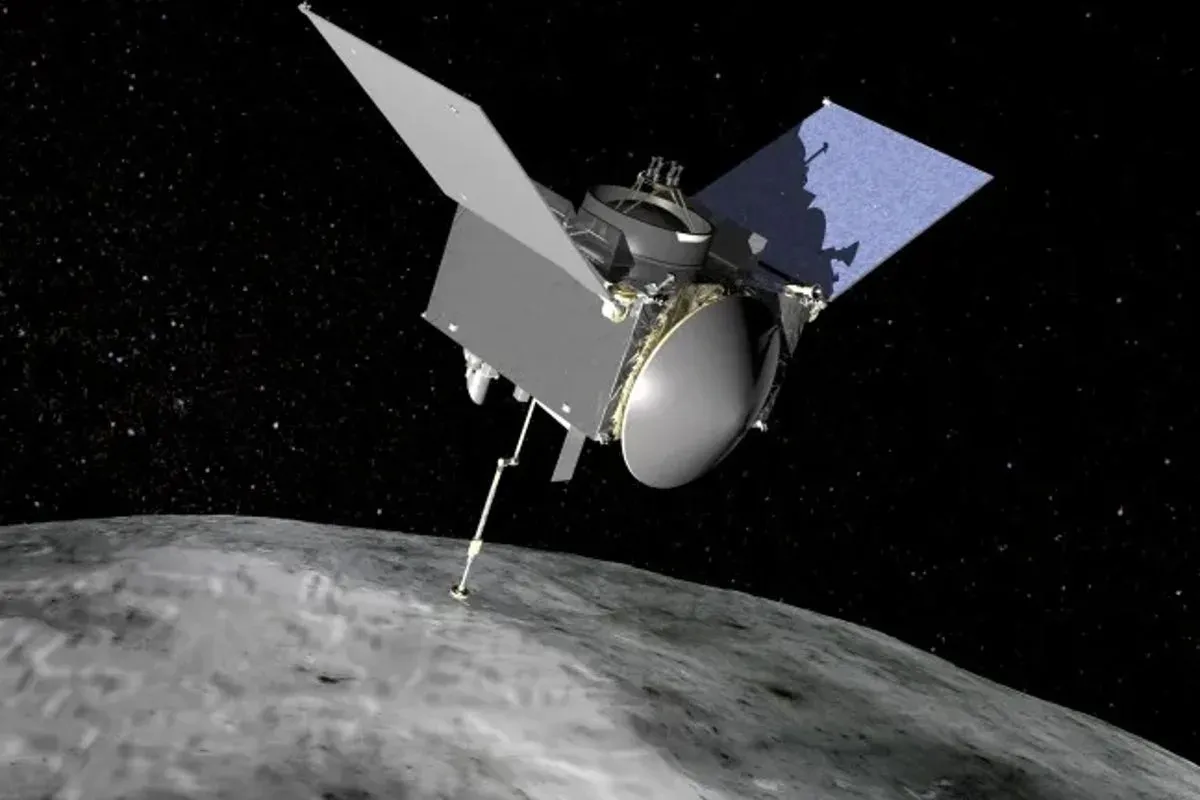
NASA has identified sugars essential to life on Earth within samples from the 4.6-billion-year-old asteroid Bennu. Among the discoveries are glucose, a primary energy source for humans, and ribose, a crucial component for RNA, the agency reported on Tuesday. This represents the first instance of ribose being detected in an extraterrestrial sample.
While the findings do not indicate the presence of life beyond Earth, they confirm that key chemical ingredients for life are widespread in the solar system. The samples were retrieved from the 1,600-foot-wide asteroid by the OSIRIS-REx spacecraft, which launched in 2016 and returned to Earth in 2023. Since their return, the samples have been undergoing extensive analysis.
Bennu, discovered in 1999 by scientists in New Mexico, is approximately the size of the Empire State Building and currently travels through space around 160 million miles from Earth. Dr. Yoshihiro Furukawa of Tohoku University explained that all five nucleobases used in DNA and RNA, along with phosphates, were previously detected in the Bennu samples. The discovery of ribose means that the asteroid contains all necessary components to form RNA molecules.
NASA had previously found evidence of past microbial activity in Martian samples earlier this year. Riboses presence was anticipated due to prior detection in meteorites on Earth in 2019. However, the absence of deoxyribose, a DNA building block, offers intriguing insights into the origins of life. It suggests that ribose may have been more prevalent than deoxyribose in early solar system environments, supporting the idea that early life may have relied on RNA.
Life today is structured around three main biopolymers: DNA, RNA, and proteins. Yet, early life forms may have been much simpler, Furukawa added. Beyond sugars, researchers discovered a mysterious translucent material dubbed "space gum," a rubber- and plastic-like compound potentially involved in lifes formation. This substance likely originated in the early solar system and may have played a role in prebiotic chemistry on Earth.
The parent body of Bennu, from which the asteroid broke off, formed from the primordial gas and dust cloud that eventually created the solar system. Previous studies indicate that it underwent chemical transformations involving heat and water. As it warmed from radiation, it produced carbamate, which subsequently reacted to form the flexible "gum" found by scientists. Dr. Scott Sandford of NASAs Ames Research Center remarked that this material represents some of the earliest chemical alterations in the solar system.
Author: Benjamin Carter
Share

Trump administration warns Europe of 'civilizational erasure'
1 minutes ago 3 min read WORLD

Bulldozer crashes into village pub during opening hours
1 minutes ago 2 min read WORLD

Three Shocking Crypto Horror Stories: Kidnapped, Murdered, and Burned for Tokens
2 minutes ago 2 min read WORLD

Israel launches air attack on southern Lebanon following historic direct talks
3 minutes ago 2 min read WORLD
Report: Nuclear energy set to significantly increase in Africa's energy mix
4 minutes ago 3 min read WORLD

The Week in Photos: November 28 - December 5
4 minutes ago 4 min read WORLD
King Charles III Maintains Crown's Credibility by Setting Boundaries
6 minutes ago 4 min read WORLD

French first lady Brigitte Macron pays a visit to an old friend in China: A giant panda named Yuan Meng
8 minutes ago 2 min read WORLD
Three polar vortexes will bring Arctic cold to central and eastern U.S. until mid-December.
9 minutes ago 3 min read WORLD

18-year-old man tasered on motorway before his death
10 minutes ago 1 min read WORLD