

Israel's new preemptive strategy clashes with Trump's vision for Syria, Middle East
- Last update: 2 days ago
- 4 min read
- 175 Views
- WORLD
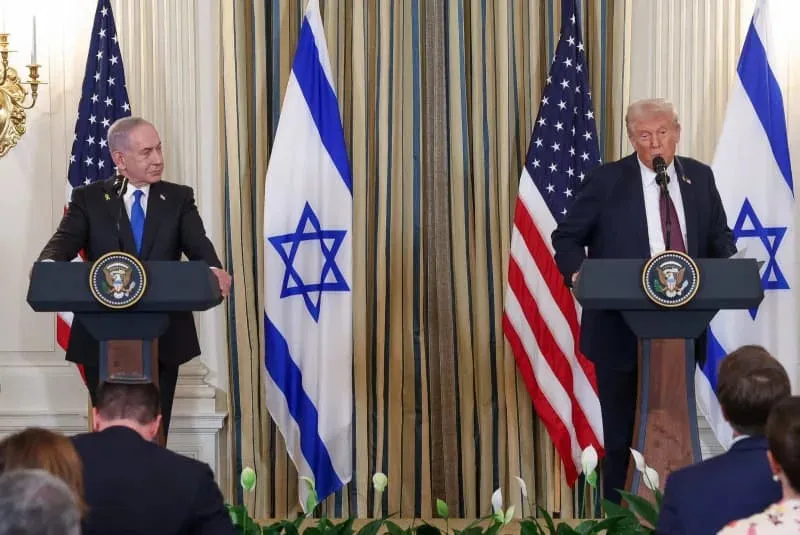
The Israeli forces withdrawal from Beit Jinn was met with an unexpected ambush, followed by airstrikes, transforming a routine security operation into a matter of international diplomacy spanning from Damascus to Washington. The IDF had not intended Fridays raid in the Syrian town of Beit Jinn to spark such controversy. The mission was part of a series of preemptive measures aimed at preventing jihadist groups from gaining footholds in the ungoverned areas of southern Syria, a region Israel has monitored closely since the collapse of the Assad regime last year.
Israeli troops from the 55th Brigade detained surrendering terrorists in Beit Jinn on November 28, 2025. Intelligence indicated that members of Jamaa al-Islamiyathe Lebanese branch of the Muslim Brotherhood with operational ties to Hamas and Hezbollahwere regrouping in Beit Jinn and planning attacks on Israel. Following careful preparation, an IDF reserve unit carried out a pre-dawn raid to capture the groups leader. During their retreat, the unit encountered an ambush. Six soldiers were injured, three seriously. Air support called in to extract the team caused casualties on the Syrian side. Israeli sources reported that over a dozen terrorists were killed, while local Syrian accounts mentioned civilian deaths as well.
The confrontation coincided with the first anniversary of Assads fall, a day initially marked by pro-government rallies that quickly turned into protests when Israeli involvement became known. Israelis viewed the operation as essential counterterrorism, while Syrians saw it as a breach of sovereignty and a test of the new leaderships ability to respond. US Special Envoy to Syria Tom Barrack met with President Ahmed al-Sharaa in Damascus as the US continues efforts to stabilize Syrias political transition and explore security arrangements between Jerusalem and Damascus. Shortly after, US President Donald Trump praised Sharaa on Truth Social, emphasizing his determination and urging Israel to maintain constructive dialogue with Syria.
The timing highlighted US concerns about Israeli operations in Syria potentially undermining Sharaa, whom Washington considers newly open to engagement. American officials privately expressed frustration over Prime Minister Benjamin Netanyahus reluctance to align IDF operations with broader diplomatic goals. One official told Axios that Netanyahu was seeing ghosts everywhere, potentially threatening a historic opportunity. Israel, however, perceives a security vacuum rather than a diplomatic opening. Southern Syria is a complex landscape of hostile actors, including remnants of Hamas, Lebanese Muslim Brotherhood elements, jihadist networks, militias, and Iranian-backed groups, with Turkey also increasing influence in the region.
Israels October 7, 2023 experience reinforced its doctrine: threats must be neutralized before they mature. The IDF now maintains a sustained presence in southern Syria, including within the former UNDOF buffer zone, conducting surveillance and targeted operations to prevent terrorist infrastructure from taking root near the Golan Heights. Fridays Beit Jinn raid extended beyond this zone. Israel has also intervened to protect Syrian Druze populations, most notably in July, when conflict erupted in Sweida amid Druze-Bedouin clashes.
Southern Syria remains unstable, with Hamas and Islamic Jihad rebuilding, Iranian weapon smuggling continuing, Turkish influence rising, and local armed groups operating. The ambush in Beit Jinn signals potential increases in armed resistance to Israeli operations. Meanwhile, Israel and Syria have quietly explored updating the 1974 disengagement framework, discussing force limitations, surveillance mechanisms, and possible formal understandings along the Golan, though Israel insists on retaining control of Mount Hermon due to its strategic importance. These talks are still exploratory, and the Beit Jinn incident complicates progress.
The divergence between Israeli and US policy is clear. Washington urges Israel to pause operations to allow Syria to stabilize, while Israel argues that security cannot rely on a government with limited control. Israels strategy prioritizes early preemptive action to prevent security failures similar to the October 7 massacre. Netanyahu emphasized after visiting wounded IDF reservists that Israel does not seek escalation with Syria or to derail diplomatic initiatives, but aims to secure its borders and prevent future attacks on Golan communities. Israel is prepared to prioritize security over diplomatic friction if necessary.
Author: Sophia Brooks
Share

Serious injury to pedestrian in Shipley accident
2 minutes ago 1 min read WORLD

U.K. and Norway agree to collaborate in tracking Russian submarines in North Atlantic
3 minutes ago 2 min read WORLD

Radio 1 newsreader fulfills CBeebies dream with royal support
6 minutes ago 2 min read WORLD

Confirmation: Nanotyrannus was a separate species, not a young T. rex
6 minutes ago 3 min read WORLD

Is It Possible to Capture Images of Alien Earths? This Newly Discovered Object Could Provide the Answer
8 minutes ago 2 min read WORLD

City hospital urges wearing masks during flu outbreak
9 minutes ago 1 min read WORLD
New clashes in eastern Congo put at risk 'historic' peace agreement mediated by Trump
11 minutes ago 2 min read WORLD

‘Continuous oil deliveries’: Main points from Putin-Modi discussions in Delhi
12 minutes ago 4 min read WORLD

IPCC chief urges UN scientists to be 'clear' on human impact to combat climate denial
13 minutes ago 2 min read WORLD

Crash and car fire lead to closure of busy road
13 minutes ago 1 min read WORLD