

Leader of Gaza militia establishes new force to challenge Hamas, alerts to resurgence of terrorists during ceasefire.
- Last update: 3 days ago
- 4 min read
- 31 Views
- WORLD
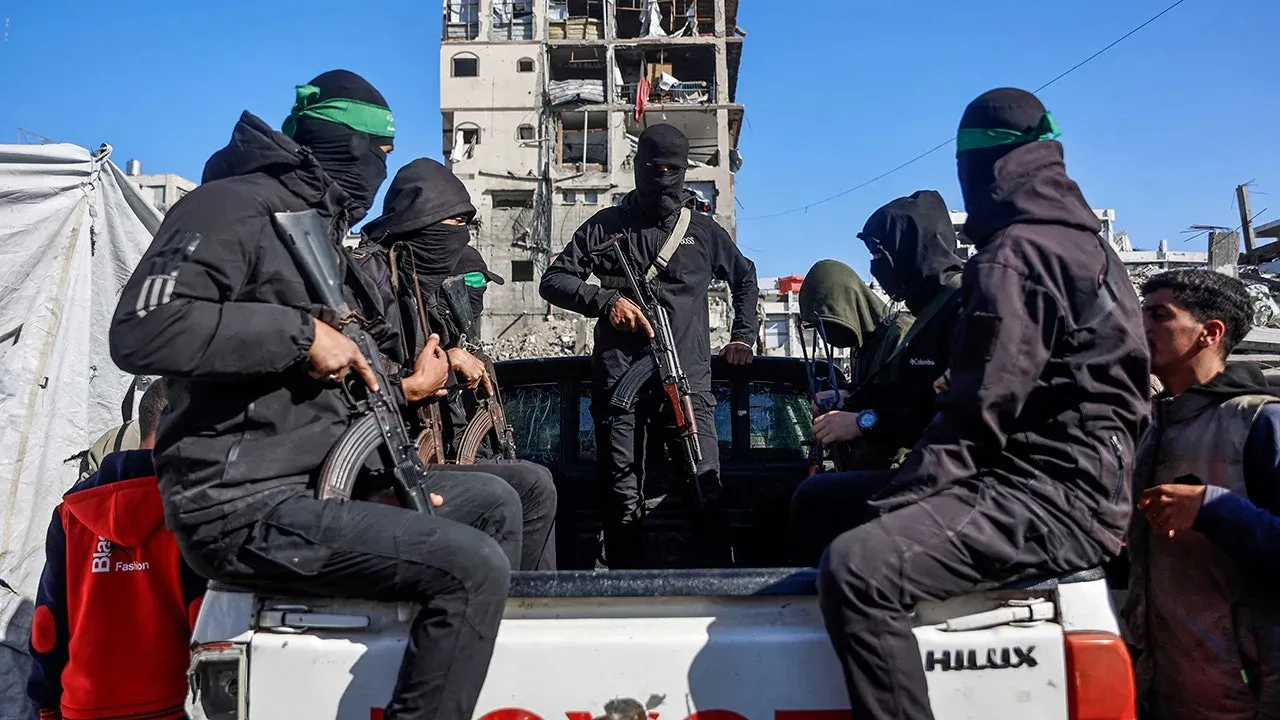
While the ceasefire in Gaza has halted major fighting, it has also given Hamas an opportunity to reorganize and restore its influence in several areas of the enclave. At the same time, a small but determined collection of alternative Palestinian armed groups claims it is attempting to establish a rival force within Gaza.
One of the most outspoken leaders of this movement is Shawqi Abu Nasira. He stated that the pause in hostilities has acted as a revival mechanism for Hamas, allowing the organization to recover and prepare for renewed conflict. According to him, Hamas is rebuilding its operational capacity, reopening facilities, and strengthening its infrastructure. He also expressed gratitude to former U.S. President Donald Trump for freezing Hamas-related assets and classifying the Muslim Brotherhood as a terrorist entity.
Abu Nasira, who once served as a senior police official in the Palestinian Authority and spent 16 years imprisoned in Israel, currently operates with a limited number of fighters in the eastern region of Gaza near the so-called yellow line an area now controlled by the Israeli military. He explained that relocation to this zone was not a choice, but a necessity to escape retaliation from Hamas.
According to reports from Jusoor News, Abu Nasiras break from Hamas-aligned influence began years earlier after Hamas killed his only son and publicly desecrated his body an act that cemented his opposition and pushed him toward armed resistance.
Despite acknowledging that his group is small and poorly equipped, Abu Nasira believes he represents the views of a broader, suffering population. He described widespread hunger, homelessness, and lack of access to medical care among civilians, insisting that many Gazans no longer support Hamas.
The current ceasefire has revealed a fragmented and unstable environment, where various militias, family clans, and armed networks have surfaced as Hamass centralized power weakened. Among the more visible groups are the Popular Forces in Rafah, the Popular Army in northern Gaza, a counter-terrorism group in Khan Yunis, and local defense forces in the Shujaiya district. Influential families such as the al-Majayda and Doghmosh clans have also taken on expanded roles. These groups operate independently, often shifting alliances, and differ significantly in structure and objectives.
Abu Nasira claimed that many of these factions are communicating and exploring cooperation. He described them as united by shared trauma and a common enemy. According to him, discussions are underway to merge these forces under a single political and military framework that could eventually function as a regional National Guard in eastern Gaza.
He emphasized that the responsibility of removing Hamas should fall primarily on Palestinians themselves. With sufficient financial, logistical, and strategic support, he believes Hamas could be defeated within months. Abu Nasira also rejected the notion that fear of being labeled a collaborator would discourage locals, stating that such threats have already become routine and no longer deter resistance.
In a broader appeal to the American public and the international community, Abu Nasira warned that Islamist extremism in Gaza is part of a much wider network. He identified Hamas, the Muslim Brotherhood, and Iran as components of a global threat that extends beyond the Middle East. For that reason, he argued, fighting terrorism in Gaza is a matter of worldwide importance.
He also criticized the idea of slowly building civilian development zones east of the yellow line as a long-term solution to undermine Hamas. While acknowledging the concept might sound constructive, he dismissed it as too slow and ineffective against a rapidly recovering militant organization.
As Hamas strengthens its position under the protection of the ceasefire, Abu Nasira insists that others like him remain prepared to act. He states that many Palestinians are eager to fight for a different future and believes that, with external backing, a united alternative force could still emerge in Gaza.
Author: Sophia Brooks
Share

Serious injury to pedestrian in Shipley accident
49 seconds ago 1 min read WORLD

U.K. and Norway agree to collaborate in tracking Russian submarines in North Atlantic
1 minutes ago 2 min read WORLD

Radio 1 newsreader fulfills CBeebies dream with royal support
4 minutes ago 2 min read WORLD

Confirmation: Nanotyrannus was a separate species, not a young T. rex
4 minutes ago 3 min read WORLD

Is It Possible to Capture Images of Alien Earths? This Newly Discovered Object Could Provide the Answer
6 minutes ago 2 min read WORLD

City hospital urges wearing masks during flu outbreak
7 minutes ago 1 min read WORLD
New clashes in eastern Congo put at risk 'historic' peace agreement mediated by Trump
9 minutes ago 2 min read WORLD

‘Continuous oil deliveries’: Main points from Putin-Modi discussions in Delhi
10 minutes ago 4 min read WORLD
IPCC chief urges UN scientists to be 'clear' on human impact to combat climate denial
11 minutes ago 2 min read WORLD

Crash and car fire lead to closure of busy road
11 minutes ago 1 min read WORLD