

Mapping the conflict: Ukraine's ongoing war with Russia
- Last update: 3 days ago
- 4 min read
- 33 Views
- WORLD
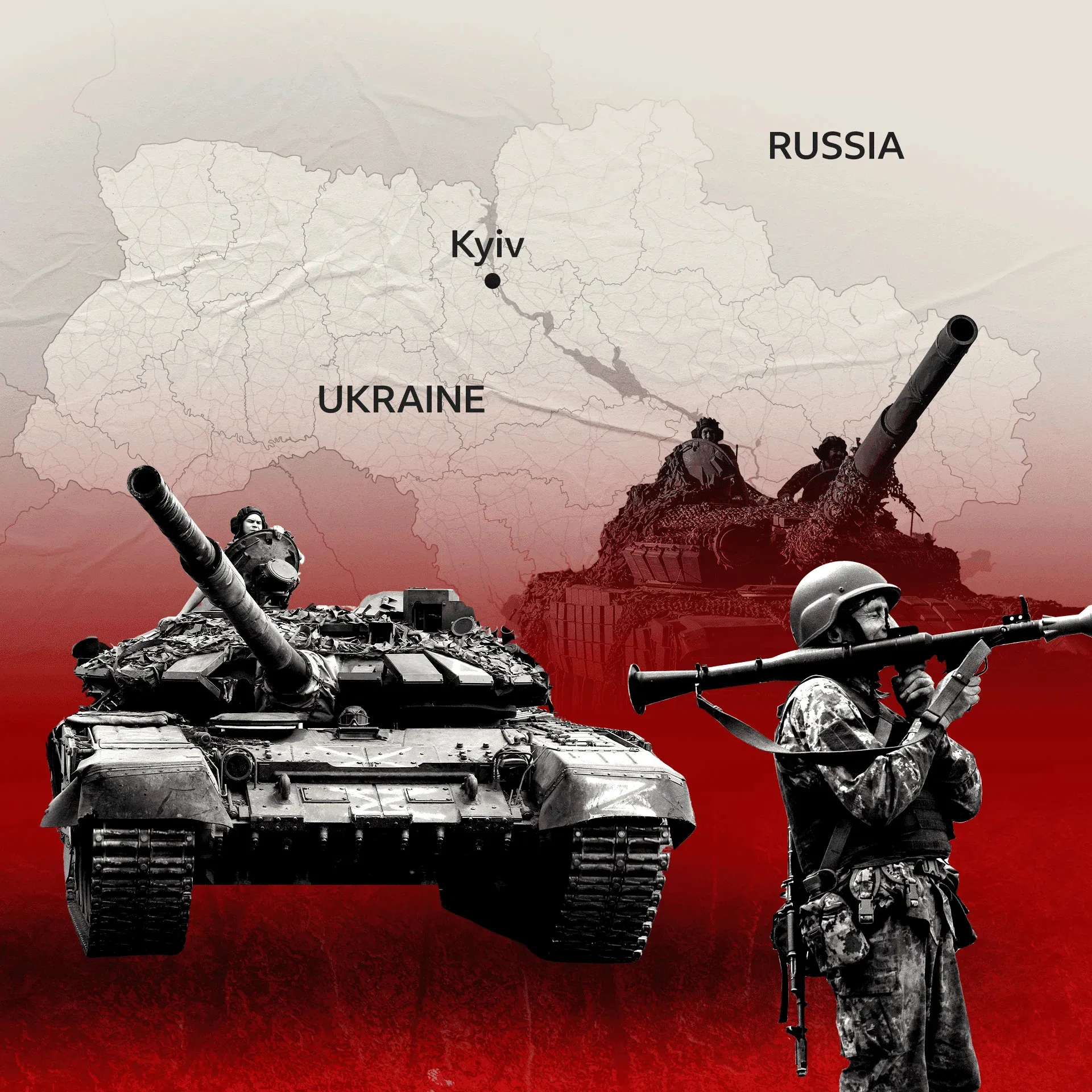
Fighting has persisted in Ukraine since Russia launched its full-scale invasion over three years ago. Over the past twelve months, Russian forces have gradually expanded their territorial control, primarily in eastern Ukraine, while continuing their intensive air raids on Kyiv and other cities.
Ukrainian and U.S. officials have been engaged in discussions to refine a U.S.-supported peace proposal, previously seen as favorable to Russia. President Volodymyr Zelensky described the talks as "constructive." Further negotiations between Russia and the U.S. are now planned, as the situation on the ground remains tense.
Eastern Ukraine and the Donbas
In eastern Ukraine, Russian forces have been advancing incrementally through the Luhansk and Donetsk regions, also known as the Donbas, targeting villages and towns. Their goal is to assert control over these areas as well as the western regions of Zaporizhzhia and Kherson.
Shortly after the invasion, Russia held referendums in these regions, aiming to annex them in a manner similar to Crimea in 2014, though full control was never established. Under the initial peace plan drafted by U.S. and Russian officials last month, Ukraine would cede Luhansk, Donetsk, Crimea, and the Russian-occupied portions of Zaporizhzhia and Kherson. Ukrainian forces would withdraw from parts of Donetsk, creating a demilitarized zone under effective Russian control, while Russian forces would retreat from areas outside these regions.
Zelensky has consistently rejected giving up the Donbas, warning it could serve as a launchpad for future Russian offensives. After recent discussions with U.S. officials, he identified the territorial question as the "most difficult" aspect of a peace deal.
Military Situation and Strategic Positions
The U.S.-based Institute for the Study of War (ISW) describes a "fortress belt" spanning 50 km through western Donetsk, reinforced over the past decade with extensive defensive infrastructure. Russian offensives near Pokrovsk have made progress north and south of the town, and Russia claims to have captured Krasnoarmeysk, a strategic location that could enable advances toward Kramatorsk and Slovyansk. Ukrainian authorities have not confirmed this, and monitoring projects suggest the town is not fully under Russian control.
ISW analysts estimate that full Russian control of the Donbas could take several years, though recent Russian advances have coincided with reduced casualty rates, likely due to increased drone use. To the north, Russia claims to have taken Vovchansk, aiming to create a buffer zone near Ukraine's northern border and to place Kharkiv within artillery range. Ukrainian counter-offensives have also struck deep into Russian territory, targeting air bases with drones, which Kyiv claims caused significant military losses, though these figures remain unverified.
Peace Talks and International Involvement
Since President Trump took office in 2025, the U.S. has been actively seeking a resolution to the conflict through negotiations. Although previously more sympathetic to Russia than his predecessor, relations with Zelensky have improved, and Ukraine continues to rely heavily on U.S.-supplied weapons and intelligence. Zelensky warned that the latest peace draft could jeopardize U.S. support, as it would require territorial concessions, military downsizing, and a pledge not to join NATO.
Russian President Vladimir Putin has acknowledged seeing a U.S. draft peace plan, suggesting it could serve as a basis for a future agreement, though Kremlin officials later expressed uncertainty about its acceptance following amendments proposed by Kyiv and European allies.
Background of the Conflict
The invasion began with extensive missile strikes on Ukrainian cities on 24 February 2022, followed by rapid ground advances. Russia initially captured significant areas in the east and south, surrounding Mariupol and advancing near Kyiv. Ukrainian forces mounted strong resistance and employed Western-supplied weapons effectively, forcing Russia to withdraw from northern Ukraine by October 2022. Ukrainian forces later recaptured Kherson, and fighting has since concentrated in the east. Military experts estimate Russian fatalities between 165,000 and 235,000, while Ukraine reported 43,000 military deaths as of December 2024, considered likely underestimates.
Data and Reporting
To illustrate Russian-controlled areas, daily assessments from the Institute for the Study of War and the American Enterprise Institute's Critical Threats Project are used. Given the rapidly changing conditions on the ground, maps may not always reflect the latest developments.
Author: Sophia Brooks
Share

Farage criticized for making racist remark about Glasgow pupils in campaign video
28 seconds ago 3 min read WORLD
German foreign minister to visit China next week after rescheduling
34 seconds ago 2 min read WORLD
Putin and Modi agree to strengthen trade relations during official visit
2 minutes ago 1 min read WORLD

Funding allocated for crime prevention in playing fields and church
3 minutes ago 1 min read WORLD

Archaeologists Discover Eerie Warning from the Roman Empire
3 minutes ago 2 min read WORLD

Stalker sentenced for violating restraining order
8 minutes ago 1 min read WORLD

US reevaluating relationship with Tanzania following violent election turmoil
9 minutes ago 2 min read WORLD
US raid reportedly resulted in death of undercover agent instead of IS official
9 minutes ago 3 min read WORLD

Legal experts' opinions on the second US strike on a boat in Venezuela
12 minutes ago 4 min read WORLD

Full support for crackdown on anti-social behavior
12 minutes ago 2 min read WORLD