

Martial law: Where else is it in force one year after South Korea imposed it?
- Last update: 2 days ago
- 3 min read
- 689 Views
- WORLD
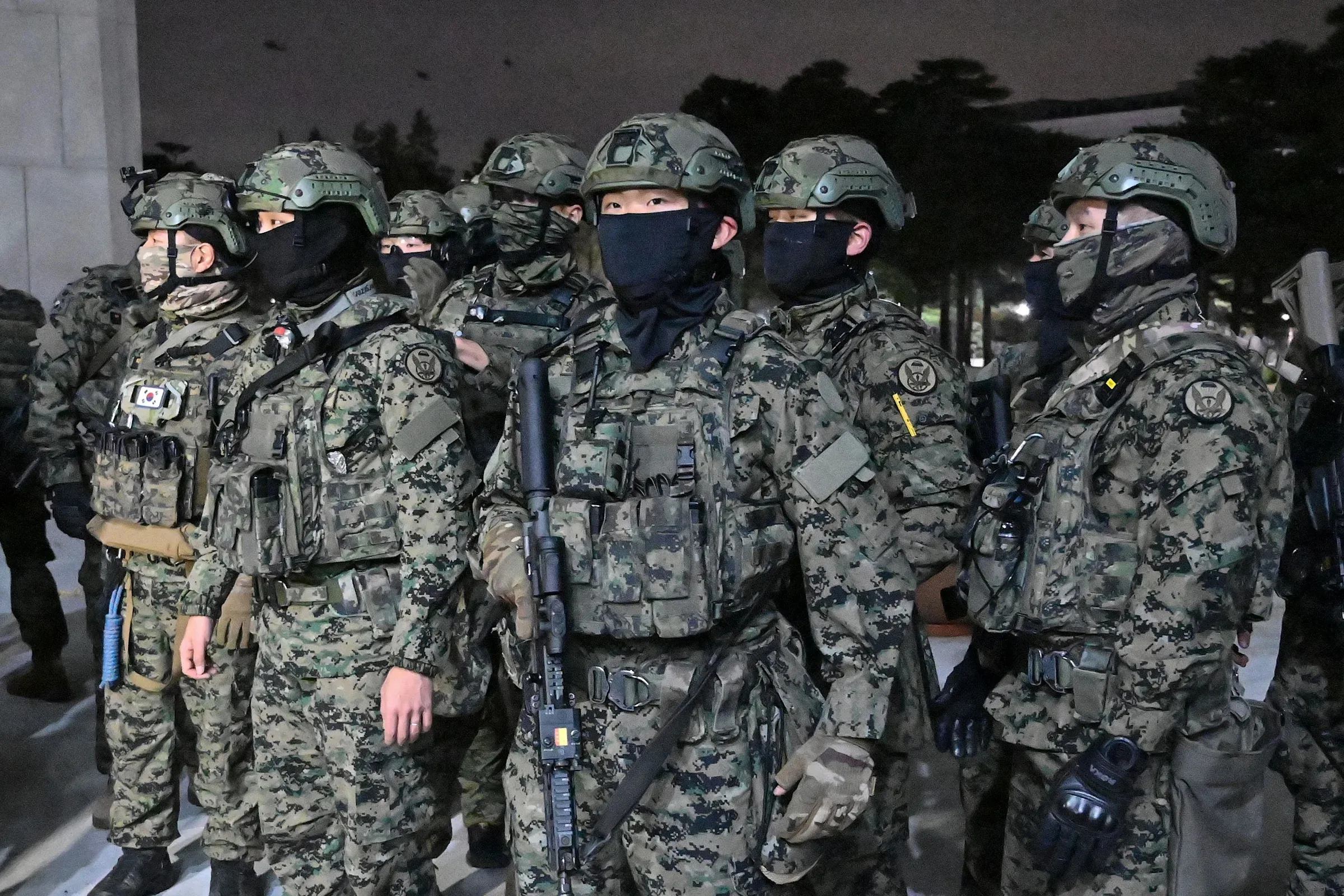
Exactly one year ago, on December 3, 2024, South Korea experienced a political upheaval when President Yoon Suk Yeol imposed martial law, citing growing unrest and potential threats to national security. Military forces were deployed, opposition lawmakers were detained, and strategic institutions, including the National Assembly, came under military oversight. Press freedoms were restricted, yet journalists continued reporting, and citizens rallied against the decree.
Public opposition escalated rapidly. Within six hours, protesters surrounded the parliament while lawmakers voted to reject the decree, compelling President Yoon to rescind it. The Supreme Court later ruled the brief martial law unconstitutional, and within weeks, Yoon was impeached and removed from office. He subsequently issued a public apology for the disruption caused.
Globally, martial law manifests differently. In some countries, it remains active or military influence dominates governance, affecting civil liberties, political opposition, and everyday life. Martial law typically grants military authority over civilian functions, often including curfews, movement restrictions, military trials, expanded arrest powers, and media or assembly limitations. In certain cases, civilian institutions may be temporarily replaced with military administrators, usually justified by war, unrest, or threats to national stability, though rights groups caution it can be misused to suppress dissent or consolidate power.
Current Martial Law and Military Governance Worldwide
Ukraine
Since February 24, 2022, Ukraine has operated under nationwide martial law following Russias invasion. Civilian authorities remain in charge, but the law grants the military extended powers, restricts men aged 1860 from leaving the country, and limits political and public activities. Public gatherings require approval, and media is restricted from reporting on sensitive defense topics. While broadly accepted, concerns about political accountability, transparency, and the suppression of opposition have arisen, with critics claiming the restrictions strengthen the governments power.
Myanmar
Myanmars military seized control in February 2021, overthrowing the elected government. Martial law applies to dozens of townships, giving military commanders broad powers to detain, try, and execute civilians. Resistance has led to civil war in some regions, with documented mass arrests, internet blackouts, and attacks on schools, hospitals, and religious sites. Political detainees, including Aung San Suu Kyi, remain in custody, while upcoming military-controlled elections face global skepticism regarding their legitimacy.
Thailand
Thailand is not under nationwide martial law, but southern provinces such as Pattani, Yala, and Narathiwat operate under emergency laws granting the military enhanced authority. Martial law has also been declared in border districts near Cambodia following clashes, aiming to protect sovereignty and civilian safety.
West Africa
Burkina Faso has been under military rule since 2022, exercising full control while restricting political activity and imposing curfews. Guineas military has ruled by decree since 2021, suspending constitutions and banning demonstrations. Guinea-Bissau fell under military control in November 2025 after election disruptions, with curfews and protest bans imposed while the army seeks to restore order.
Madagascar
Military-backed governance has influenced Madagascar since 2009. In October 2025, youth-led protests led to a military takeover of the capital, the ousting of President Rajoelina, and suspension of political institutions. A military council now governs, drawing condemnation from the UN and African Union.
Potential Shifts Toward Martial Law
Bangladesh
Following a mass uprising and the ousting of Prime Minister Sheikh Hasina in 2024, the army maintains a visible presence while an interim administration governs via executive decrees, preparing for elections in February 2026.
Nepal
After Prime Minister KP Sharma Oli resigned in 2025 amid protests, an interim government assumed control. Security forces, including the army, have played a significant role in maintaining order. While not formally martial law, it demonstrates how military and police forces can become decisive political actors during crises.
Author: Sophia Brooks
Share

Scientists Believe They Have Identified the Cause of Death for 60,000 Penguins on 2 Remote Islands
3 minutes ago 2 min read WORLD
Justin Trudeau Excited to Introduce 'Partner' Katy Perry to Japan's Former Prime Minister in Their First Political Event Together
4 minutes ago 2 min read WORLD

'Charity shop worker attacked by full-time burglar with a knife'
7 minutes ago 2 min read WORLD

Green leader successfully passes no confidence vote
8 minutes ago 1 min read WORLD

Nearly 200 homes evacuated in UK town due to potential explosives threat, 2 men arrested
11 minutes ago 2 min read WORLD
Germany decides to reinstate voluntary military service
12 minutes ago 2 min read WORLD

Chris Pratt to Star in Documentary About Saint Peter's Tomb by AF Films & Vatican Media
12 minutes ago 3 min read WORLD
Hyundai from South Korea Supports Quick Naval Upgrades in the Philippines
14 minutes ago 3 min read WORLD
Merz delays Norway visit for discussions in Belgium regarding frozen Russian assets
15 minutes ago 2 min read WORLD
France’s Macron Alerted Other Leaders to Possible Trump Betrayal
16 minutes ago 2 min read WORLD