

RSF military advances in Kordofan raise concerns of Sudan's potential division
- Last update: 5 days ago
- 4 min read
- 13 Views
- WORLD
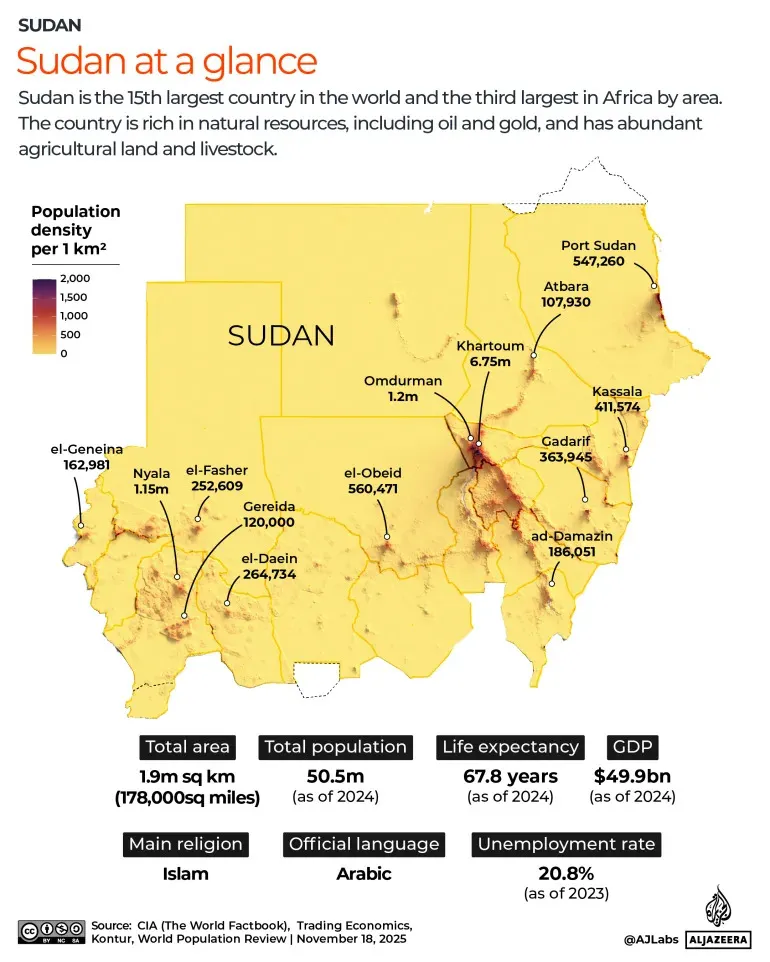
The Rapid Support Forces (RSF) of Sudan are intensifying their efforts to seize control of the central Kordofan region. Key targets include cities and towns such as Babnusa and el-Obeid, with the RSF leveraging momentum from their recent victory in el-Fasher, Darfur, where clashes claimed at least 1,500 lives and displaced thousands.
Sudanese Armed Forces (SAF) currently maintain a defensive position in Babnusa, an essential transport hub linking multiple regions. Analysts warn that holding the city will become increasingly challenging, and if Babnusa falls, the RSF is likely to advance toward el-Obeid, a crucial gateway to the capital, Khartoum.
Earlier in March, the RSF was pushed out of Khartoum, giving the SAF a temporary upper hand in the protracted conflict. However, the tide has shifted, and with the loss of Darfur, the SAF now risks losing Kordofan as well.
The RSF is building momentum and intends to capitalize on it, said Dallia Abdelmoniem, a Sudanese political analyst, noting that the RSFs ally, the SPLM-N, already controls South Kordofans Nuba Mountains. Abdelmoniem emphasized that RSF leader Mohamed Hamdan Dagalo, known as Hemedti, aims to extend his influence beyond Darfur to the entire country.
With SAF resources stretched and access to weapons limited, Abdelmoniem believes the power balance is shifting in favor of the RSF. The SAF remains vulnerable unless it can secure weaponry comparable to or superior to the RSFs arsenal, she explained.
RSF advances have occurred despite ongoing mediation from the Quad Egypt, Saudi Arabia, the UAE, and the United States aimed at halting the fighting. SAF chief Abdel Fattah al-Burhan rejected a Quad-proposed ceasefire last Sunday, claiming it favored the RSF and criticizing UAE involvement, which Abu Dhabi denies. Meanwhile, the RSF announced a unilateral three-month ceasefire but has continued operations in Babnusa.
Some experts argue that the Quads push for a ceasefire may have inadvertently intensified the fighting. The pressure for a ceasefire encourages both sides to secure territory quickly before negotiations alter the balance, said Kholood Khair, founding director of Confluence Advisory. Both SAF and RSF reportedly stockpiled weapons during the rainy season, now deploying them as conditions improve and RSF confidence grows after el-Fasher.
Kordofan is strategically vital due to its agricultural, livestock, and petroleum resources. Control of Kordofan is about economic dominance as much as territorial gain, said retired Lieutenant Colonel Omar Arbab. Babnusa serves as the link between Darfur and el-Obeid, making it a key RSF objective. If captured, it would allow the RSF to threaten el-Obeid and potentially redirect forces there, creating a major political and economic shift.
The conflict in Kordofan is also deepening Sudans political and ethnic divisions. Analysts note that the war has become heavily ethnicized, with communities aligning with SAF, RSF, or other armed groups based on identity rather than strategy. Abdelmoniem warns that some SAF factions might accept fragmentation, focusing control on Arab-majority regions while abandoning Darfur, which is largely non-Arab and targeted by RSF attacks. However, she stresses that without alliances with other groups, the SAF cannot secure long-term victory.
Arbab, while acknowledging de facto fragmentation, believes formal partition is unlikely due to the complex network of alliances and the need for a nationwide political project. Nevertheless, Kordofan now faces a potential humanitarian crisis similar to Darfur, with escalating violence, sieges, and mass displacement expected. Analysts warn that access for humanitarian aid is extremely limited, as neither SAF nor RSF are likely to allow relief operations, and Kordofan lacks open borders for aid delivery.
Experts caution that without international intervention, the cycle of violence and impunity is likely to worsen, further destabilizing the region and exacerbating Sudans ongoing crisis.
Author: Sophia Brooks
Share

Chile's presidential runoff overshadowed by concerns about migration and crime
6 minutes ago 3 min read WORLD
Watch: NASA rover records unique event on Mars for the first time
7 minutes ago 1 min read WORLD

Prison guard involved in smuggling drugs into jail
7 minutes ago 2 min read WORLD

Kate Middleton and Her Daughter Princess Charlotte Share a Sweet Moment at Royal Holiday Tradition
12 minutes ago 2 min read WORLD

Man discovered deceased at residence possessed a 'kind and generous nature'
14 minutes ago 1 min read WORLD

Reform UK Receives Largest Political Donation in British History from Tether Investor
18 minutes ago 3 min read WORLD

ZachXBT: British Hacker Connected to $243M Genesis Theft Likely Arrested in Dubai
22 minutes ago 3 min read WORLD

Drug dealer involved in County lines operation sentenced to prison
24 minutes ago 1 min read WORLD

Brooklyn boy missing for 2 months as mother denies existence of child
24 minutes ago 2 min read WORLD

US President Trump awarded first FIFA Peace Prize at World Cup draw
30 minutes ago 2 min read WORLD