

Russia claims that military victories are increasing its leverage in negotiations with Ukraine.
- Last update: 1 days ago
- 3 min read
- 675 Views
- WORLD

The Kremlin stated on Wednesday that recent military achievements in Ukraine have strengthened Russia's leverage in ongoing negotiations aimed at ending the conflict. Both Moscow and Kyiv are preparing for further discussions with the United States.
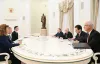
US President Donald Trump's representatives, Steve Witkoff and Jared Kushner, met with President Vladimir Putin into the early hours, but no agreement on a peace settlement was reached. Moscow reported that no consensus was found regarding territorial disputes and emphasized that Ukraines potential NATO membership remains a central point in the talks.
The White House had previously expressed optimism about its plan to resolve the conflict, Europes deadliest since World War II, though that hope diminished as Moscow labeled parts of the proposal unacceptable. The US delegation presented an updated version of the peace plan during the meetings.
Russias military push in eastern Ukraine intensified last month, and President Putin has signaled that Moscow is prepared to continue fighting to claim the territories it asserts, should Kyiv refuse to concede them.
"The progress and tone of the negotiations have been shaped by the recent successes of the Russian army," Kremlin aide Yuri Ushakov, who participated in the talks, told reporters. "Our military operations have influenced the way our foreign partners evaluate potential paths to a settlement."
Moscow stressed that it did not completely reject the US plan and reaffirmed its commitment to diplomacy, despite Putin issuing a warning that Russia is ready to respond militarily if Europe initiates conflict.
"We remain willing to meet as often as necessary to reach a peace settlement," Kremlin spokesman Dmitry Peskov said. However, Germany described Putins statements as aggressive and noted there are no signs that Russia is shifting into serious negotiation mode.
Russia invaded Ukraine in February 2022, citing concerns over Kyiv joining NATOa rationale both Ukraine and Western nations dismiss as a pretext. Ukraine insists that NATO membership would secure protection against future Russian aggression. Trump has consistently opposed Ukraine joining the alliance, and Ushakov identified the issue as key in discussions.
According to Ushakov, US envoys will consider Moscows proposals and priorities, though details were not disclosed. Trump, who has expressed frustration over the lack of progress from both sides, has yet to comment on the results of the talks.
Following the US delegations return from Moscow, Ukrainian President Volodymyr Zelensky announced that top negotiator Rustem Umerov and military chief Andriy Gnatov would travel to Brussels for discussions with NATO foreign ministers regarding Washingtons peace initiative. They will also meet with US envoys in the United States. Zelensky stressed that any agreement must prevent further Russian attacks.
These renewed negotiations coincide with NATO pledging hundreds of millions of dollars in US arms to Kyiv. NATO chief Mark Rutte noted that while peace talks are positive, Ukraine must remain in a strong position to continue defending itself.
European nations have expressed concern that Washington and Moscow might reach agreements without their input and have been working to modify the US proposal to avoid forcing Kyiv to yield. In Moscow, tensions with Europe were heightened by Putins assertive statements, warning that while Russia does not plan to start a war with Europe, it is prepared if conflict arises. His spokesman accused Europe of seeking a strategic defeat of Russia.
The ongoing Russian offensive in Ukraine, responsible for thousands of deaths, has been accompanied by a domestic crackdown on dissent not seen since the Soviet era.
Author: Ava Mitchell
Share

Putin agrees to certain U.S. suggestions regarding Ukraine, but not all
2 days ago 2 min read WORLD
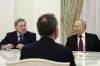
Europeans doubt Putin's sincerity in seeking peace following discussions with US representatives
2 days ago 3 min read WORLD

Putin: We are prepared for conflict with Europe.
2 days ago 4 min read WORLD
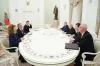
Putin holds over 4-hour meeting with Witkoff and Kushner.
2 days ago 4 min read WORLD

Putin aide says Russia-US talks on Ukraine peace deal end without breakthrough
2 days ago 3 min read WORLD
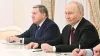
Kremlin indicates lack of progress following Ukraine talks with US
2 days ago 4 min read WORLD
Putin warns Russia is prepared in case Europe decides to start a war with them during Ukraine negotiations
2 days ago 3 min read WORLD
American diplomats engage in crucial discussion with Putin
2 days ago 1 min read WORLD

Putin in discussions with US representatives at Kremlin regarding Ukraine peace proposal
2 days ago 1 min read WORLD

Steve Witkoff and Jared Kushner in Moscow to discuss resolution of Ukraine conflict
2 days ago 3 min read WORLD