

Telecom Fiber-Optic Cables Capture Earthquake with Amazing Precision
- Last update: 1 hours ago
- 2 min read
- 763 Views
- WORLD
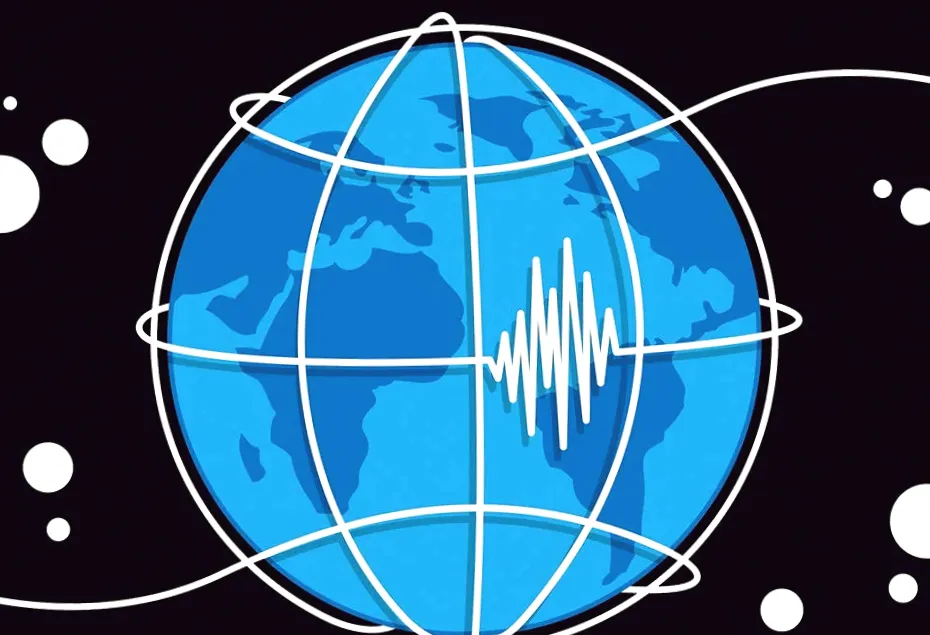
Optical fiber networks, typically responsible for transmitting global Internet traffic, are now revealing the subtle movements of the Earth itself. A recent study published in Science demonstrated that these fibers can detect seismic activity with far greater precision than conventional seismic monitoring systems.
Researchers deployed 15 kilometers of fiber-optic cable near Mendocino, California, and recorded the regions largest earthquake in five years. The data provided an intricate view of the magnitude 7 rupture, showing its initial propagation, periods of slowing, and rapid acceleration that surpassed the speed of sound.
Its like mistaking Saturn for a star until a better telescope reveals its rings, says Zhongwen Zhan, a geophysicist at Caltech not involved in the study, highlighting the clarity this method offers.
Optical fibers are designed to carry light signals that encode massive amounts of information efficiently. Even minor bends or touches can disrupt this flow, which telecom companies typically work to prevent. However, these disturbancesconsidered noise for telecommunicationsprovide valuable data for seismic observation.
The oil industry has utilized similar fiber-optic monitoring since the 1990s to measure temperature, pressure, and vibration during drilling operations. Seismologist James Atterholt from the U.S. Geological Survey sought to adapt this technique to earthquake detection. In May 2022, his team installed an interrogator, a device combining a laser and a computer, on an inactive fiber of a coastal telephone cable. Minute irregularities in the fiber reflected light back at intervals, effectively turning the cable into 2,800 miniature seismometers.
When the earthquake struck Cape Mendocino on December 5, 2024, the fiber-optic system recorded the event in real time. The data traced the rupture moving east, slowing near the junction of three tectonic plates, and then accelerating to supershear speeds, generating a sonic boom due to its velocity exceeding that of sound. This observation offered one of the clearest insights into the complex mechanics of fault lines causing supershear rupture.
Obtaining comparable detail with traditional seismometers would require an earthquake of massive magnitude directly at the instrument site. Experts note that this approach could significantly enhance early-warning systems for earthquakes, especially for coastal regions at risk from offshore quakes and tsunamis.
Additionally, Zhan and Brad Lipovsky of the University of Washington, who was not part of the study, emphasize the potential of this technology in extreme environments, such as Antarctica, where specially installed fiber could monitor glacier dynamics and terrain changes in response to climate change.
Author: Maya Henderson
Share

Chile's presidential runoff overshadowed by concerns about migration and crime
3 minutes ago 3 min read WORLD
Watch: NASA rover records unique event on Mars for the first time
4 minutes ago 1 min read WORLD

Prison guard involved in smuggling drugs into jail
4 minutes ago 2 min read WORLD

Kate Middleton and Her Daughter Princess Charlotte Share a Sweet Moment at Royal Holiday Tradition
9 minutes ago 2 min read WORLD

Man discovered deceased at residence possessed a 'kind and generous nature'
11 minutes ago 1 min read WORLD

Reform UK Receives Largest Political Donation in British History from Tether Investor
15 minutes ago 3 min read WORLD

ZachXBT: British Hacker Connected to $243M Genesis Theft Likely Arrested in Dubai
19 minutes ago 3 min read WORLD

Drug dealer involved in County lines operation sentenced to prison
21 minutes ago 1 min read WORLD

Brooklyn boy missing for 2 months as mother denies existence of child
21 minutes ago 2 min read WORLD

US President Trump awarded first FIFA Peace Prize at World Cup draw
27 minutes ago 2 min read WORLD