

The final full moon of 2025 will shine tonight, marking one of the last supermoons for some time.
- Last update: 47 minutes ago
- 2 min read
- 590 Views
- WORLD
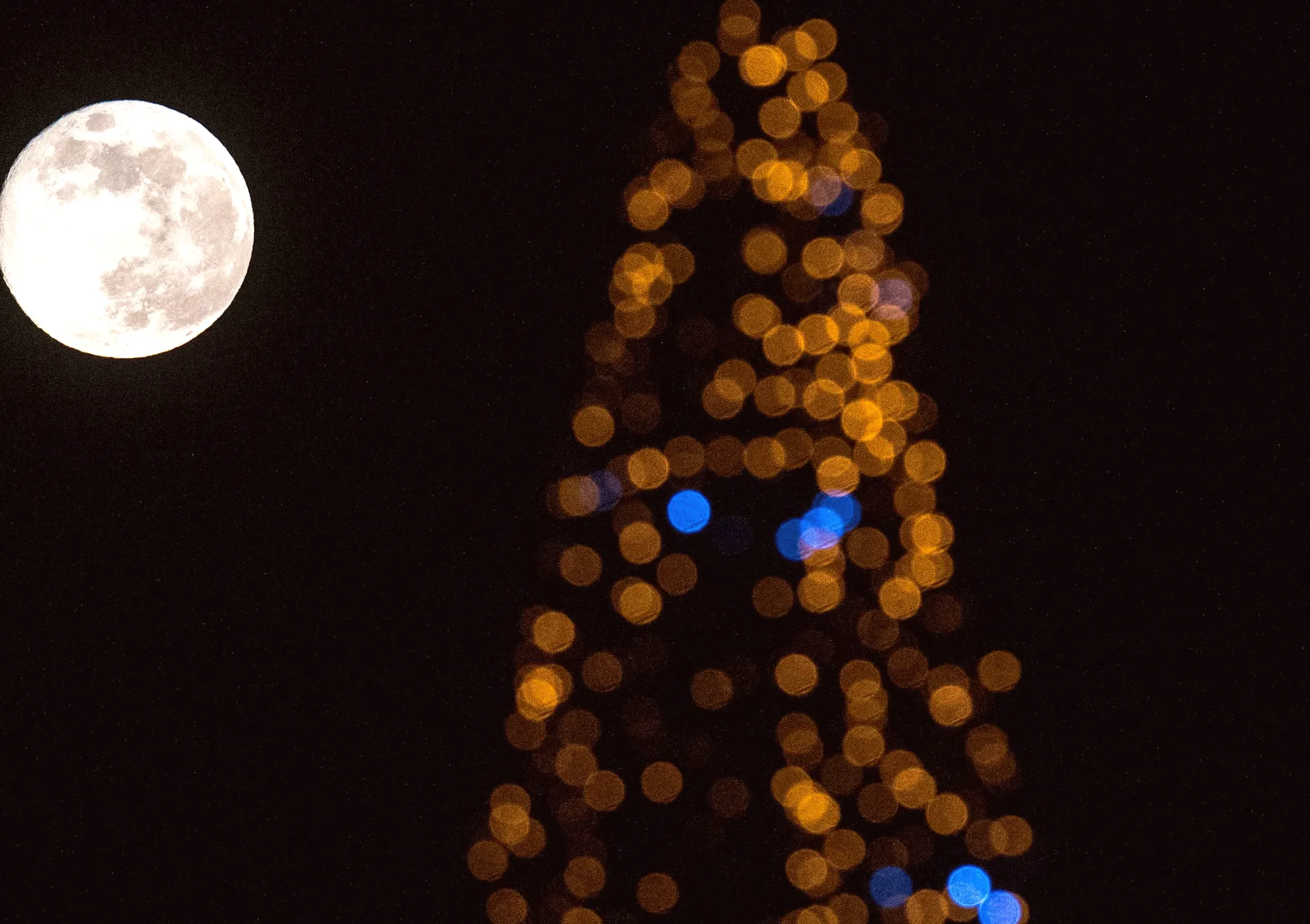
Prepare to witness the last full moon of 2025 tonight. The Cold Moon will appear in the sky on Thursday, December 4, 2025, at precisely 6:14 PM, according to the Old Farmer's Almanac.
This event is particularly special, as it marks the conclusion of the year's full moons and also serves as one of the final supermoons of this stretch. Following this, the January 2026 full moon will also be classified as a supermoon. However, after January, we won't see another supermoon until November 2026.
What Makes a Supermoon Different?
Although the term "supermoon" has no formal scientific definition, it refers to a full moon that appears about 14% larger and shines about 30% brighter than an average full moon, according to the Natural History Museum.
This effect occurs because the moons orbit around Earth is elliptical, not perfectly circular. When the moon is closest to Earth, at a point called perigee, it appears much larger and brighter. Conversely, when it is farthest away, at apogee, it creates a smaller, dimmer micromoon.
Why Is December's Full Moon Called the Cold Moon?
The name "Cold Moon" originates from the frigid winter conditions associated with this time of year. According to the Old Farmer's Almanac, it is a name that reflects the cold grip of winter. Additionally, it has been referred to as the "Long Night Moon" because it rises during the longest nights of the year, near the winter solstice.
Other Names for the December Full Moon
Throughout different cultures, this moon is known by various names, such as:
- Drift Clearing Moon (Cree)
- Frost Exploding Trees Moon (Cree)
- Moon of the Popping Trees (Oglala)
- Hoar Frost Moon (Cree)
- Snow Moon (Haida, Cherokee)
- Winter Maker Moon (Western Abenaki)
- Moon When the Deer Shed Their Antlers (Dakota)
- Little Spirit Moon (Anishinaabe)
How to View the Cold Moon
While no special equipment is required to view the Cold Moon, using a telescope or binoculars can enhance your experience. According to Tim Brothers, a technical instructor and observatory manager at MIT, stargazing is often more enjoyable with a good telescope or binoculars, providing a clearer and more detailed view of celestial events.
Whats Next After the December Full Moon?
The first full moon of 2026 will occur on January 3, reaching peak brightness at 5:03 AM. This will be known as the Wolf Moon.
Author: Ava Mitchell
Share
The final full moon of 2025 will shine tonight, marking one of the last supermoons for some time.
47 minutes ago 2 min read WORLD

Michael Bublé considers meeting Pope Leo as 'one of the greatest moments'
55 minutes ago 2 min read WORLD

Prince George is receiving instruction on his future duties as king — Source
56 minutes ago 3 min read WORLD

Video of Nigerian customs officer justifying feeding bandits is outdated
1 hours ago 3 min read WORLD
Have We Finally Moved Beyond the "Jaws Effect?"
1 hours ago 2 min read WORLD

The Royal Family's Best Photos from the German State Banquet at Windsor Castle
1 hours ago 2 min read WORLD
Tragic Accident: 6-Year-Old Boy Fatally Struck by School Bus During Drop Off, Leaving Community Devastated
1 hours ago 2 min read WORLD

Prince George remains unfazed by his future responsibilities as a future king — Source
1 hours ago 2 min read WORLD

Flavio Bolsonaro announces candidacy for Brazil’s 2026 presidential election endorsed by his father
1 hours ago 4 min read WORLD

Leader of Lithuanian governing party convicted for inciting hatred against Jews
1 hours ago 2 min read WORLD