

This week's 'Cold Supermoon' is the highest full Moon of the year
- Last update: 2 days ago
- 2 min read
- 435 Views
- WORLD
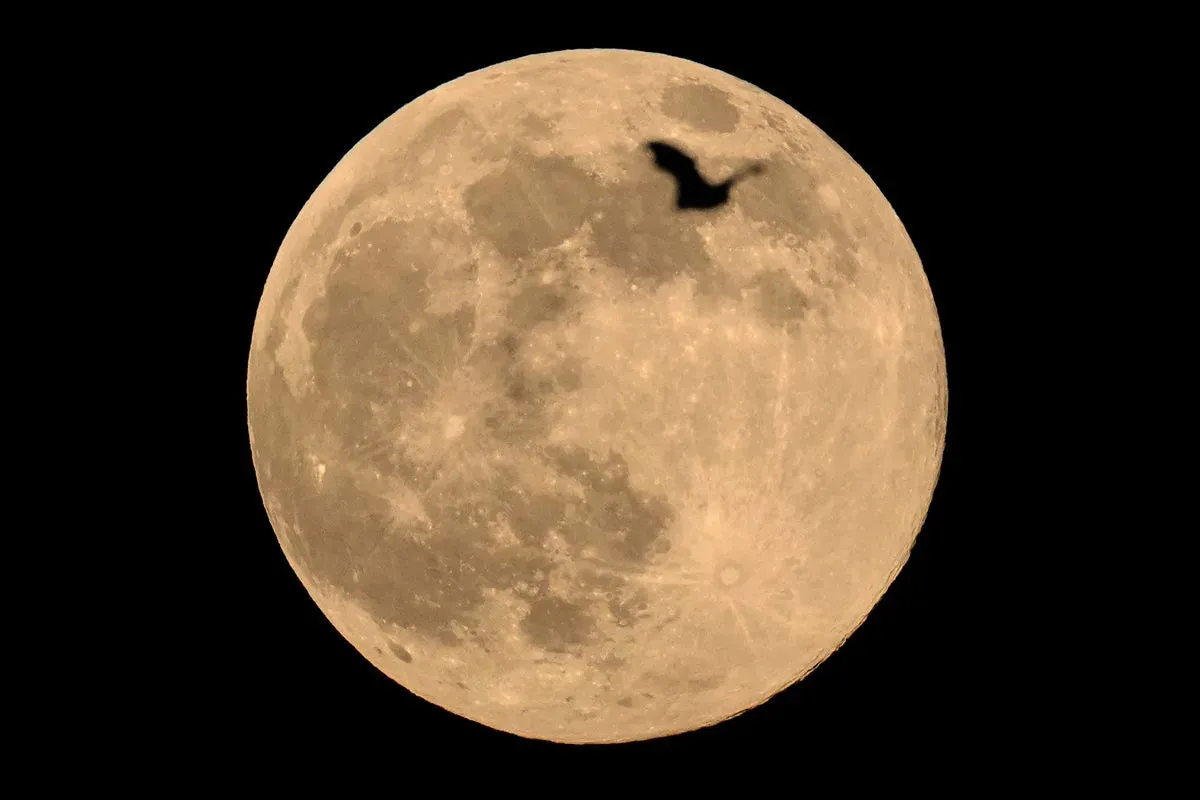
This week, skywatchers will witness the last supermoon of 2025, which will also rise higher than any other full Moon this year, reaching its peak on Thursday evening. Decembers full Moon, often called the Cold Moon, is the third in a sequence of four supermoons, giving it a noticeably larger and brighter appearance.
The Moon follows an elliptical orbit around Earth, meaning its distance from our planet constantly changes. When a full Moon coincides with its closest approach to Earth, known as perigee, a supermoon occurs. According to NASA, this can make the Moon look up to 14% larger and 30% brighter compared to the smallest full Moon of the year.
A supermoon happens when a full Moon aligns with the Moons nearest point to Earth in its elliptical orbit, called perigee, NASA explained in a blog post. During its 27-day journey around Earth, the Moon reaches both its perigee, about 226,000 miles (363,300 km) away, and its farthest point, apogee, around 251,000 miles (405,500 km) away.
Supermoons tend to occur in clusters several times a year, taking advantage of the Moons orbital pattern. The phenomenon is visible to the naked eye on clear nights, though the difference in size and brightness can be subtle.
The latest forecast from the UKs Met Office predicts mostly clear skies for England on Thursday night, allowing optimal viewing as the full Moon peaks at 11:14pm GMT.
Even without a supermoon, the Moon can appear larger near the horizon due to the Moon Illusion, a visual effect that remains not fully understood. With a supermoon, that visual effect is slightly more pronounced, said astronomer William Alston from the University of Hertfordshire.
Tides may rise slightly higher during a supermoon because of the Moons proximity to Earth, though the difference is generally minor. The next and final supermoon in this series will occur on 3 January 2026, with the subsequent one expected only on 24 November 2026.
Author: Ethan Caldwell
Share

Survey shows that Asia has the highest public trust in tax systems
7 seconds ago 2 min read WORLD

Firefighters combat fire in a barn
11 seconds ago 1 min read WORLD

World War 2 Fighters from Surprising Countries
2 minutes ago 4 min read WORLD

Mamdani and Trump Becoming Friendly Is America's 'Nightmare of the Horseshoe Theory'
5 minutes ago 2 min read WORLD

German lower house approves new voluntary military service
6 minutes ago 2 min read WORLD
Tonight's Full Moon in December 2025: What is a Supermoon and How to Witness It
8 minutes ago 1 min read WORLD

Vatican commission rejects proposal to allow women as deacons
9 minutes ago 3 min read WORLD

Over 150 Christmas trees adorned with decorations
9 minutes ago 1 min read WORLD

Everything You Need to Know About Kate Middleton's Annual "Together at Christmas" Carol Service (and the Royal Excluded from the Event)
10 minutes ago 3 min read WORLD

Trump administration warns Europe of 'civilizational erasure'
14 minutes ago 3 min read WORLD