

World War 2 Fighters from Surprising Countries
- Last update: 46 minutes ago
- 4 min read
- 433 Views
- WORLD
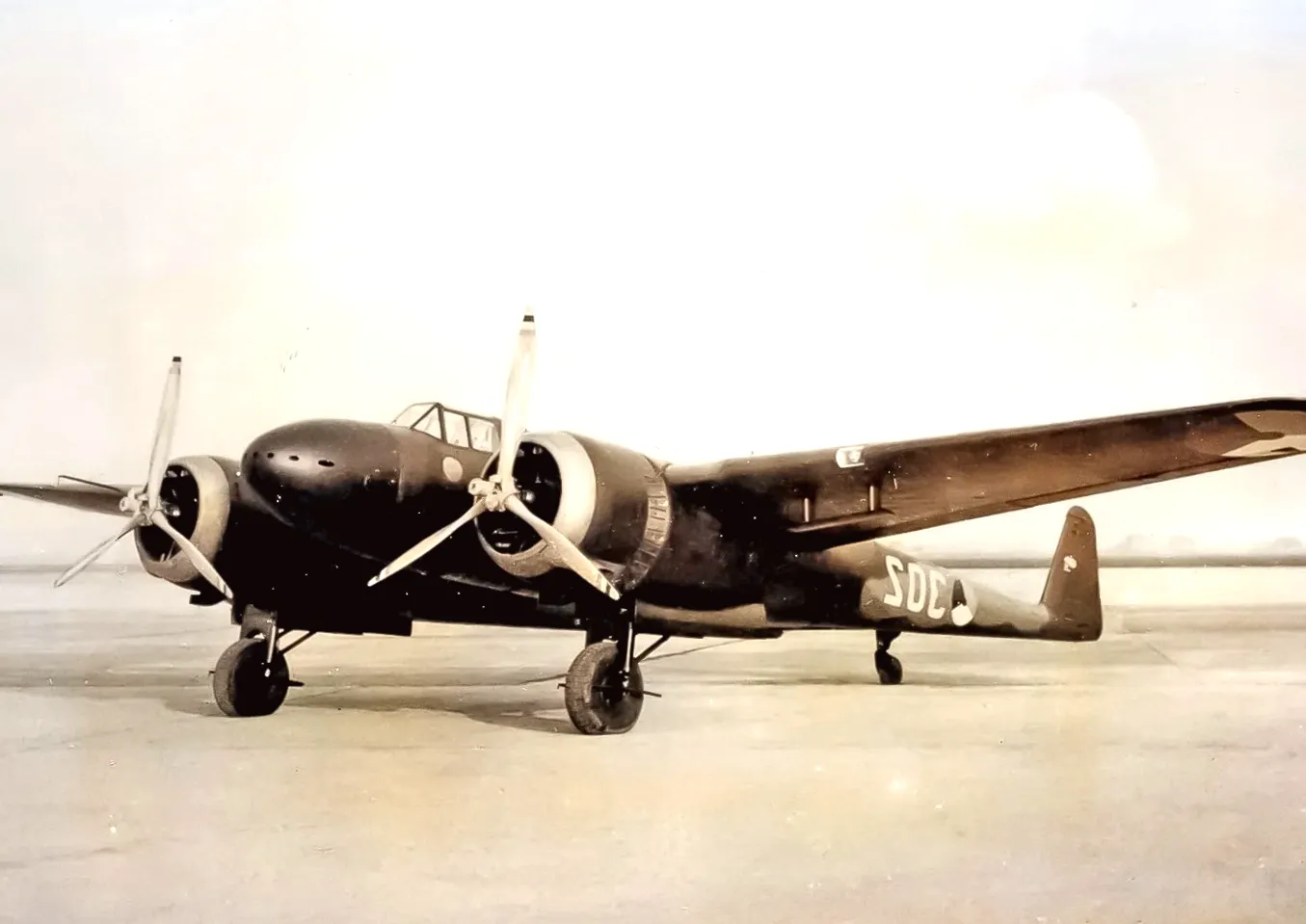
While iconic World War II fighters are often associated with military giants like the United States and Germany, several smaller countries developed their own combat aircraft, sometimes out of urgent necessity when global supplies ran low. Surprisingly, many of these lesser-known fighters performed effectively in battle. Here is a look at ten remarkable aircraft from nations you might not expect, ranging from Australia to Yugoslavia. Each saw operational use, and most engaged in combat.
10: CAC Boomerang
After Pearl Harbor, Australia faced the threat of Japanese attacks and a precariously long supply line from the UK and the US. Concerned that modern aircraft deliveries might falter, Lawrence Wackett of the Commonwealth Aircraft Corporation designed a domestic fighter. Based on the Wirraway trainer and powered by the locally built Pratt & Whitney R-1830 Twin Wasp engine, the Boomerang first flew in May 1942. It was agile and easy to handle, though its speed lagged behind contemporary fighters.
Entering service in early 1943, the Boomerang struggled to intercept Japanese bombers but excelled in close-support roles, where its manoeuvrability, firepower, and armor made it highly effective in the South West Pacifics small-scale engagements.
9: Avia B.534
Czechoslovakias B.534 biplane, one of the finest of its type, entered service in 1933 and remained in use after the German annexation in 1939. The Bk.534 variant carried a 20mm cannon, while later models offered a bubble canopy for full cockpit visibility. B.534s served with Slovak units on the Eastern Front and played a small but notable role in the Slovak National Uprising, achieving the last confirmed air-to-air victory for a biplane fighter. Germany, Bulgaria, Greece, and Yugoslavia also operated the type in various capacities.
8: VL Myrsky
Finland developed the Myrsky fighter in 1939 to ensure a domestic supply of aircraft. Powered by the Pratt & Whitney R-1830 Twin Wasp engine, the Myrsky was primarily made of wood and proved faster than the Australian Boomerang. First flying in December 1941, it saw action during the Continuation War against the USSR. Despite structural issues due to low-quality glue, the Myrsky remained in service until 1948, demonstrating notable agility in dogfights with Soviet fighters.
7: Fokker D.XXI
The Dutch Fokker D.XXI, a low-wing monoplane with an enclosed cockpit, was designed for the Netherlands East Indies but saw action in Europe, mainly with Finland. During the Winter War of 193940, it achieved 130 victories for just 12 losses. Dutch D.XXIs proved effective against Bf 109Es during the 1940 German invasion, securing 16 confirmed kills.
6: Fokker G.1
The twin-boom G.1 heavy fighter, developed as a private venture, inspired the Lockheed P-38 Lightning years later. Debuting in 1937, it carried eight forward-firing machine guns and was used in the defense of the Netherlands in 1940, achieving 14 air-to-air victories before being repurposed as a trainer under German occupation. Two G.1s even escaped to England in 1941.
5: PZL P.24
The Polish P.24 was an advanced gull-winged fighter exported to Bulgaria, Greece, Romania, and Turkey. Although Poland did not deploy it, the aircraft saw significant combat, including defending Greece against Italy in 1940 and Romanian airfields against Soviet attacks. Its heavy firepower enabled notable success despite being slower and less manoeuvrable than opponents. The design later influenced the Romanian IAR 80, which became a capable wartime fighter.
3: FFVS J 22
Swedens FFVS J 22 was developed after a US arms embargo limited access to modern fighters. A lightweight, compact design powered by the R-1830 engine, the J 22 performed exceptionally well relative to its power, remaining competitive with P-51Ds at high altitude. It was valued for its handling, simplicity, and effectiveness, serving in the Swedish Air Force until 1952, with 198 built in total.
2: Saab J 21
The unusual Saab J 21 used a pusher configuration, placing its propeller behind the cockpit to concentrate heavy firepower in the nose. This design required an early ejection seat for pilot safety. First flown in 1943, the J 21 excelled as a fighter-bomber, carrying bombs, rockets, and wingtip fuel tanks. Powered by the German DB 605 engine, it was later adapted into the J 21R jet fighter, Swedens first operational jet in 1950.
1: Rogoarski IK-3
Yugoslavias IK-3, a domestic fighter, distinguished itself during the brief April 1941 invasion by Germany, Italy, and Hungary. Advanced for its time, the IK-3 had a retractable undercarriage, high speed, and superior maneuverability compared to the German Bf 109. Only 12 were completed due to halted engine deliveries, but in eleven days of combat, IK-3s shot down eleven enemy aircraft. The design later influenced the post-war Ikarus S-49, which remained in service until 1961.
Author: Gavin Porter
Share
World War 2 Fighters from Surprising Countries
46 minutes ago 4 min read WORLD
Fascinating World War 2 Fighters from Unexpected Countries
3 hours ago 4 min read WORLD
Fascinating World War 2 Fighters from Unexpected Countries
5 hours ago 4 min read WORLD
Unlikely Nations' World War 2 Fighters: A Fascinating Look
5 hours ago 4 min read WORLD
Fascinating World War 2 Fighters from Unexpected Countries
6 hours ago 4 min read WORLD
Unlikely Nations' World War 2 Fighters: A Fascinating Look
6 hours ago 4 min read WORLD
Fascinating World War 2 Fighters from Unexpected Countries
6 hours ago 4 min read WORLD
Fascinating World War 2 Fighters from Unexpected Countries
8 hours ago 4 min read WORLD
Unexpected World War 2 Fighters from Unlikely Countries
10 hours ago 4 min read WORLD
Top 10: Most significant airplanes during the Vietnam War
2 days ago 4 min read TRAVEL