

Fascinating World War 2 Fighters from Unexpected Countries
- Last update: 6 hours ago
- 4 min read
- 681 Views
- WORLD
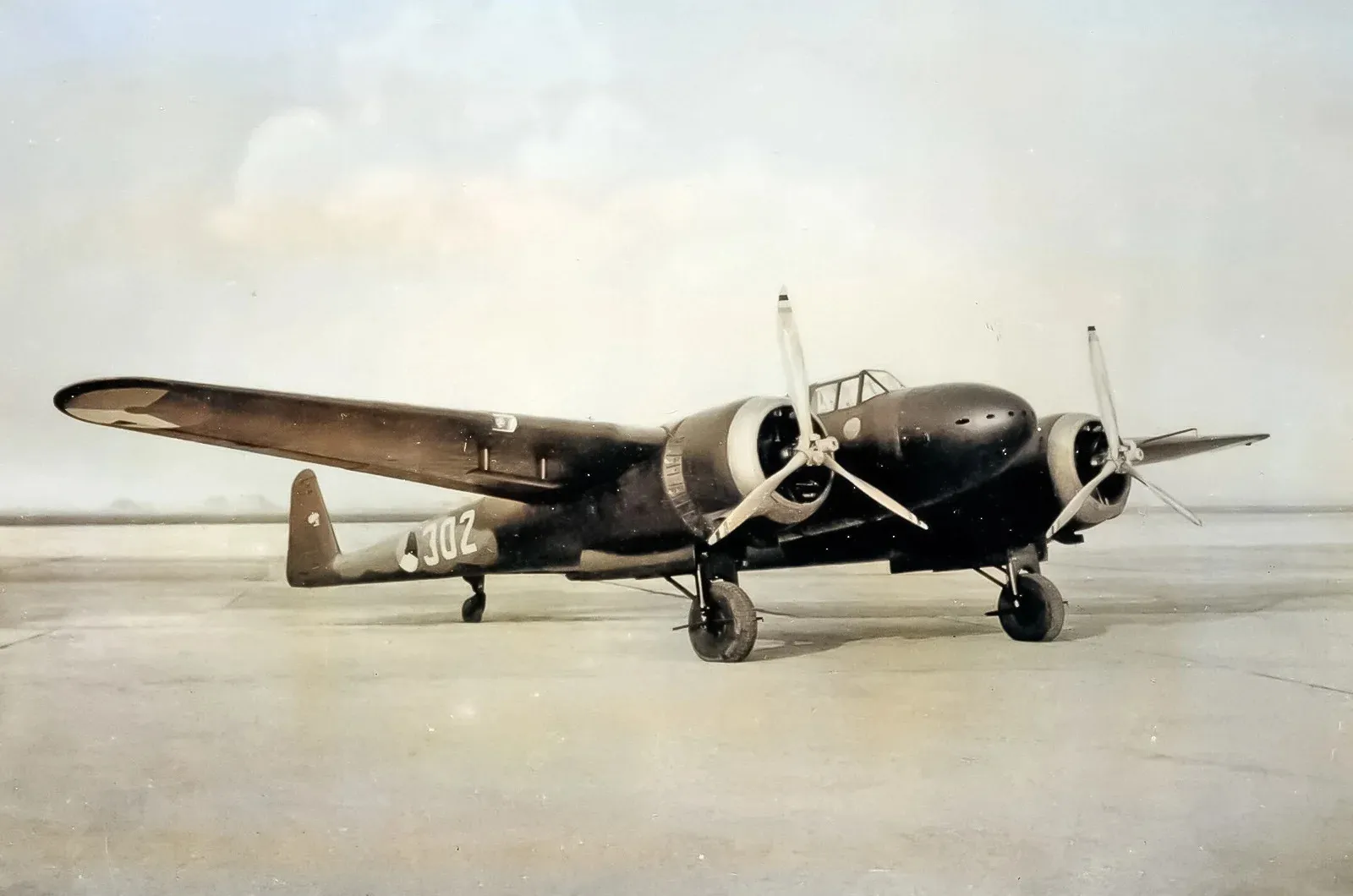
While iconic World War II fighters often hail from major powers like the United States and Germany, smaller countries also produced combat aircraft, often out of necessity when international supplies were scarce. Many of these lesser-known planes performed admirably in battle. Here is a look at ten of the most fascinating fighters from unexpected corners of the world, from Australia to Yugoslavia. All were produced in limited numbers, saw operational service, and most engaged in combat.
10: CAC Boomerang
After the attack on Pearl Harbor, Australia faced the threat of Japanese forces while relying on a supply chain stretching to the UK and US. Concerned about potential shortages of modern fighters, Lawrence Wackett of the Commonwealth Aircraft Corporation proposed an indigenous design. Based on the Wirraway trainer and powered by the Pratt & Whitney R-1830 Twin Wasp, the Boomerang prototype first flew in May 1942, showing agility and ease of handling.
Although underpowered and slow compared to contemporary aircraft, the Boomerang entered service in early 1943. It struggled against Japanese bombers but excelled in close-support missions, benefiting from its maneuverability, armor, and armament in the South West Pacific campaign.
9: Avia B.534
The Czechoslovakian B.534, one of the finest biplane fighters ever, debuted in 1933. Even after Germany annexed Czechoslovakia in 1939, the B.534 continued service with several countries. Variants included four machine guns or a 20mm cannon, and later models featured improved rear visibility. Slovak units scored a few victories over Soviet aircraft, and three B.534s even participated in the 1944 Slovak National Uprising. Germany, Bulgaria, Greece, and Yugoslavia also used this fighter for various roles.
8: VL Myrsky
Finland, anticipating limited foreign aircraft availability, developed the VL Myrsky in 1939. Using the same Pratt & Whitney R-1830 engine as the Boomerang, the largely wooden Myrsky was fast and agile, seeing action in the Continuation War against the USSR. Construction flaws due to poor-quality glue caused structural issues, but the fighter remained operational until 1948.
7: Fokker D.XXI
Designed for the Netherlands East Indies, the Fokker D.XXI was a rugged, modern monoplane with an enclosed cockpit and fixed landing gear. It saw its first combat in Finland during the Winter War of 1939-40, achieving remarkable results against Soviet aircraft. In Dutch service, it proved effective against the Bf 109E during the 1940 campaign, scoring 16 confirmed victories.
6: Fokker G.1
The Dutch G.1, a twin-boom heavy fighter, debuted in 1937 and influenced later designs such as the Lockheed P-38 Lightning. Nicknamed "le Facheur" for its nose-mounted armament of eight machine guns, it saw limited action during Germany's 1940 invasion. Surviving planes were used for ground attack, training, and one was flown to England to evade capture.
5: PZL P.24 & IAR 80
Polands PZL P.24, an advanced gull-wing monoplane, entered service with export customers like Greece, Bulgaria, Romania, and Turkey. Greek P.24s fought effectively against Italian forces in 1940, while Romanian examples defended oilfields and cities against Soviet bombers. Romania later developed the IAR 80, improving performance and firepower. The IAR 80 series remained active until 1949, participating in both air-to-air and ground-attack missions.
3: FFVS J 22
Swedens FFVS J 22, nicknamed a "pocket rocket," was created after a US arms embargo prevented access to modern fighters. Powered by the R-1830 engine, the small and lightweight J 22 was highly efficient and competitive against aircraft like the P-51D up to 20,000 ft. Pilots praised its handling and performance, though its narrow undercarriage was unusual. It remained in Swedish service until 1952, with 198 units built.
2: Saab J 21
The unconventional SAAB 21 featured a pusher propeller layout to concentrate firepower in the nose, making it one of the first fighters with an ejection seat. Initially intended for air superiority, it excelled as a fighter-bomber, with excellent forward visibility and the ability to carry bombs and rockets. Powered by the Daimler-Benz DB 605, the aircraft was later converted into Swedens first jet fighter, the J 21R, in 1950.
1: Rogoarski IK-3
Yugoslavias Rogoarski IK-3 was a domestically built fighter that performed impressively during the brief invasion of the country. Featuring a retractable undercarriage and high maneuverability, the IK-3 could outperform the German Bf 109 in certain conditions. Only 12 were completed, and during eleven days of combat, IK-3s destroyed eleven enemy aircraft. The design later influenced the postwar Ikarus S-49, which served until 1961.
Author: Harper Simmons
Share
World War 2 Fighters from Surprising Countries
1 hours ago 4 min read WORLD
Fascinating World War 2 Fighters from Unexpected Countries
4 hours ago 4 min read WORLD
Fascinating World War 2 Fighters from Unexpected Countries
6 hours ago 4 min read WORLD
Unlikely Nations' World War 2 Fighters: A Fascinating Look
6 hours ago 4 min read WORLD
Fascinating World War 2 Fighters from Unexpected Countries
7 hours ago 4 min read WORLD
Unlikely Nations' World War 2 Fighters: A Fascinating Look
7 hours ago 4 min read WORLD
Fascinating World War 2 Fighters from Unexpected Countries
7 hours ago 4 min read WORLD
Fascinating World War 2 Fighters from Unexpected Countries
9 hours ago 4 min read WORLD
Unexpected World War 2 Fighters from Unlikely Countries
11 hours ago 4 min read WORLD
Top 10: Most significant airplanes during the Vietnam War
2 days ago 4 min read TRAVEL