

Fascinating World War 2 Fighters from Unexpected Countries
- Last update: 7 hours ago
- 4 min read
- 318 Views
- WORLD
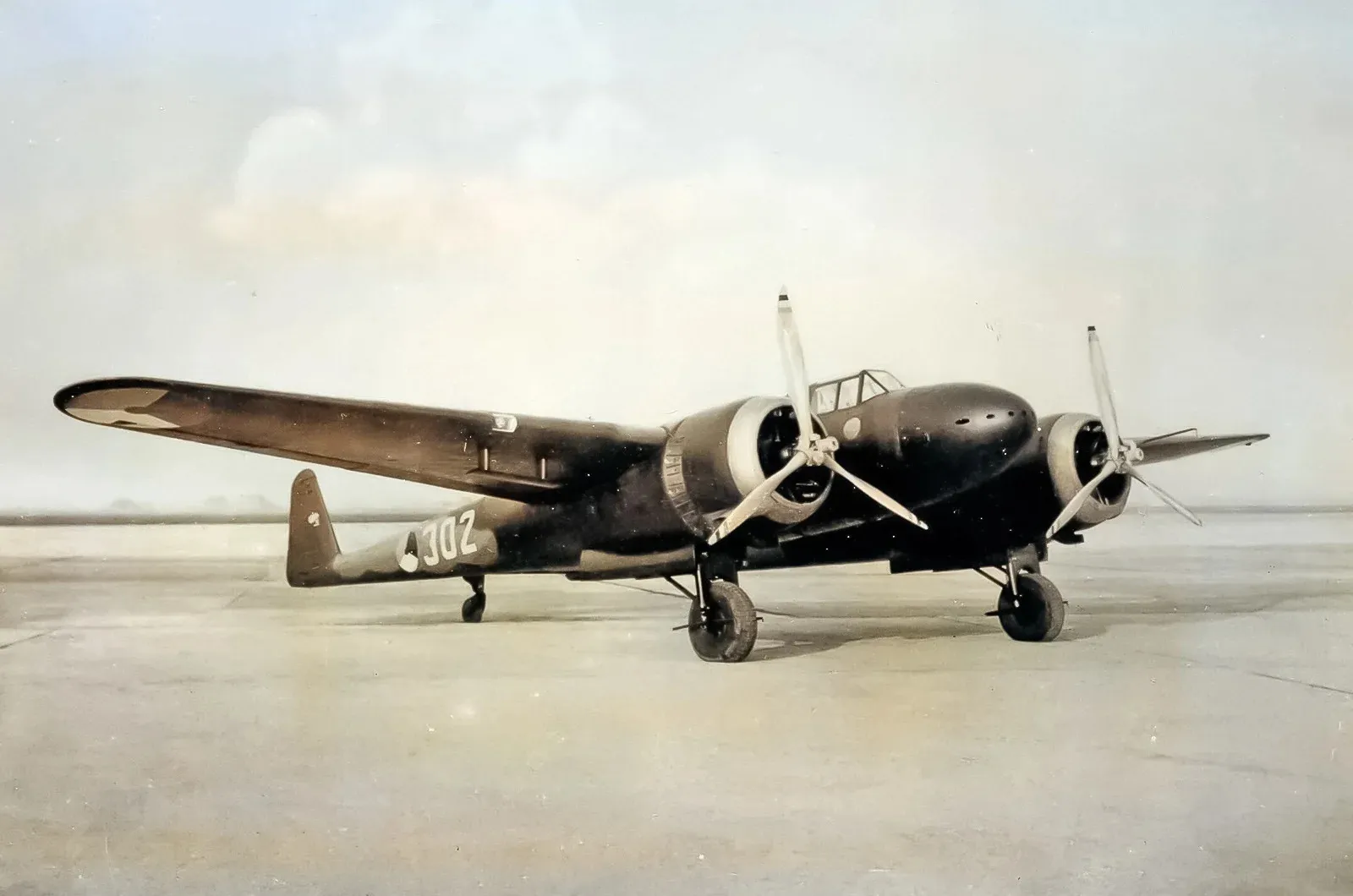
While World War II is often remembered for fighters produced by major powers like the United States and Germany, smaller countries also developed their own aircraft, often out of necessity due to limited access to global arms supplies. Surprisingly, some of these lesser-known fighters proved effective in combat. Below are ten notable examples from unexpected corners of the world, from Australia to Yugoslavia. Each saw operational service, and most engaged in combat missions.
10: CAC Boomerang
Following the attack on Pearl Harbor, Australia faced war with Japan and was at the end of a long supply chain from the UK and US. Anticipating delays in receiving modern fighters, Lawrence Wackett of the Commonwealth Aircraft Corporation proposed a domestic fighter. The Boomerang was quickly developed using the Wirraway airframe and powered by a locally manufactured Pratt & Whitney R-1830 Twin Wasp engine. Its prototype first flew in May 1942, showing excellent maneuverability and handling.
Though agile, the Boomerang was slow compared to contemporary aircraft. Entering service in early 1943, it struggled to intercept Japanese bombers. However, when repurposed for close support, it excelled thanks to its maneuverability, armor, and armament, performing effectively in the South West Pacific theater.
9: Avia B.534
Czechoslovakias B.534 biplane, introduced in 1933, was considered among the best fighters of its time. Even after the German annexation in 1939, it continued service with several countries. Variants included versions with a 20mm cannon and improved visibility cockpits. B.534s saw action on the Eastern Front with Slovakia and supported the Slovak National Uprising in 1944, achieving one of the last confirmed air-to-air victories by a biplane. Germany and other nations also used the B.534 in training and auxiliary roles.
8: VL Myrsky
Finland developed the Myrsky fighter in 1939 to counter potential shortages of foreign aircraft. Built mainly from wood and powered by the R-1830 Twin Wasp, it first flew in December 1941. A total of 51 were produced and saw combat during the Continuation War against the USSR. While fast and maneuverable, construction flaws due to low-quality glue led to structural issues in harsh weather. Despite this, the Myrsky remained in service until 1948.
7: Fokker D.XXI
The Dutch-designed Fokker D.XXI was a rugged, low-wing monoplane with an enclosed cockpit but fixed landing gear. It first flew in 1936 and 36 were ordered for the Netherlands. Finland used license-built versions during the Winter War and the Continuation War, scoring significant victories against Soviet aircraft. In Dutch service, it was surprisingly effective against German Bf 109s during the 1940 invasion.
6: Fokker G.1
The twin-boom Fokker G.1 heavy fighter was initially a private venture that later influenced the design of the Lockheed P-38 Lightning. Known as "le Facheur," it featured eight forward-firing guns. When Germany invaded the Netherlands in 1940, 23 G.1s were operational. They achieved 14 air-to-air victories and were later used by Germany as trainers. Remarkably, two G.1s were flown to England by Dutch personnel to avoid capture.
5: PZL P.24
The Polish P.24, a gull-wing monoplane, first flew in 1934 and set a speed record for radial-engine fighters. Although Poland did not use it in combat, the P.24 was exported to countries including Greece and Romania. Greek P.24s excelled against Italian Fiat CR.42s, achieving 64 aerial victories. Romanian P.24s defended key targets against Soviet bombers, scoring 37 kills. Romania also developed the IAR 80 based on the P.24, which served effectively against the USSR and later the US air raids until 1944.
3: FFVS J 22
Swedens FFVS J 22 emerged from a US arms embargo, prompting a domestic fighter program. Produced by the Royal Air Administration Aircraft Factory, it used the R-1830 engine and was extremely efficient for its power. Lightweight and fast, the J 22 performed well in mock dogfights against P-51Ds. Pilots appreciated its handling, although its narrow landing gear was problematic. A total of 198 were built, remaining in Swedish service until 1952.
2: Saab J 21
The Swedish SAAB J 21 featured an unusual pusher design to concentrate firepower in the nose, necessitating an ejection seat for safety. First flown in 1943, 298 were built. While intended as a fighter, it excelled as a fighter-bomber, capable of carrying bombs, rockets, and fuel tanks as improvised incendiary weapons. Powered by a German DB 605 engine built under license, the design was later adapted for jet propulsion as the J 21R, Swedens first military jet in 1950.
1: Rogoarski IK-3
During the German invasion of Yugoslavia, most defending aircraft were foreign, but the domestically produced Rogoarski IK-3 stood out. Advanced and maneuverable, it featured a retractable undercarriage and higher speed than its predecessor, the IK-2. Only 12 were completed due to engine supply issues, but during eleven days of combat, they destroyed eleven enemy planes. The design later evolved into the Ikarus S-49, which served until 1961.
Author: Riley Thompson
Share
Fascinating World War 2 Fighters from Unexpected Countries
4 hours ago 4 min read WORLD
Fascinating World War 2 Fighters from Unexpected Countries
6 hours ago 4 min read WORLD
Unlikely Nations' World War 2 Fighters: A Fascinating Look
6 hours ago 4 min read WORLD
Fascinating World War 2 Fighters from Unexpected Countries
7 hours ago 4 min read WORLD
Unlikely Nations' World War 2 Fighters: A Fascinating Look
7 hours ago 4 min read WORLD
Fascinating World War 2 Fighters from Unexpected Countries
7 hours ago 4 min read WORLD
Fascinating World War 2 Fighters from Unexpected Countries
9 hours ago 4 min read WORLD
Unexpected World War 2 Fighters from Unlikely Countries
11 hours ago 4 min read WORLD
Top 10: Most significant airplanes during the Vietnam War
2 days ago 4 min read TRAVEL
Top 10: Key aircraft during the Vietnam War
2 days ago 5 min read TRAVEL