

Fascinating World War 2 Fighters from Unexpected Countries
- Last update: 9 hours ago
- 4 min read
- 874 Views
- WORLD
While iconic fighters of World War II often hailed from major powers like the United States and Germany, smaller countries also produced their own combat aircraft, frequently out of necessity as global supply lines faltered. Some of these lesser-known fighters proved surprisingly capable in combat. Here are ten remarkable examples from unexpected corners of the globe, spanning Australia to Yugoslavia. Each was produced in limited numbers and saw actual service.
10: CAC Boomerang
After Pearl Harbor, Australia faced the Japanese threat at the end of a long supply chain from the UK and US. To ensure local fighter production, Lawrence Wackett of the Commonwealth Aircraft Corporation proposed the CAC Boomerang, based on the Wirraway trainer and powered by the Pratt & Whitney R-1830 Twin Wasp engine. The prototype flew in May 1942, demonstrating agility and ease of flight.
Despite its manoeuvrability, the Boomerang was slow compared to contemporary fighters and initially struggled to intercept Japanese bombers. Once reassigned to close support, its robust design and heavy armament made it highly effective in the South West Pacific, excelling in small-scale, close-quarters engagements.
9: Avia B.534
The Czechoslovak B.534, introduced in 1933, was among the finest biplane fighters ever built. Though appearing outdated by World War II, it served multiple nations in varied roles. Armed with four fuselage-mounted machine guns, or a 20mm cannon in the Bk.534 variant, it later gained a bubble canopy for improved visibility. B.534s saw combat on the Eastern Front with Slovakia, participated in the Slovak National Uprising, and were also employed by Bulgaria, Greece, and Yugoslavia. Germany used captured units for training and experiments with carrier operations.
8: VL Myrsky
Finland developed the Myrsky (Storm) in 1939 to address potential shortages of imported fighters. Using the same Pratt & Whitney R-1830 engine as the Australian Boomerang, the primarily wooden aircraft first flew in December 1941. Fifty-one Myrskys were built and saw action during the Continuation War against the USSR, where their speed and agility made them effective dogfighters. Poor-quality glue caused structural issues in harsh weather, but the aircraft remained in service until 1948.
7: Fokker D.XXI
The Dutch D.XXI was a rugged, low-wing monoplane designed for simplicity and reliability. First flown in 1936, it lacked a retractable undercarriage but was highly manoeuvrable. Finland acquired the type for the Winter War, where it achieved 130 victories at the cost of 12 losses. Dutch D.XXIs also fought effectively during the 1940 German invasion, securing 16 confirmed kills against Bf 109Es.
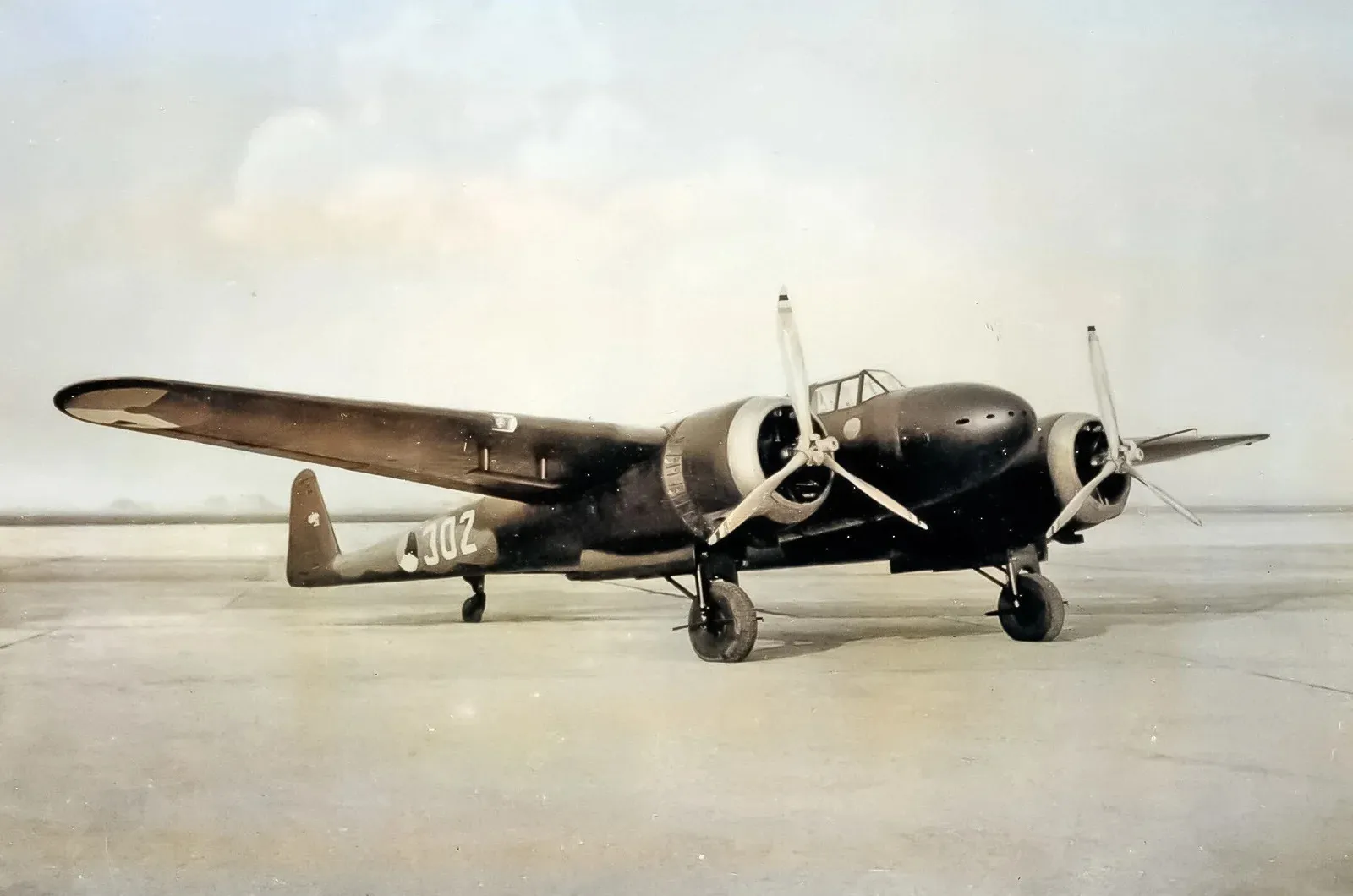
6: Fokker G.1
The twin-boom G.1 heavy fighter, developed privately by Fokker, impressed at the 1936 Paris Air Show. Nicknamed le Facheur for its eight forward-firing guns, it entered service in 1937. During Germanys 1940 invasion of the Netherlands, 23 G.1s were operational, achieving 14 air-to-air victories. Remaining aircraft were used by the Germans as trainers, while two were flown to England in 1941 by escaping Dutch personnel.
5: PZL P.24 / IAR 80
Polands PZL P.24, a gull-wing monoplane fighter, first flew in 1934 and was exported to Bulgaria, Greece, Romania, and Turkey. Though Poland did not deploy it, Greek and Romanian forces used it extensively, scoring significant victories despite being outmatched in manoeuvrability by some opponents. Romanias IAR 80, developed from the P.24, first flew in 1939 and proved effective against Soviet aircraft. Later variants added heavier armament and dive-bombing capabilities, serving until 1949.
3: FFVS J 22
Swedens J 22 pocket rocket was a small, lightweight fighter produced domestically due to a US arms embargo. Powered by the R-1830 engine, it maximized performance and handled well despite its narrow undercarriage. Capable of competing with the P-51D up to 20,000ft, the J 22 remained in Swedish service until 1952, with 198 aircraft built.
2: Saab J 21
The unconventional Saab J 21 featured a pusher layout with propeller behind the pilot, allowing heavy nose-mounted guns. Its forward visibility and concentrated firepower made it an excellent fighter-bomber. Introduced in 1943, 298 units were built. Post-war, it was converted to jet propulsion as the J 21R, becoming Swedens first operational military jet in 1950.
1: Rogoarski IK-3
Yugoslavias IK-3 was an advanced domestic fighter, featuring a retractable undercarriage and superior manoeuvrability compared to the German Bf 109. Only twelve were completed before the 1941 invasion, but they destroyed eleven enemy aircraft in eleven days, with top pilot Milislav Semiz accounting for four. The IK-3s design later influenced the Ikarus S-49, which remained in service until 1961.
Author: Ethan Caldwell
Share
Fascinating World War 2 Fighters from Unexpected Countries
4 hours ago 4 min read WORLD
Fascinating World War 2 Fighters from Unexpected Countries
6 hours ago 4 min read WORLD
Unlikely Nations' World War 2 Fighters: A Fascinating Look
6 hours ago 4 min read WORLD
Fascinating World War 2 Fighters from Unexpected Countries
7 hours ago 4 min read WORLD
Unlikely Nations' World War 2 Fighters: A Fascinating Look
7 hours ago 4 min read WORLD
Fascinating World War 2 Fighters from Unexpected Countries
7 hours ago 4 min read WORLD
Fascinating World War 2 Fighters from Unexpected Countries
9 hours ago 4 min read WORLD
Unexpected World War 2 Fighters from Unlikely Countries
11 hours ago 4 min read WORLD
Top 10: Most significant airplanes during the Vietnam War
2 days ago 4 min read TRAVEL
Top 10: Key aircraft during the Vietnam War
2 days ago 5 min read TRAVEL