

Ukrainian F-16s Equipped with Laser-Guided Rockets
- Last update: 1 hours ago
- 3 min read
- 571 Views
- WORLD
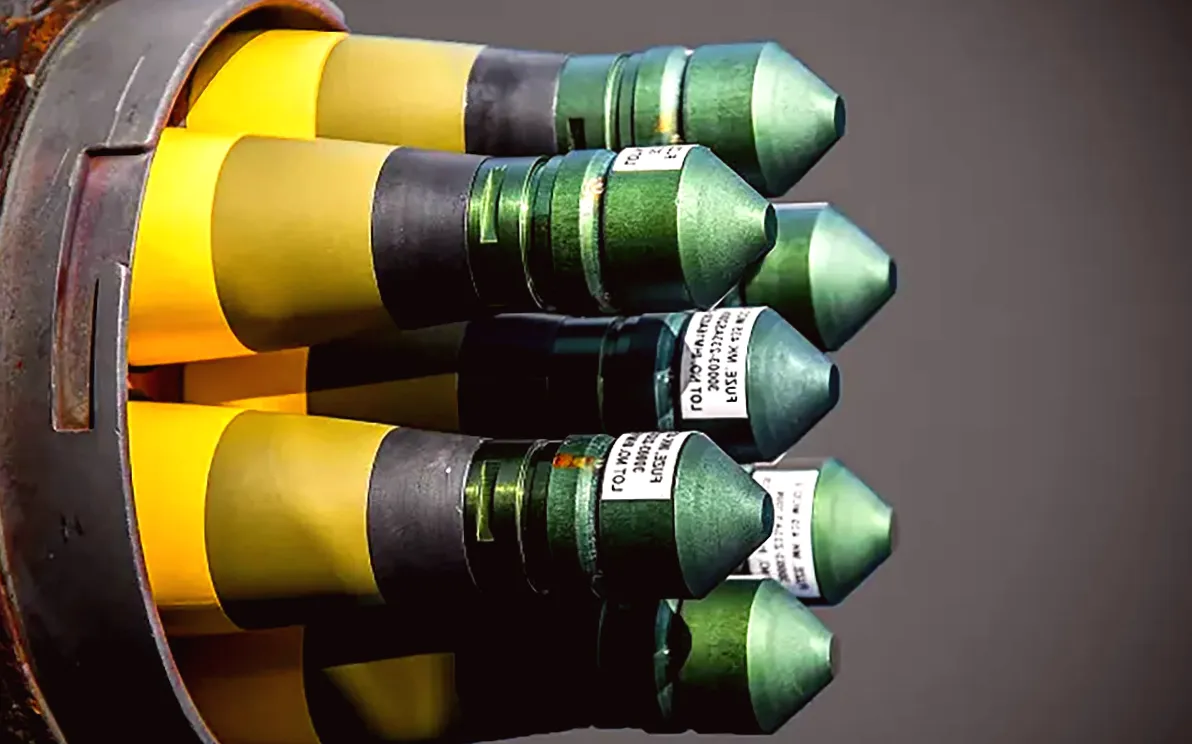
Ukrainian F-16 Vipers are now reportedly capable of deploying laser-guided 70mm Advanced Precision Kill Weapon System II (APKWS II) rockets. This development provides Kyiv with a cost-effective tool for countering long-range kamikaze drones and subsonic cruise missiles.
Images circulating online, originally shared on the Avia OFN Telegram channel, show an F-16AM from the 107th Separate Aviation Wing carrying two LAU-131/A seven-shot rocket pods loaded with APKWS II munitions. The aircraft also appears equipped with AIM-9 Sidewinder missiles and an AN/AAQ-33 Sniper Advanced Targeting Pod (ATP).
Avia OFN has posted additional images suggesting that other Ukrainian F-16s may also be armed with APKWS II, though the rocket pods are less visible. The channel promises further visual confirmation, including in-cockpit footage of rocket launches.
Ukraine has previously used APKWS II rockets in ground-based roles, but integrating them onto F-16s significantly boosts their air defense capabilities. The jets are crucial for intercepting Russian long-range drones and cruise missiles, while also maintaining ground strike capabilities. Their existing arsenal includes AIM-120 AMRAAM and AIM-9 Sidewinder missiles.
One major advantage of APKWS II is cost efficiency. Each rocket, comprising a 70mm motor, warhead, and guidance unit, costs roughly $20,000$25,000. In comparison, AIM-120s and AIM-9X missiles cost around $1 million and $500,000 per unit, respectively. A specialized air-to-air variant, known as AGR-20 FALCO, features a proximity-fuzed warhead and enhanced targeting algorithms, though it is unclear if Ukraine has received these versions.
APKWS II rockets also increase magazine depth. Replacing two air-to-air missiles with two seven-shot rocket pods provides 12 additional engagement opportunities per sortie. U.S. F-16s have demonstrated carrying two pods on a single pylon, further increasing operational flexibility.
Limitations exist: APKWS II is not fire-and-forget, requiring continuous laser designation. Techniques like buddy lasing, where one aircraft designates for another, can mitigate this. BAE Systems is developing a dual-mode guidance package with an imaging infrared seeker to allow quasi-fire-and-forget operation, enhancing overall flexibility.
While not suitable for dogfighting, APKWS II is effective against drones and cruise missiles due to their predictable flight paths. Additionally, the rockets retain their original air-to-ground capability, offering precise, low-cost options for attacking static or moving targets.
The Sniper ATP remains a key asset, combining electro-optical and infrared cameras, a laser designator, and the ability to generate GPS coordinates for munitions. It also provides secondary air-to-air targeting and reconnaissance capabilities.
This development comes amid ongoing pressure on Ukraines air defenses from Russian drone and missile attacks. Adding lower-cost APKWS II rockets to F-16 loadouts may reduce reliance on traditional, more expensive missiles and strengthen defensive operations against future aerial threats.
Author: Ethan Caldwell
Share
First Russian MiG-29 Reportedly Destroyed in Ukraine, But There Could Be More to the Story
12 hours ago 3 min read POLITICS

Reports: Ukraine May Receive Australia's Unwanted Tiger Attack Helicopters
1 days ago 2 min read WORLD

German military-equipment spending near $40bn by 2025 due to new projects
1 days ago 2 min read BUSINESS
Top 10: WWII aircrafts boasting massive firepower
3 days ago 3 min read WORLD
Top 10: WWII aircraft with significant firepower
3 days ago 4 min read WORLD
Top 10: WWII aircrafts known for their immense firepower
3 days ago 4 min read WORLD
Top 10: WWII aircrafts with significant firepower
3 days ago 4 min read WORLD
Israel to fully implement revolutionary Iron Beam laser system
4 days ago 3 min read WORLD

Ukrainian unmanned boats destroy Russian oil tankers
4 days ago 2 min read WORLD