

What impact will Red Funnel's acquisition have on passengers?
- Last update: 3 days ago
- 2 min read
- 25 Views
- WORLD
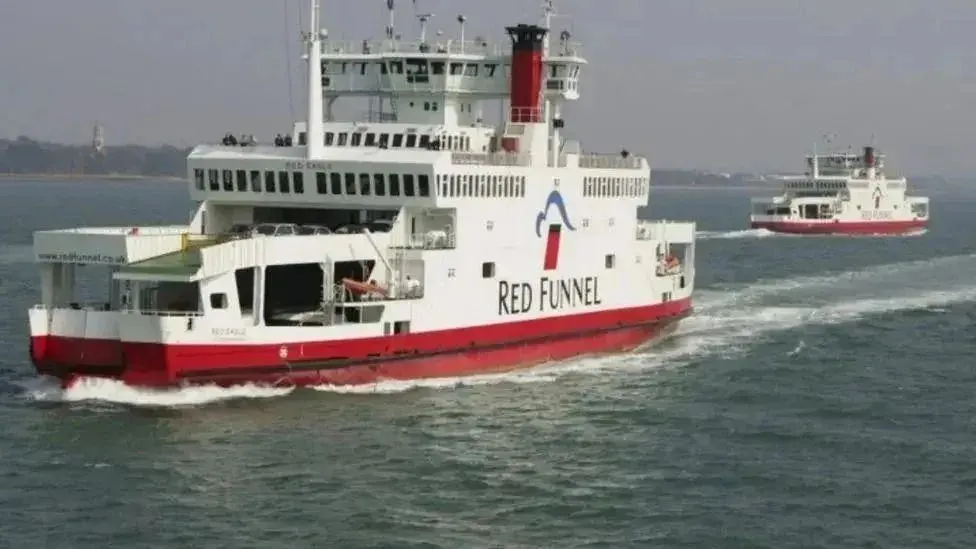
Investment company Njord Partners has finalized its purchase of the Isle of Wight ferry operator Red Funnel, following government approval. The acquisition is expected to have significant implications for passengers on cross-Solent routes.
Red Funnel announced that the deal has reduced the company's debt by over 75%, enabling greater investment in services. Chief Executive Fran Collins has outlined several planned improvements aimed at addressing past criticism regarding high fares and inconsistent service.
Service Reliability and Investment
Red Funnel has faced criticism for recent cancellations on routes between Southampton, Cowes, and East Cowes, caused by technical issues and staffing shortages. Collins acknowledged that reliability "wasn't good enough" in recent years but highlighted recent improvements. Vehicle ferry reliability has risen, while the RedJet service has maintained 99% reliability over the past three months.
The takeover with Njord Partners is expected to fund further investment in technology and infrastructure, while also modernizing the company's digital booking process. Collins admitted that ticket pricing could be clearer, noting that while early bookings offer the best deals, the variety of ticket options can sometimes confuse customers.
Fleet Modernization
Plans to replace the operator's 30-year-old vehicle ferries were drawn up two years ago. Collins confirmed the design will be reviewed under the new ownership to ensure suitability. Although the company hopes to operate fully electric ferries, current infrastructure in the region will likely require diesel-electric hybrids. New vessels could be operational as early as 2029.
Existing RedJet passenger ferries will not be replaced, but a new electric vessel from Artemis Technologies is scheduled for a three-year trial starting in summer 2026. Planned new ferries will be slightly smaller, accommodating 150 cars and 600 passengers, compared to 200 cars and 900 passengers on current vessels. Faster crossing times are expected to maintain overall capacity.
Passenger Demand and Capacity
Collins described ferry demand as "incredibly variable," with average occupancy around 47% annually, though vessels are full during peak periods such as summer holidays and festivals. The adjustments in vessel size are intended to optimize crossings without reducing service availability.
Regulatory Perspective
Isle of Wight East MP Joe Robertson, who has previously criticized high ferry fares, recently introduced the Ferry Services (Integration and Regulation) Bill in the House of Commons. He expressed skepticism about the takeover, describing it as a transfer between private equity groups without guaranteeing improvements in service reliability or schedules. Robertson called for government intervention to regulate fares and service standards, similar to public transport elsewhere in the UK.
Author: Sophia Brooks
Share

DOT's New Integrator for ATC System
55 seconds ago 4 min read WORLD
The 'Threat' Used to Justify Killing 2 Boat Attack Survivors Was Purely Speculation
5 minutes ago 4 min read WORLD

"Actor and Playwright Jeremy O. Harris Arrested in Japan for Alleged Drug Smuggling while Filming "Emily in Paris"
6 minutes ago 2 min read WORLD

Trump's ICE crackdown in cities captures thousands of migrants, with less than 30% having criminal convictions
7 minutes ago 3 min read WORLD

Kate Middleton brings Holiday Spirit in Catherine Walker Coat for ‘Together at Christmas’ Carol Service
9 minutes ago 2 min read WORLD

A Navy jet's $60 million aircraft carrier landing goes awry in seconds with a bang and sparks
12 minutes ago 3 min read WORLD

IDF reservist tragically dies in car crash just weeks before daughter's wedding
14 minutes ago 1 min read WORLD

Arab press voices on Trump's categorization of the Muslim Brotherhood
14 minutes ago 4 min read WORLD

Conner Smith Reflects on Impact of Fatal Car Accident That Took the Life of 77-Year-Old Woman
16 minutes ago 2 min read WORLD

World Food Program warns of severe hunger in Cameroon without more funding
17 minutes ago 2 min read WORLD