

A ten years of Brexit: Britain lags behind peers in trade and growth
- Last update: 2 days ago
- 2 min read
- 410 Views
- BUSINESS
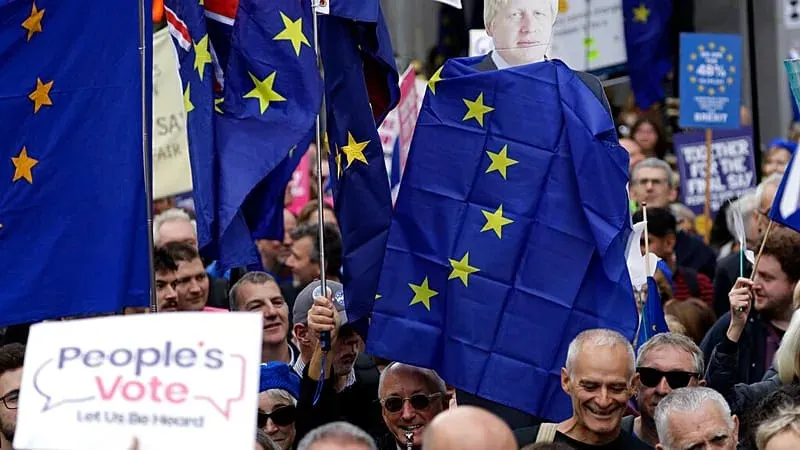
Almost ten years since the Brexit referendum, the United Kingdom has experienced a noticeable deviation from its pre-2016 economic path, marked by a steady decline in investment, productivity, and its global economic influence. This conclusion comes from a recent analysis conducted by the Decision Maker Panel, a research initiative based at Kings College London.
The report states, By early 2025, our estimates suggest the UK economy was around 8% smaller than it would have been without Brexit according to macroeconomic data, and 6% smaller based on firm-level data.
Researchers highlight an extended period of political uncertainty and changing trade regulations that delayed decisions crucial for economic expansion. Instead of pursuing growth through new investments and hiring, many companies focused on anticipating policy changes and mitigating risks. Investment initiatives were often put on hold, while managerial resources were redirected toward Brexit-related preparations rather than innovation or expansion.
The study quantifies the impact: Investment is estimated to have fallen by 1218%, employment by 34%, and productivity by 34% compared to a scenario without Brexit.
The economic consequences were unevenly distributed. Firms deeply embedded in European supply chains, including some of the UKs most productive exporters, experienced the greatest setbacks, weakening sectors that traditionally drove national growth. The report describes Brexit as a reverse form of trade reform, raising barriers instead of reducing them, contrary to typical global trends.
Trade flows did not immediately collapse after the referendum. The UK initially continued under existing rules, which temporarily masked the structural changes. The significant economic disruption coincided with the enforcement of the post-Brexit Trade and Cooperation Agreement, rather than immediately after the vote.
Over the following years, the UKs economic performance fell behind international peers, with growth slowing, living standards stagnating, and the country slipping in global economic rankings. GDP per capita is now estimated to have grown between 6% and 10% less than comparable nations, placing the UK near the 10th percentile among advanced economies.
The report warns that early predictions underestimated the duration of uncertainty and its deep impact on corporate decision-making. What was initially viewed as a temporary adjustment has become a structural shift, still affecting the economy nearly a decade later.
Overall, the findings paint a picture of a United Kingdom transformed not by a single political event, but by years of diverted focus, reduced confidence, and weakened competitiveness. Even ten years on, the economic consequences of Brexit remain significant and persistent.
Author: Gavin Porter
Share

Chinese Spyware Now Disguised as Your Trusted Browser Extensions
1 minutes ago 2 min read BUSINESS

Nuclear Startup Reveals Kansas Location for Mile-Deep Reactor Pilot
2 minutes ago 4 min read BUSINESS

Surprising Reality: Craig Piligian to Depart from Lionsgate
4 minutes ago 3 min read BUSINESS

Backlash ignited by Netflix's acquisition of Warner Bros.
4 minutes ago 2 min read BUSINESS

Generous donations help 88-year-old veteran retire with over $1.5 million
5 minutes ago 2 min read BUSINESS

BLM offering discounted Christmas trees and firewood in western states
6 minutes ago 2 min read BUSINESS

SAG-AFTRA to Analyze Netflix-WB Deal Before Taking Position, Warns Merger Raises Serious Questions
6 minutes ago 2 min read BUSINESS

Dan Bongino Reveals: 'I Was Compensated for My Thoughts on Previous Pipe Bomb Conspiracy Theories'
9 minutes ago 3 min read BUSINESS

NCAI and NARF Organize Session to Discuss Proposed Restrictions on Federal Water Protections
11 minutes ago 2 min read BUSINESS

Closing of student magazines as the latest development in the fight for press freedom and diversity, equity, and inclusion
12 minutes ago 3 min read BUSINESS