

Record-breaking $30.2 million sale of Fabergé egg at rare auction
- Last update: 2 days ago
- 3 min read
- 698 Views
- BUSINESS
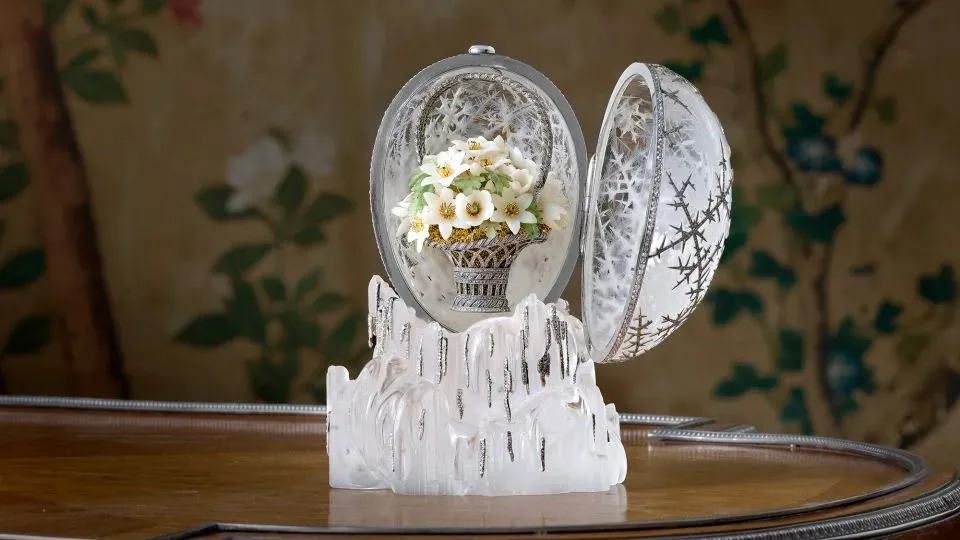
One of the final Faberg eggs held privately fetched 22.9 million ($30.2 million) at auction on Tuesday, setting a new high for the Russian jewelers works sold publicly. Commissioned by Tsar Nicholas II in 1913 for his mother, the Winter Egg was acquired by an undisclosed buyer after a brief three-minute bidding session at Christies in London. The sale slightly surpassed the auction houses pre-sale estimate of 20 million ($26 million).
The enormous price reflects the extreme scarcity of Imperial Eggs created by the House of Faberg, none of which have appeared at auction in over two decades. Only 50 were ever produced, with the Winter Egg among just seven still privately owned; the rest are either lost or held by museums and institutions.
These ornate eggs were crafted for Nicholas II and his father, Alexander III, as Easter gifts for family members between 1885 and 1916. Each egg required roughly a year to design and produce, with new commissions ordered shortly after prior deliveries.
Margo Oganesian, head of Christies Faberg and Russian art department, described the Winter Egg as the most spectacular, artistically inventive and unusual of all 50. Unlike most eggs inspired by historical styles such as Rococo or Neoclassicism, she said, the Winter Egg is an object in its own style The design is timeless its so modern.
Crafted mainly from rock crystal (clear quartz), the egg mimics a frost-covered block of ice. Its exterior is adorned with a snowflake pattern of platinum and 4,500 rose-cut diamonds. Inside is one of Fabergs signature surprises: a miniature hanging basket containing wood anemones made of white quartz, nephrite, and garnets.
The Winter Eggs design was uniquely created by a female jeweler, Alma Pihl, reportedly inspired by ice crystals on her workshop window. Nicholas II purchased it for 24,600 rubles, marking the third-highest sum ever charged by Faberg, according to Christies records.
Kieran McCarthy, co-managing director at Wartski, emphasized the craftsmanship behind the Winter Egg, noting that the thousands of tiny diamonds hold no intrinsic value individually. The value comes purely in the artistic expression its like holding a lump of ice in your hand, he explained.
After the Russian Revolution of 1917, the Winter Egg passed through multiple private collections. It was sold by the Bolsheviks to fund the new Soviet state, purchased by Wartski in the late 1920s or 1930s for just 450, and later held in various British collections. It resurfaced in 1994, selling for over 7.2 million Swiss francs ($5.6 million), setting a record that was surpassed in 2002 with a $9.6 million sale in New York. No Imperial Egg appeared at auction until this Winter Egg sale.
The Winter Egg was part of a larger auction featuring nearly 50 other Faberg items, including jeweled pendants, decorative boxes, and miniature creations, all from a princely collection, according to Christies.
Oganesian commented that the record sale highlights the enduring significance, rarity, and brilliance of one of Fabergs finest works, calling it a historic opportunity for collectors to acquire an object of unparalleled importance.
Author: Sophia Brooks
Share

Critics Choice 2026 nominations: Top forecast accuracy from Gold Derby experts, editors, and users
2 minutes ago 2 min read BUSINESS

The unexpected importance of not skipping your morning orange juice
5 minutes ago 2 min read BUSINESS

Customers adored the 'fabric queen'. But with each order, her tale unraveled.
7 minutes ago 3 min read BUSINESS

Revealed: Alleged Cause of Solange Knowles' Elevator Attack on Jay Z
8 minutes ago 2 min read BUSINESS

Crackdown on H-1B visas targets the incorrect employees
8 minutes ago 2 min read BUSINESS

Officials widen investigation into Waymo regarding self-driving taxis operating near buses
10 minutes ago 2 min read BUSINESS
Engineers develop groundbreaking technology with potential to transform home energy usage: 'Efficient'
11 minutes ago 2 min read BUSINESS

Trump's Team to Meet with Industry Stakeholders to Oppose President's Tariff Proposal on Film & TV Production Tax Incentives
16 minutes ago 3 min read BUSINESS

Federal government selects company for overseeing upgrades to air traffic control system
19 minutes ago 2 min read BUSINESS

Poverty rate in Argentina drops to 36.3%, reaching lowest level since 2018
19 minutes ago 2 min read BUSINESS