

Why do we continue to rebuild the Jersey Shore despite floods and storms?
- Last update: 57 minutes ago
- 4 min read
- 707 Views
- BUSINESS
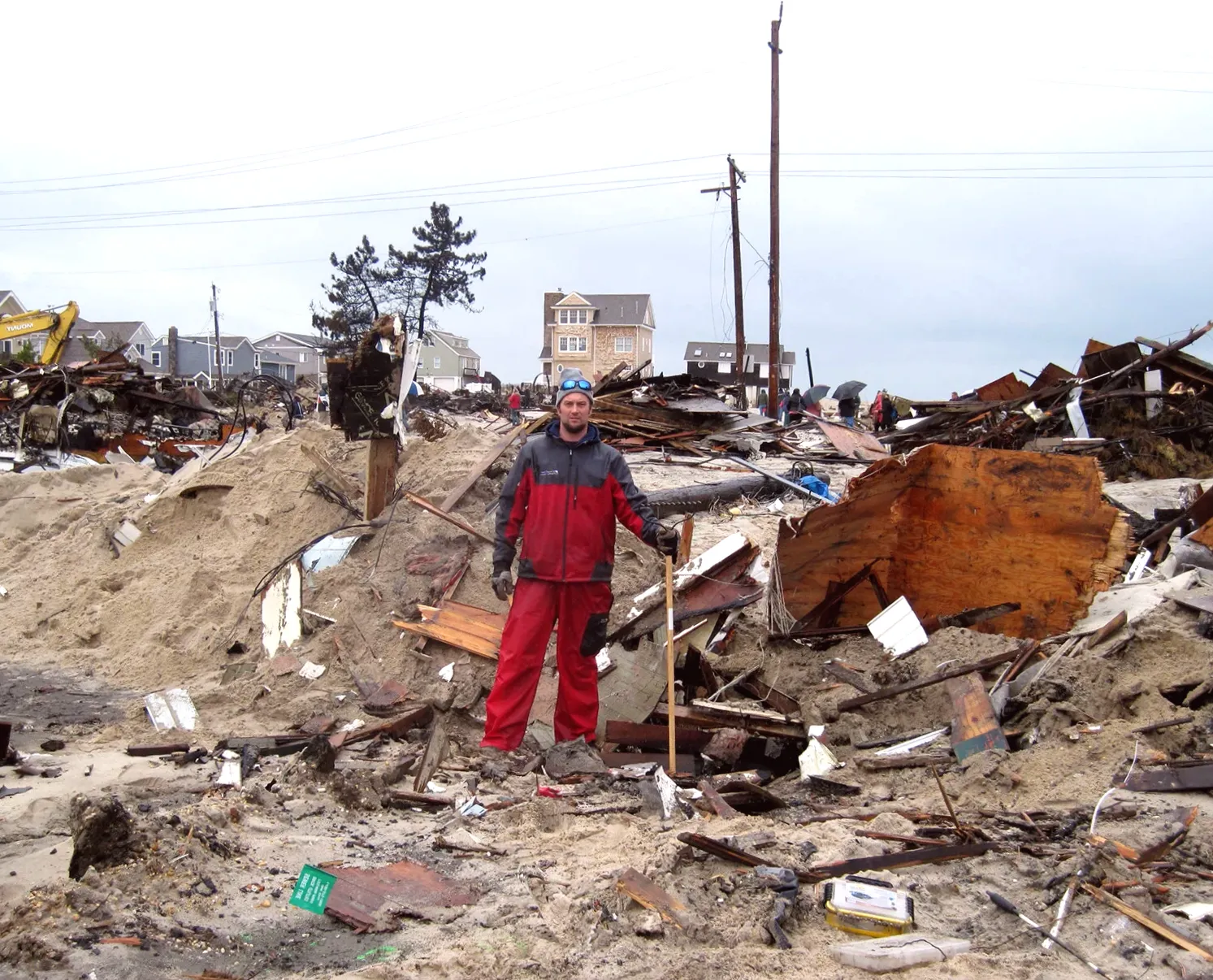
On October 29, 2012, Hurricane Sandy slammed into the Jersey Shore. Nick Honachefsky, a local fisherman, lived in a small bungalow community called Camp Osborn on Barnegat Bay Island. Earlier that day, he had walked along the beach with a bottle of rum, capturing photos of the incoming storm. After hearing warnings from police and a concerned call from his mother, he chose to spend the night on the mainland. Hours later, a storm surge surged over high tide, carving new inlets and washing away almost every bungalow, including Honachefskys 750-square-foot home.
Returning ten days later, Honachefsky witnessed flames shooting 30 feet from the ground due to an exploding transformer and lack of a gas shutoff. Today, the same site features enormous white duplexes built on stilts above ground-floor parking. Between them stretches a newly planted dune leading to the wide Atlantic beach. While the landscape has changed, Honachefsky remains determined to return, despite the high costs.
The Jersey Shore itself is a chain of barrier islands and inlets stretching about 130 miles, characterized by narrow sandy strips separating the Atlantic Ocean from inland bays. Rising seas and warming oceans now cause high-tide flooding to become increasingly frequent, with projections indicating up to 120 flood days annually by mid-century. Storms have also intensified, with extreme rainfall events rising faster in New Jersey than anywhere else in the U.S.
Most shore development sits on shifting sands, formed after glacial retreat 10,000 years ago. Artificial measuresbulkheads, seawalls, jetties, and billions of dollars in dredged sandhave attempted to stabilize the coastline. Over the last 35 years, more than $3 billion has been spent on beach nourishment, often creating cycles of erosion and replenishment. Seawalls, intended to protect property, can accelerate sand loss by reflecting wave energy. Despite Sandy exposing these vulnerabilities, development surged afterward, driven by nostalgia, real estate interests, and local autonomy.
Federal funding for coastal adaptation is dwindling. Many Army Corps of Engineers programs, which provided long-term support, are set to expire by 2040. States nationwide face similar challenges: rising seas and eroding beaches strain budgets and highlight the limits of reactive, short-term interventions. Public policy experts advocate for managed retreat and reduced reliance on federal subsidies, but political and economic realities have stalled transformative change.
Historically, the Jersey Shores growth accelerated after the Garden State Parkway opened in 1954, attracting tourists and developers to barrier islands previously dominated by dunes and marshes. Tiny lots and informal construction proliferated without oversight, transforming the region into a densely built, high-value vacation zone. Superstorm Sandy dramatically altered the Shores physical and social landscape, yet reconstruction favored immediate economic recovery over long-term climate resilience.
Current development trends continue to favor large elevated homes and luxury amenities, often ignoring risks from rising seas and storms. Local officials and developers emphasize personal and economic desire over climate adaptation, while federal and state policies have failed to embed risk into planning or market behavior. Despite studies and proposals for resilient building practices, political pressure and entrenched interests have slowed meaningful implementation.
Programs like New Jerseys Blue Acres, which buy out properties in vulnerable areas, are largely ineffective along the Shore due to high property values. Voluntary retreat remains limited, and the cost of maintaining infrastructure against natural forces continues to escalate. Water systems, sewage, stormwater management, and beach replenishment require massive investment, yet funding sources are uncertain.
Residents and officials acknowledge the threat but often prioritize immediate lifestyle and property desires over long-term adaptation. Efforts to stabilize small eroding islands and maintain beaches illustrate the ongoing struggle to balance human habitation with natural processes. Many locals, like Honachefsky and Angela Andersen, feel a deep connection to the Shore and remain determined to stay, despite the growing environmental and financial pressures.
The future of the Jersey Shore is uncertain. Without large-scale policy intervention and funding, wealthy homeowners may continue to maintain properties, while broader public access and safety may decline. Long-term resilience measures, including planned retreat, infrastructure adaptation, and climate-informed development, remain largely aspirational rather than operational.
In essence, the Jersey Shore is caught between a desire to preserve its iconic lifestyle and the reality of rising seas and intensifying storms. The ongoing cycle of rebuilding, reinforced by public funds and private ambition, continues to shape a coastline at ever-increasing risk.
Author: Maya Henderson
Share

Autonomous surface vessels to become part of Pentagon’s global C2 network
2 minutes ago 3 min read BUSINESS

Contributor: The left's anxiety about climate change is finally decreasing
5 minutes ago 3 min read BUSINESS

Driver who hit three people with car while drunk sentenced to jail
6 minutes ago 2 min read BUSINESS

EU Commission dismisses negative outlook presented in US security strategy
8 minutes ago 2 min read BUSINESS

Extreme right-wing groups have been networking online long before the internet - and AI is their next target.
8 minutes ago 3 min read BUSINESS

Jimmy Kimmel expresses gratitude to Trump for helping him become the 3rd most trending person in the world in 2025
9 minutes ago 2 min read BUSINESS

European Union agreement on the definition of alcohol-free wine
11 minutes ago 1 min read BUSINESS

Employers have eliminated 1.1 million jobs in 2021. Here's the reason.
13 minutes ago 2 min read BUSINESS

Potential Increase in Town's Council Tax with Devolution of Services
14 minutes ago 2 min read BUSINESS

New York Times takes legal action against Perplexity AI for copyright infringement
16 minutes ago 1 min read BUSINESS