

Eastern United States Covered in Winter Storms, Western US Concerned About Lack of Snow
- HOME
- ENTERTAINMENT
- Eastern United States Covered in Winter Storms, Western US Concerned About Lack of Snow
- Last update: 2 days ago
- 4 min read
- 13 Views
- ENTERTAINMENT
As ski resorts prepare for the season, the eastern half of the United States is experiencing heavy winter storms, while the western U.S. has seen a slow start to snow accumulation. As of December 1, 2025, snow levels across much of the West were below average. In Denver, measurable snowfall did not arrive until November 29, marking one of the city's latest first-snow dates on record. However, a delayed start does not automatically indicate a poor snow season ahead.
What Forecasters Are Monitoring
Adrienne Marshall, a hydrologist in Colorado studying western snowfall trends, notes that it is still early in the season, and forecasts remain uncertain. A late first snowfall does not guarantee reduced snowfall for the entire season. Forecasters are closely observing several climate patterns that influence snow, including La Nia. The National Oceanic and Atmospheric Administration (NOAA) predicts La Nia conditions this winter, possibly shifting to neutral midseason. La Nia is characterized by cooler-than-average sea-surface temperatures in the Pacific Ocean near the equator west of South America, which can affect U.S. weather patterns.
La Nia and El Nio do not determine outcomes with certainty but can increase the likelihood of wetter or drier conditions depending on the region. Typically, La Nia brings cooler, wetter weather to the Pacific Northwest and somewhat warmer, drier conditions in the Southwest. Regarding snow, La Nia often leads to more snow in the Northwest and less in the Southwest, though variability remains significant. Individual storms also play a critical role, and their timing is less predictable than broad seasonal patterns.
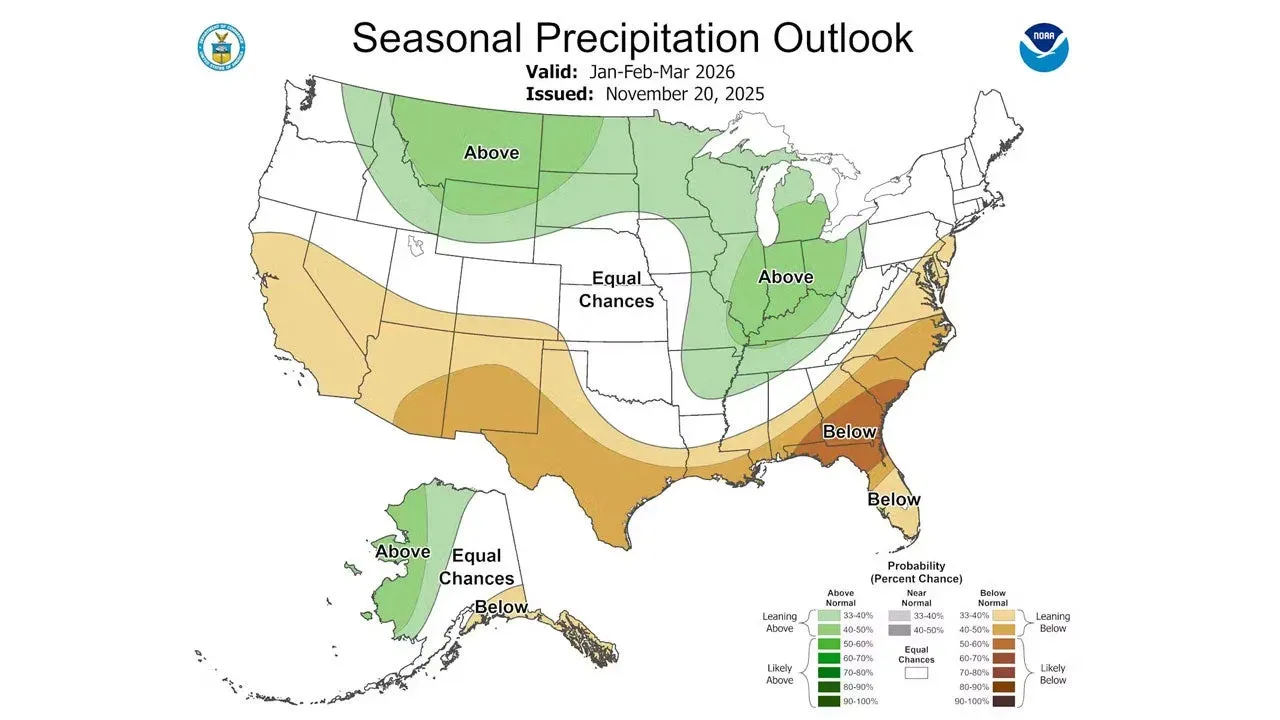
NOAAs seasonal outlook maps show that much of Colorado and Utah fall between the northern cooler/wetter pattern and the southern warmer/drier pattern expected this winter. This indicates roughly equal chances of above- or below-average snowfall and temperatures in major ski areas.
Climate Change and Western Snowfall
Historical snow records in the West, dating back to the 1920s, indicate a declining trend in snowfall and more midwinter melting. Snowpack is influenced by both temperature and precipitation, and warming temperatures have contributed to reduced snow, particularly in the Southwest. Recent research attributes observed decreases in spring snowpack to human-driven climate change. While total precipitation changes are less predictable, the overall effect is a reduced snowpack in spring. Future climate models suggest high confidence in less snow under warming scenarios, with worse outcomes if greenhouse gas emissions continue to rise.
Implications for Water Supplies
The current winter forecast is not extreme, leaving uncertainty about water availability for the year. Snowpackaccumulated snow minus meltdirectly affects water resources, particularly in the West, where snowmelt historically acts as a natural reservoir. For instance, California depends on snowpack for about a third of its annual water supply. Rising temperatures are causing earlier snowmelt and more rain-on-snow events at high elevations, leading to rapid runoff. These changes challenge water managers, who must balance storing water for summer use with preventing flooding.
Long-term trends in major reservoirs like Lake Powell and Lake Mead show a pattern of decline, reflecting the imbalance between supply and increasing demand. These variations, combined with the potential for drought, create ongoing challenges for water resource management.
Snowfall and Ecosystem Impacts
Low-snow years result in early snowpack loss, drier soils, and longer summer drought conditions, which can worsen wildfire risk. Forests left with dry fuels are more prone to large fires. Snow is also essential for wildlife, including endangered species like wolverines, which rely on deep snow for winter denning.
Takeaways from Climate Projections
Climate models indicate that the largest snow years may become less snowy in a warmer climate, while very low-snow years are likely to occur more frequently. However, projections depend on future greenhouse gas emissions scenarios and are not fixed predictions. Reducing emissions can help create a more favorable outcome for snow seasons and the broader climate. The choices society makes today will influence both future snow levels and overall climate conditions.
Updated information corrects Denver's snowfall record, noting one of the city's latest snowfalls on record. Adrienne Marshall, Assistant Professor of Geology and Geological Engineering at the Colorado School of Mines, contributed expert insight.
Author: Sophia Brooks
Share

Nominees for the 2026 Golden Globes to be announced on "CBS Mornings"
25 seconds ago 3 min read ENTERTAINMENT

Tom Petty estate unveils exclusive 'Live Anthology' vinyl in limited edition
28 seconds ago 1 min read ENTERTAINMENT

Jessica Chastain, Jonathan Bailey and Jeff Goldblum Attend Star-Studded Premiere of 'The Gracious Visionary' in Rome to Celebrate Brunello Cucinelli
31 seconds ago 3 min read ENTERTAINMENT

Check out the latest track 'Drag Me' by From Ashes to New
2 minutes ago 1 min read ENTERTAINMENT

Miley Cyrus shares how an unusual fear is impacting her everyday routine
2 minutes ago 1 min read ENTERTAINMENT

Jessica Alba explains her desire to produce and shares her opinions on 'Fantastic Four' movies.
3 minutes ago 3 min read ENTERTAINMENT

The impact of Netflix acquiring Warner Bros. on the film industry
3 minutes ago 3 min read ENTERTAINMENT

Is Netflix attempting to acquire Warner Bros. or destroy it?
3 minutes ago 3 min read ENTERTAINMENT

Kim Cattrall Quietly Marries Longtime Partner
4 minutes ago 2 min read ENTERTAINMENT
'Malcolm in the Middle: Life Remains Unfair' Teaser Confirms 2026 Release
4 minutes ago 2 min read ENTERTAINMENT